- +91-7023509999
- 0294-6622222
- info@narayanseva.org
In Sanatan Dharma, Pitru Paksha is considered a sacred period dedicated to remembrance, devotion, and gratitude towards ancestors. It is a special time when people remember their ancestors and perform rituals such as Tarpan, Shradh, Pind Daan, and charitable activities in their honour. According to religious beliefs, performing these rituals with devotion is believed to bring peace to the ancestors and their blessings to the family.
The last day of Pitru Paksha is known as Sarva Pitru Amavasya. This Amavasya is considered especially significant for remembering all known and unknown ancestors whose Shradh date may not be known or whose Shradh could not be performed on the prescribed tithi for some reason. Therefore, Tarpan, Shradh, Pind Daan, and charitable activities are traditionally performed on this day for all ancestors.
In 2026, Sarva Pitru Amavasya will be observed on Saturday, 10 October 2026. The Amavasya Tithi will begin at 9:35 PM on 9 October and continue until 9:19 PM on 10 October. According to the Udaya Tithi tradition, Shradh for Sarva Pitru Amavasya will be performed on 10 October.
On this day, devotees should take a bath in the morning, wear clean clothes, and remember their ancestors with devotion. According to their family traditions and capacity, they may perform Tarpan, Shradh, and other religious rituals and pray to God for the peace and spiritual well-being of their ancestors.
Sarva Pitru Amavasya is considered the concluding and sacred day of Pitru Paksha. According to religious beliefs, Shradh, Tarpan, Pind Daan, and charitable acts performed on this day hold special significance. Those whose ancestors’ Shradh date is unknown may also perform Shradh for them on this day.
The word “Shradh” itself is associated with faith and devotion. Therefore, while performing rituals for ancestors, greater importance is traditionally given to sincere श्रद्धा, devotion, and gratitude than to external display. Remembering one’s ancestors and expressing gratitude towards them is an important part of Sanatan tradition.
Pitru Paksha also reminds us that our present is connected with our ancestors. They carried forward family values, traditions. Therefore, expressing respect towards them and performing acts of devotion and charity in their memory on Sarva Pitru Amavasya is considered an important religious and family tradition.
On Sarva Pitru Amavasya, take a bath in the morning, wear clean clothes, and remember your ancestors with a peaceful mind. According to your family traditions, perform Tarpan, Shradh, or Pind Daan. Prepare food in remembrance of your ancestors and offer it with devotion. Feeding Brahmins and people in need is also traditionally considered a charitable act.
According to one’s capacity, one may donate food grains, clothes, fruits, sesame seeds, jaggery, and other useful items. Feeding green fodder to cows and lighting a diya are also considered acts of devotion on this day.
Devotees may also recite the Shrimad Bhagavad Gita, Vishnu Sahasranama, chant the name of Lord Vishnu, or perform Rudra Path while praying for the peace of their ancestors. Every act performed on this day should be accompanied by a spirit of श्रद्धा, service, and compassion.
The Garuda Purana describes the significance of food offered for ancestors in the following verse:
यदाहारा भवन्त्येते पितरो यत्र योनिषु।
तासु तासु तदाहारः श्राद्धान्नेनोपतिष्ठति॥
— Garuda Purana, Pretakalpa, Chapter 225, Verse 19
Meaning: It is traditionally explained that the food offered through Shradh reaches the ancestors according to the form or existence in which they are situated.
In accordance with this scriptural belief, offering food with devotion for one’s ancestors is considered an important part of Shradh rituals.
In Sanatan Dharma, charity is regarded as a means of selflessness, compassion, and service. Donation is not merely about giving away an item; it represents the spirit of using one’s available resources to support someone in need and bring happiness into their life.
Charity performed during Pitru Paksha is traditionally considered a way of expressing devotion and remembrance towards one’s ancestors. The Garuda Purana also discusses Shradh and charity in relation to the satisfaction of ancestors. It describes the offering of food, wealth, and other items by relatives with devotion for the ancestors and associates Shradh performed according to one’s capacity with their satisfaction.
Therefore, donating on Sarva Pitru Amavasya can be an opportunity to express gratitude and devotion towards one’s ancestors while also helping people in need. Charity should be performed without ego or the desire for recognition. Its purpose should be to dedicate the resources given by God towards the service of those who need them. True charity is traditionally associated with devotion, humility, compassion, and service.
On the sacred occasion of Sarva Pitru Amavasya, one may donate food grains, meals, clothes, fruits, sesame seeds, jaggery, rice, wheat, ghee, and other useful items according to one’s capacity. Providing meals to people in need and supporting their essential requirements are also considered meaningful acts of service.
Among these, food donation and meal service hold a special place. Providing a respectful meal to a hungry or needy person is an act of humanitarian service that brings together compassion, charity, and the spirit of helping others.
The importance of offerings made for ancestors is also described in the Manusmriti:
यद्यद्ददाति विधिवत्सम्यक् श्रद्धासमन्वितः।
तत्तत्पितॄणां भवति परत्रानन्तमक्षयम्॥
— Manusmriti, Chapter 3, Verse 265
Meaning: According to the traditional interpretation, whatever a person offers properly and with faith for their ancestors is considered to become inexhaustible for them in the afterlife.
With this scriptural sentiment, one may take a pledge to perform charity and service for the ancestors according to one’s capacity on Sarva Pitru Amavasya.
On the sacred occasion of Sarva Pitru Amavasya, support meal service for underprivileged, needy, and specially abled children at Narayan Seva Sansthan. By providing food and bringing happiness into the lives of people in need, you can express remembrance and gratitude towards your ancestors.
Remember your ancestors with devotion, perform Tarpan and Shradh according to your family traditions, and fulfill your responsibility towards humanity through charity and meal service.
On Sarva Pitru Amavasya, light the lamp of service, pay tribute to your ancestors, and dedicate this sacred occasion to serving humanity.
Q. When is Sarva Pitru Amavasya 2026?
A. Sarva Pitru Amavasya 2026 will be observed on Saturday, 10 October 2026, marking the end of Pitru Paksha.
Q. What is the significance of Sarva Pitru Amavasya?
A. Sarva Pitru Amavasya is the final day of Pitru Paksha and is traditionally dedicated to remembering and honouring all ancestors. Shradh, Tarpan, Pind Daan, and charity are performed according to family traditions.
Q. Is Sarva Pitru Amavasya auspicious?
A. Sarva Pitru Amavasya is considered an important day for ancestral remembrance and religious observances. Devotees traditionally perform Shradh, Tarpan, Pind Daan, and charitable activities with श्रद्धा and devotion.
Q. How to perform Sarva Pitru Amavasya Shradh?
A. Take a bath, wear clean clothes, remember your ancestors, and perform Tarpan, Shradh, or Pind Daan according to your family traditions. Food, clothes, and other useful items may also be donated to people in need.
Q. What time is Sarva Pitru Amavasya Shradh in 2026?
A. Sarva Pitru Amavasya falls on 10 October 2026. Shradh is traditionally performed during the daytime, particularly during the Aparahna period. Exact timings may vary by location, so the local Panchang should be consulted.
Q. What is Pitru Amavasya?
A. Pitru Amavasya refers to the Amavasya associated with ancestral remembrance and Shradh rituals. During Pitru Paksha, Sarva Pitru Amavasya is the final day dedicated to all ancestors.
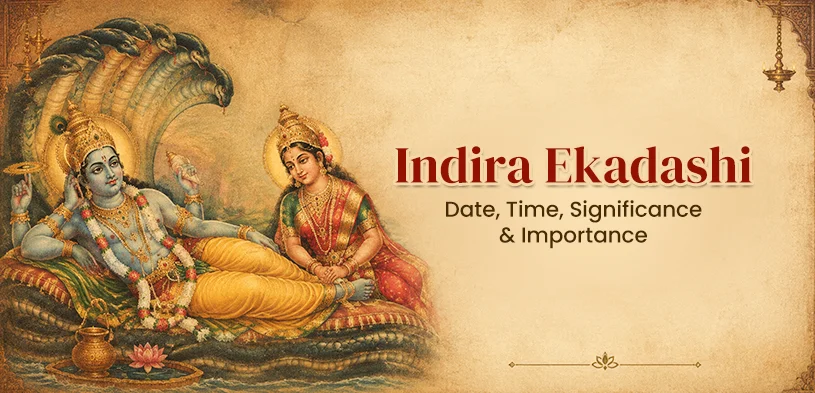
Indira Ekadashi, which falls during the Krishna Paksha of the Ashwin month, is one such meritorious tithi. As it occurs during Pitru Paksha, this day is specially associated with the worship of Lord Vishnu along with feelings of reverence and righteous deeds.
Our ancestors laid the foundation of the family through their lives, austerities, values, and good deeds. Pitru Paksha is the sacred opportunity to express reverence and gratitude towards them.

Bhadrapada Purnima 2026 falls on September 26. Discover its date, puja vidhi, vrat, Satyanarayan worship, Chandra Dev prayers, and the spiritual significance of charity and service.