- +91-7023509999
- 0294-6622222
- info@narayanseva.org
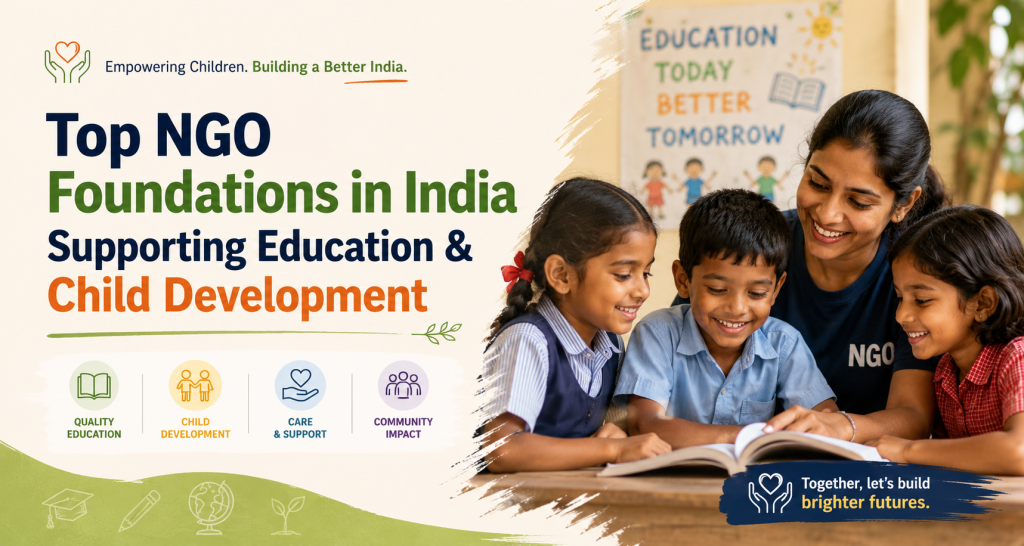
Education is one of the most important tools that gives opportunities in life. Education is the thing that makes every individual skilled, knowledgeable and ambitious in their career. Still many children in India struggle to get good and quality education opportunities. Even with growth in education and school admission, many poor children continue to face issues like poverty, lack of school infrastructure, trained teachers, and limited access to digital resources. To fill this gap and build a foundation, an NGO is working in the education sector.
Across the country, best ngo in India are supporting rural education, girls’ education (saving girls from child labour and child marriage), supporting digital learning, scholarship opportunities, and accessible programs for differently abled children.
In this blog, we will know about how an NGO foundation in India is transforming education, know the best NGO foundations working in this field, and explain why supporting these organizations can help build a strong society and an equal future.
India has made extraordinary progress in expanding access to education, but the journey is far from complete. For many children from low-income families, especially in rural and underserved areas, going to school is still a challenge. Limited family income, lack of school facilities, shortage of trained teachers and social discrimination often stop children from receiving proper education in childhood. This becomes a barrier in child development.
Children struggle for admission and often do not have books, uniforms, transportation, digital devices, or a safe learning environment at home. Girl children are often at risk of dropping out due to social pressures, early marriages, or household responsibilities. Differently abled children face more barriers because many schools are not equipped with the resources or support systems they need.
This is why NGO working for education are so important. They step in where gaps exist and offer meaningful support that helps children stay in school and thrive. Whether through free learning centers, scholarships, teacher training, digital classrooms, or community support, these organizations are changing lives every day.
Many NGO foundations run free or sponsored education programs for children from financially weaker backgrounds. These programs help children continue their studies without the stress of financial conditions.
Technology has become a key part of learning. Several NGO foundations in India are starting smart classrooms, computer labs, and online learning tools in rural and low-resource schools to help students gain digital literacy and improve academic performance.
Scholarships are essential for talented students who cannot afford school or higher education expenses. Many foundations offer financial help, sponsorships and educational support to deserving students.
Beyond formal education, many skill development NGOs also provide vocational and life skills training, helping students and young people become independent and more prepared for employment opportunities.
Well-trained teachers are important for quality education. NGO foundations organise teacher development workshops, awareness campaigns, and community engagement programs to strengthen the learning environment.
Education is a right for every child. To support differently abled children, many foundations have taken important steps in this field. Support may include special tutors, assistive devices, therapy, rehabilitation, transportation and personalized learning programs for children with disabilities.
In rural areas, access to school education is limited, and available schools may not have adequate classrooms, sanitation, trained teachers, or study materials. Urban poor communities also face serious educational barriers due to overcrowding, instability and lack of support.
Such organizations help children stay connected to learning by providing resources, mentoring, financial support, community awareness and emotional support. They create equal learning opportunities for children who may otherwise be left behind.
Without a strong support system, many bright children never get the chance to grow. By working as NGOs helping poor children, these foundations ensure that education becomes a right in practice, not just in policy.
Narayan Seva Sansthan works on empowering differently abled and underprivileged children by blending education and rehabilitation. Their mission is to ensure that disability does not stop a child from education and career opportunities. They also offer residential schools and vocational training in IT, sewing and mobile repair. By providing services and tools, NSS changes many lives, helping students move from dependency to financial independence.
Pratham works toward the goal of every child being in school and learning well. They are famous for the ASER report and the Read India campaign, which focuses on improving basic reading and math skills for primary students. Working directly with communities, Pratham reaches many children to strengthen their foundational learning skills.
Smile Foundation follows a life-cycle approach to help poor children break the cycle of poverty. Their education programs provide not just schooling, but also healthcare and nutrition to ensure children stay in classrooms. Operating across 25 states, they bridge the gap for children living in difficult circumstances and provide them with better opportunities for success.
CRY works at the grassroots level to ensure every child’s right to education is protected. They work on the root causes of school dropouts, such as child labour and early marriage, by empowering local communities to demand better school facilities. For over 40 years, CRY has been instrumental in bringing millions of children back to school and protecting their future.
Teach For India aims to end educational inequality by placing talented graduates as full-time teachers in low-income schools. Their two-year Fellowship program focuses on providing high-quality guidance to students who need it most. This movement not only impacts thousands of students directly but also builds a network of leaders committed to reforming India’s education system.
Disabled children in rural areas often face the greatest educational disadvantages. An education support NGO in India plays an important role in ensuring that these groups are not removed from learning opportunities.
In rural areas, many organizations provide free study materials, uniforms, transportation support and hostel facilities to students. They also work with parents and communities to promote the value of education and reduce dropout rates.
This support helps children not only attend school but also participate with confidence. An NGO for differently abled children can make a life-changing difference by turning barriers into opportunities.
A donation helps more than fund books or uniforms; it invests in a child’s future and stronger communities.
When you support education, you are helping shape a more just and empowered India.
With so many organizations working in the social sector, it is important to choose the right NGO.
Choosing the right NGO foundation ensures that your support reaches children who truly need it.
Education is a powerful tool to break the cycle of poverty, create equal opportunities, and transform the future of a nation. Yet for many children in India, especially those from underprivileged, rural and differently abled backgrounds, access to quality education remains a struggle.
This is why every NGO foundation working in the education space plays such an important role. From scholarships and free schooling to inclusive support and digital learning, these organizations are helping children grow and succeed. They also contribute significantly to children’s emotional and mental development through supportive learning environments.
If you want to make a difference, consider supporting an education NGO that is committed to changing lives. Your contribution, awareness and support can help a child step into a classroom, continue their education and build a brighter future.
A better India begins with educated children and a growth mindset. Together, we can make that possible.

In the year 2026, Shradh Paksha (Pitru Paksha) will begin on 26 September 2026 and end on 10 October 2026 with Sarva Pitru Amavasya. During this sacred period, followers of Sanatan Dharma can perform Shradh, Tarpan and other rituals for their ancestors according to the respective tithi.

Bhadrapada Purnima 2026 falls on September 26. Discover its date, puja vidhi, vrat, Satyanarayan worship, Chandra Dev prayers, and the spiritual significance of charity and service.

Bhadrapada Amavasya holds special spiritual significance in the Hindu Panchang. This sacred day is considered highly auspicious for self-reflection, remembering ancestors, offering Tarpan, taking a holy bath, and performing charity.