If you want to donate to an NGO in India but don’t know where to start, you are not alone in this struggle. With over 3 million credible NGOs, choosing the right organization can feel overwhelming. Here are the Top 10 NGOs in India transforming lives and communities.
Whether you want to donate, volunteer, support, or simply learn more, this blog will help you.
An NGO, also known as a nonprofit organization, works to help people without being part of the government and without making a profit.
India has one of the largest NGO ecosystems in the world. From the mountains of Himachal Pradesh to the coastal villages of Tamil Nadu, these organizations are quietly doing the work that most people never see. They run free hospitals, teach children who dropped out of school, and give disabled people a chance to walk again.
It all happens because they care about humanity.
Millions of Indians still live below the poverty line. Millions of children drop out of school before Class 5. Thousands of disabled people from poor families never receive treatment, not because treatment does not exist, but simply because they cannot afford it.
NGOs step into the gap between what the government can do and what people actually need. They bring healthcare to villages that have never seen a doctor. They teach women skills that become livelihoods. They give disabled people a second chance at walking, working, and living with dignity.
No donor is too small.
No problem is too big.
That is the spirit of India’s best NGOs.
Founded in 1985 by Kailash Manav Agarwal in Udaipur, Rajasthan, India, Narayan Seva Sansthan was built on one simple belief — no one should be left behind because of disability or poverty.
The organization performs free corrective surgeries for people with locomotor disabilities, especially polio survivors from remote villages who otherwise never receive treatment. They provide free artificial limbs, vocational training, rehabilitation support, and organize mass marriages for disabled and underprivileged individuals.
More than 4.5 lakh free corrective surgeries have been performed, and over 30,000 individuals receive vocational training every year.
Founded in 1979 in the slums of Delhi, Deepalaya works with children and communities that the city has often neglected.
They run schools, vocational training centres, and healthcare programs in underserved urban communities. Their approach focuses on the entire family because when parents become financially stable, children automatically gain a better future.
They have positively impacted more than 1.2 million people across Delhi and Haryana.
Seva Mandir has been serving tribal and rural communities in Rajasthan since 1969. Their work focuses on natural resource management, women’s empowerment, education, and healthcare.
Their watershed development initiatives have transformed water availability in villages that once faced severe drought conditions every summer.
More than 500 villages across Udaipur and Rajsamand districts have benefited from their programs.
Founded in 1994, Udayan Care works with orphaned and abandoned children who grow up without family support.
Their group homes, known as Udayan Ghars, provide a family-like environment where children receive care, emotional support, and education.
They also run mentoring programs for girls and support young adults transitioning from institutional care into independent life.
More than 300,000 students and young people have benefited from their support programs.
Mann Deshi Foundation was started by rural women for rural women in Maharashtra’s Satara district.
They run India’s first rural women’s bank, business schools for women entrepreneurs, and sports initiatives for girls from farming communities.
Their programs have directly supported more than 2 lakh rural women through entrepreneurship and financial literacy initiatives.
Parivar Foundation works for children in Kolkata, West Bengal, especially children of sex workers, trafficking survivors, and children from extremely poor backgrounds.
They provide education, shelter, nutrition, emotional support, and long-term residential care in a family environment.
More than 1,500 children currently live and study under their care.
LEPRA India has been fighting leprosy, tuberculosis, and other neglected diseases since 1925.
They work across multiple Indian states providing free diagnosis, treatment, rehabilitation, and disability support for affected individuals.
Vanavasi Foundation works with tribal communities in the forests of Tamil Nadu. Their focus areas include education, healthcare, and preservation of indigenous culture.
Their residential schools provide quality education while protecting the language, traditions, and identity of tribal children.
They also advocate for forest rights and land rights because land security is essential for community survival.
For children, NGOs rescue those trapped in child labour, help school dropouts return to education, provide nutrition support, and offer counselling for children in difficult situations.
For women, NGOs provide financial literacy, vocational training, healthcare support, legal awareness, and shelters for domestic violence survivors.
For disabled individuals, NGOs provide free surgeries, prosthetic limbs, assistive devices, education, rehabilitation programs, and livelihood support.
In rural India, access to doctors and hospitals remains limited. NGOs fill this gap through mobile health units, telemedicine, medical camps, and community healthcare workers.
In education, top ngos in india support children who cannot access quality schooling due to financial challenges. They provide classroom support, teacher training, scholarships, and learning programs that improve educational outcomes.
Programs started by NGOs in a few villages often become national models that impact millions of lives.
You do not need to be wealthy to make a difference.
Even a small donation of ₹100 to ₹5000 to a trusted NGO can support surgeries, education, physiotherapy, food distribution, and rehabilitation programs.
If financial support is not possible right now, you can volunteer your skills. Doctors, teachers, lawyers, accountants, marketers, and designers are always needed.
Businesses can also contribute through CSR initiatives. Under the Companies Act 2013, eligible companies are required to spend 2% of profits on CSR activities. Donations made under Section 80G of the Income Tax Act qualify for tax deductions.
Despite doing meaningful work, NGOs face several challenges.
Funding limitations under FCRA laws, short-term project cycles, lack of skilled manpower, and limited operational budgets create difficulties in sustaining programs long term.
In some cases, poor transparency and mismanagement by a few organizations damage trust across the entire sector. That is why choosing NGOs with proper 80G and FCRA registration is extremely important.
India’s top NGOs are not waiting for someone else to solve problems. They are already working in the most difficult places with whatever resources they have.
Deepalaya has shown what is possible when compassion turns into action. Pratham has proven that children can learn with the right support. Narayan Seva Sansthan has shown that differently-abled people in India can live with dignity and achieve extraordinary things despite difficult challenges.
You do not have to do everything. But you can do something.
Even the smallest donation to a trusted NGO can support a child’s physiotherapy session, a surgery, a meal, a book, an artificial limb, or access to clean drinking water.
Nothing is Impossible.

Full moon of Ashwin month, known as Sharad Purnima, Kojagari Purnima, and Raas Purnima, holds a special place because of its religious and spiritual significance. It is associated with Lord Shri Krishna’s divine Raas Leela, worship of Goddess Lakshmi

According to the Hindu calendar, Dussehra, also known as Vijayadashami, is celebrated on the tenth day of the Shukla Paksha, or waxing phase of the Moon, in the month of Ashwin.
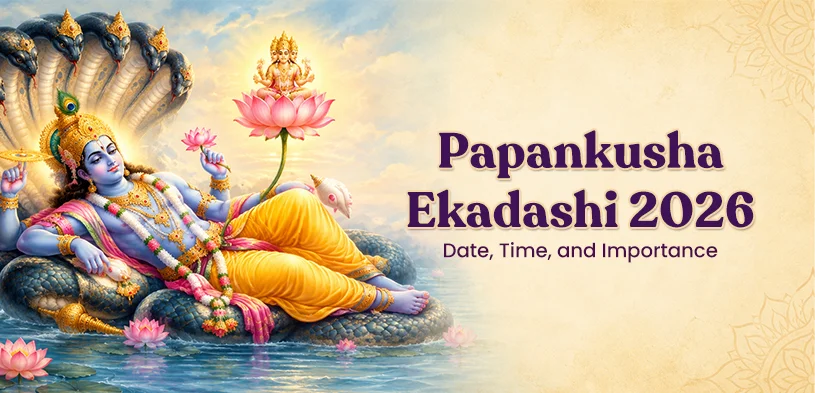
On Papankusha Ekadashi, traditions of worshipping Lord Vishnu, fasting, chanting His name, listening to religious stories, night vigil, and charity have been followed. This day provides an opportunity to light the lamp of devotion and spirituality within oneself.