- +91-7023509999
- 0294-6622222
- info@narayanseva.org
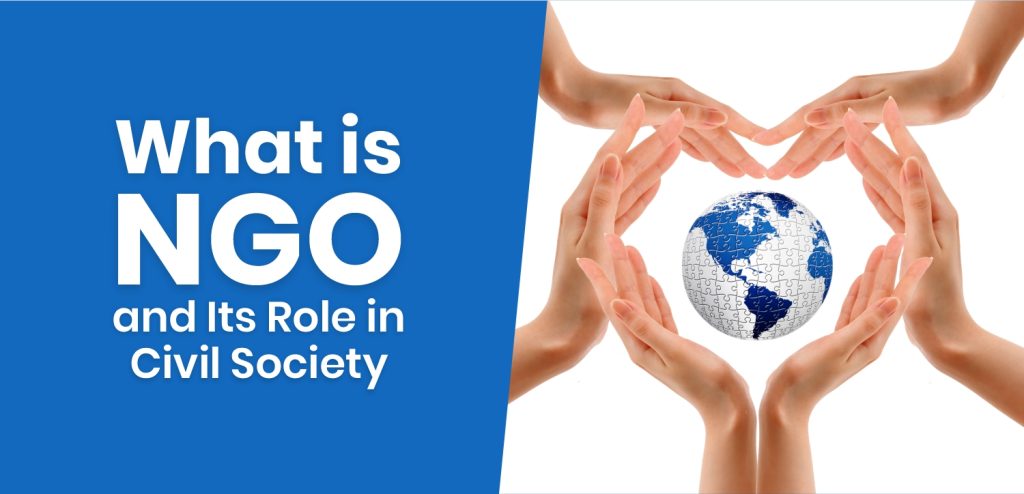
Basically, an NGO (Non-Governmental Organization) is a group of people working toward a specific mission without any government strings attached. They aren’t in it for the profit; they’re driven by activists and volunteers who are fed up with the world’s biggest problems—like poverty or environmental collapse—and want to actually do something about it.
Since they don’t answer to politicians, they can stay 100% focused on human welfare. Whether it’s setting up a school or rushing in after a disaster, they go where they’re needed most. They run on the generosity of regular people and businesses. In India, they’ve been a huge part of the social fabric since 1945, essentially filling the massive gaps left behind by the government and the private sector.
Think of civil society as the “third sector” of our lives. It’s the space where we, as citizens, come together to fix things when the government is too slow or the private sector is too expensive.
How they bridge the gap:
The “Last Mile”: They get food and medicine to the people the rest of the world has forgotten.
Voice for the Voiceless: They run awareness campaigns that force big corporations and governments to actually pay attention to things like climate change.
Real Skills: They don’t just give handouts; they provide tools and training so people can find jobs and support themselves.
From legal aid to medical care: NGOs handle everything from teaching people their basic human rights to running mobile health clinics in the middle of nowhere. They provide free meals to the hungry, distribute wheelchairs to those who can’t walk, and partner with big companies (through CSR) to make sure corporate money actually does some good in the real world.
Running an NGO is incredibly tough. They’re constantly fighting:
Empty Pockets: Funding is usually tight and totally unpredictable.
Red Tape: Mountains of paperwork and annoying regulations can eat up all their time.
Bad Planning: Sometimes passion isn’t enough, and a lack of a clear strategy leads to wasted effort.
Wrong Focus: A common trap is spending too much on “stuff” (like fancy offices) instead of investing in people.
Rural areas in India are home to more than 60 crore people. But most of them have very limited access to quality healthcare.
To fill these gaps in India, NGOs work every single day.
Function of Ngos is to drive mobile health units in vans stocked with medicines and basic diagnostic equipment that travel to remote villages on a fixed schedule. People know when the van is coming, and they solve their health problems on a daily basis.
NGOs also, from time to time, send health workers to villages who do daily work that never work for headlines but save many lives. They visit every house to know that no one is sick, track pregnant women’s health, and baby movement. Also, they remind parents about vaccines for their child. Also, they check vitals & symptoms of old age patients, who are on long-term medicines. They get to know problems early- before they become emergencies.
Also, health workers are aware of clean sanitation, nutrition programs for malnourished children and mothers.
Organisations like Seva Mandir in Rajasthan have been doing this work for decades. In villages they serve, infant deaths have reduced, more women give birth safely in health centres, and TB patients complete their full treatment — because someone is following up with them.
When an NGO works in a community for 5 -10 years, the change becomes visible and measurable. Baby death rates go down. More women deliver babies safely in health centres. TB patients complete their treatment. Children are fully vaccinated. Families start visiting doctors earlier instead of waiting until a condition becomes critical.
These small improvements prevent big health crises in the family. With precaution and awareness, family lives them, children suffer less, mothers worry less about children, and elderly parents get time-to-time checkups.
The impact is also felt at a system level. When NGO programs prove that something works, a mobile van model, a community health worker system, a door-to-door enrollment drive, state and central governments take notice. Many schemes that are now national policy were first tested and proven by NGOs working quietly on the ground.
NGOs also build something that lasts longer than any single program’s awareness and trust. Communities have been supported by NGOs to begin to take charge of their own health. They ask questions. They demand services. They stop accepting poor healthcare as their fate. That shift in mindset is perhaps the most lasting impact of all.
The future of the best NGO in India is moving toward better tech and global fundraising. But the real power is still at the “grassroots” level—small, local groups that can move fast when a crisis hits. These organizations need more than just “likes” on social media; they need your hands and your heart. Whether you’re volunteering or just helping fund a project, you’re the reason the mission stays alive.

Bhadrapada Amavasya holds special spiritual significance in the Hindu Panchang. This sacred day is considered highly auspicious for self-reflection, remembering ancestors, offering Tarpan, taking a holy bath, and performing charity.
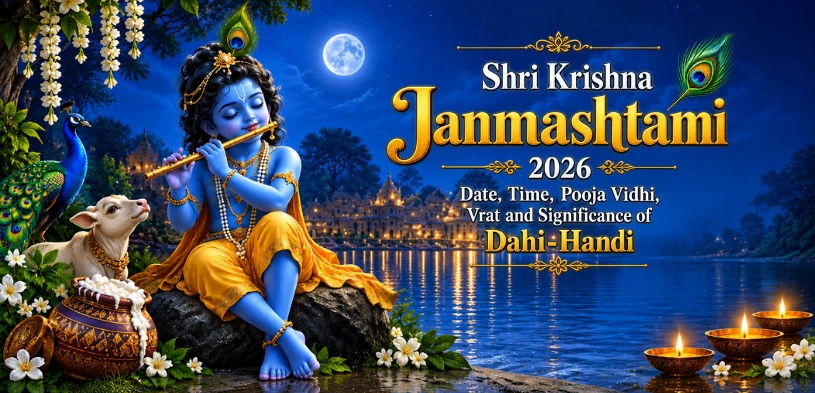
Shri Krishna Janmashtami is celebrated as the birth festival of Lord Shri Krishna. It is also known as Shri Krishna Janmotsav and Gokulashtami. On this day, special prayers, bhajans, kirtans, and religious ceremonies are organized at Krishna temples across the country, including Mathura, Vrindavan, Gokul, and Dwarka.
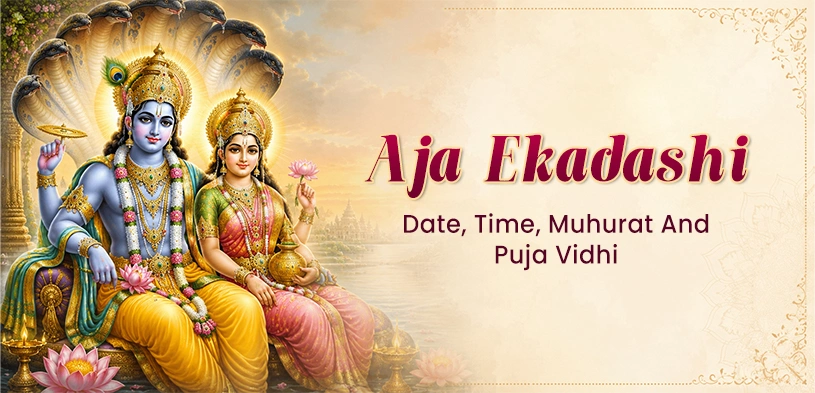
In Sanatan Dharma, Ekadashi Tithi is considered highly sacred for worshipping Lord Vishnu. Each Ekadashi observed throughout the year has its own religious significance. The Ekadashi that falls during the Krishna Paksha of the Bhadrapada month is known as Aja Ekadashi.