- +91-7023509999
- 0294-6622222
- info@narayanseva.org
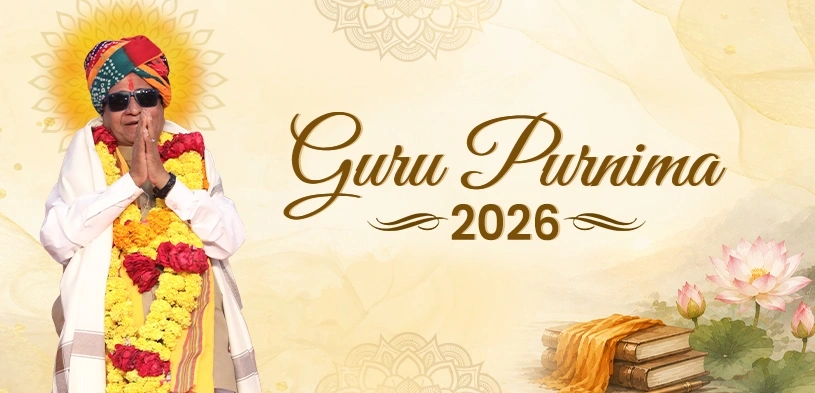
In Indian Sanatan culture and spiritual traditions, the Guru is accorded a status even higher than that of God. Guru Purnima is the sacred festival dedicated to honoring the Guru, acknowledging their immense importance, and expressing gratitude towards them. This holy occasion is celebrated across the country with great reverence, joy, and devotion every year on the full moon day of the Shukla Paksha in the month of Ashadha, know as Ashadha Purnima.
Occurring just before the arrival of the month of Shravan, this full moon day marks a momentous occasion symbolizing the rise of the sun of knowledge in a disciple’s life. Worshipping one’s Guru and seeking their blessings on this day paves the way for success and spiritual progress in life.
Guru Purnima is also known as ‘Vyasa Purnima’. It was on this sacred day that Maharshi Krishna Dvaipayana Vedavyasa—the compiler of the four Vedas and the author of great texts such as the Mahabharata, the eighteen Puranas, and the Shrimad Bhagavata Mahapurana—manifested on earth. Maharshi Vyasa is revered as the Jagat Guru of humanity; he organized scattered knowledge and compiled scriptures for the welfare of the world.
According to Drik Panchang, the festival of Guru Purnima will be celebrated on July 29, 2026. The Purnima Tithi will begin at 6:18 PM on July 28, 2026, and conclude at 8:05 PM on July 29, 2026. Since there are slight variations in timing across different regions of India based on sunrise and the specific segments of the lunar day, it is highly advisable to consult a local Panchang or Sanatan calendar to determine the precise and auspicious timings for fasting, ritual bathing, charity, and Guru worship.
In the scriptures of Sanatan Dharma, the Guru is regarded as the embodiment of the Supreme Reality (*Parabrahma*). The word ‘Guru’ is formed by the combination of two syllables. ‘Gu’ means darkness or ignorance and ‘Ru’ means light. That is, the one who takes the soul out of the deep darkness of ignorance and takes it towards the ultimate light of divine knowledge is the Guru.
While worshiping the Guru in the scriptures it is said:
Ajna Timirandhasya Gyananjan Shalakaya |
Chakshurunmeelitam yen tasmai Shri Gurve Namah ॥
That is, by applying a kajal of knowledge in the eyes of a person who has become blind due to the darkness of ignorance, through which the eyes of conscience are opened, I bow down to the feet of such a supremely beneficial Gurudev.
In our Vedas, Upanishads and saint tradition, Guru is considered greater than God, because Guru also paves the way to realize God.
Tridev Swaroop Guru Vandana: In Skanda Purana’s Guru Geeta, Lord Shiva, while explaining the importance of Guru to Mother Parvati, says that Guru is the symbol of the creator, sustainer and destroyer of the universe:
Gururbrahma Gururvishnuh Gururdevo Maheshwarah.
Guru Sakshat Param Brahma Tasmai Shri Gurve Namah.
That is, Guru is Brahma, Guru is Vishnu and Guru is Lord Shankar. Guru himself is the ultimate Parabrahma (God), I pay my respectful obeisances to such a great Gurudev.
Basic basis of Sadhana: Meditation on the Guru and following his words is the greatest Sadhana of the disciple.
It is said in the scriptures:
Dhyanamoolam Gururmurthy Poojamoolam Guruh Padam.
Mantramoolam Gururvakyam Mokshamoolam Guruh Kripa.
In essence, the Guru’s form is the foundation of meditation; the Guru’s lotus feet are the foundation of worship; the words spoken by the Guru are the foundation of the mantra; and the Guru’s boundless grace is the foundation for attaining liberation (Moksha).
Indian scriptures and Puranas abound with instances where complete surrender to the Guru transformed ordinary human beings into immortal figures:
Lord Shri Krishna and Maharshi Sandipani: Despite being the incarnation of Lord Narayana Himself, Shri Krishna resided at Maharshi Sandipani’s ashram to learn the sixty-four arts and the Vedas. The Lord’s own surrender to His Guru illustrates the exalted status a Guru holds in worldly life.
Adi Shankaracharya and Totakacharya: Totakacharya was simple by nature and considered less intellectually gifted than other disciples, yet his dedication to serving his Guru was unparalleled. Through his Guru’s grace, he suddenly attained supreme wisdom and composed the magnificent hymn known as ‘Totakashtakam’.
Swami Vivekananda and Ramakrishna Paramahansa:
In the modern era, the journey of Narendra transforming into Vivekananda was the result of Guru Ramakrishna Paramahansa’s spiritual power and grace. The Guru’s blessings altered the course of Narendra’s life, enabling him to hoist the banner of Sanatana Dharma across the globe.
Across India, the sacred festival of Guru Purnima fosters a remarkable atmosphere of devotion towards the Guru in ashrams, temples, and homes alike. The traditional rituals for celebrating Guru Purnima are as follows:
Morning Bath and Meditation: On this day, disciples rise during *Brahma-muhurta* (the auspicious pre-dawn hours), bathe in holy rivers or in water mixed with Ganga-jal , and don clean attire.
Worship and Reverence at the Guru’s Feet: Subsequently, disciples seek a personal audience with their Guru and worship His feet. They offer flowers, fruits, new clothes, dakshina, and sweets to the Guru, seeking His blessings.
Satsang and Bhajans: On this day, spiritual centers organize Akhand Kirtan , the singing of hymns glorifying the Guru, and special Satsangs. Vow and Fasting: Many devotees observe a complete fast on this day and take a firm resolve to follow the Mool Mantra, spiritual practices, and ideals imparted by the Guru throughout their lives.
Yet, the sentiment of reverence towards the Guru remains as eternal as ever. Today, our teachers, parents, mentors, and the inspiring figures who guide us onto the right path also fall into the category of ‘Guru.’ Amidst the hustle and bustle and mental stress of modern life, the need for a true guide—one who can keep us steadfast on the path of moral values, truth, and goodness—has become even greater.
The finest example of the ideal relationship between a disciple and a Guru is found in the *Shanti Path* (Invocation of Peace) from the Upanishads, which is recited especially on this day:
Om Saha Navavatu. Saha Nau Bhunaktu.
Saha Viryam Karavavahai.
Tejasvinavadhitamastu Ma Vidvishavahai.
Om Shanti, Shanti, Shanti.
Meaning: O Supreme Lord! Protect both of us—the Guru and the disciple—together. Sustain and nourish us both together. Let us together acquire the strength and capability to attain knowledge. May the knowledge we acquire be radiant and potent, and may no ill will or bitterness ever arise between us. May peace prevail all around.
The celebration of Guru Purnima is a day for introspection. This festival teaches us that no matter how much material progress we achieve, our lives remain aimless without proper guidance and moral values. It is under the benevolent guidance of a Guru that a person sheds their ego, learns humility, and gives true meaning to their life.
Let us, on this sacred Guru Purnima, remember all the Gurus in our lives—both direct and indirect—express our deep gratitude towards them, and make a sincere effort to walk the path of truth, compassion, and wisdom shown by them.
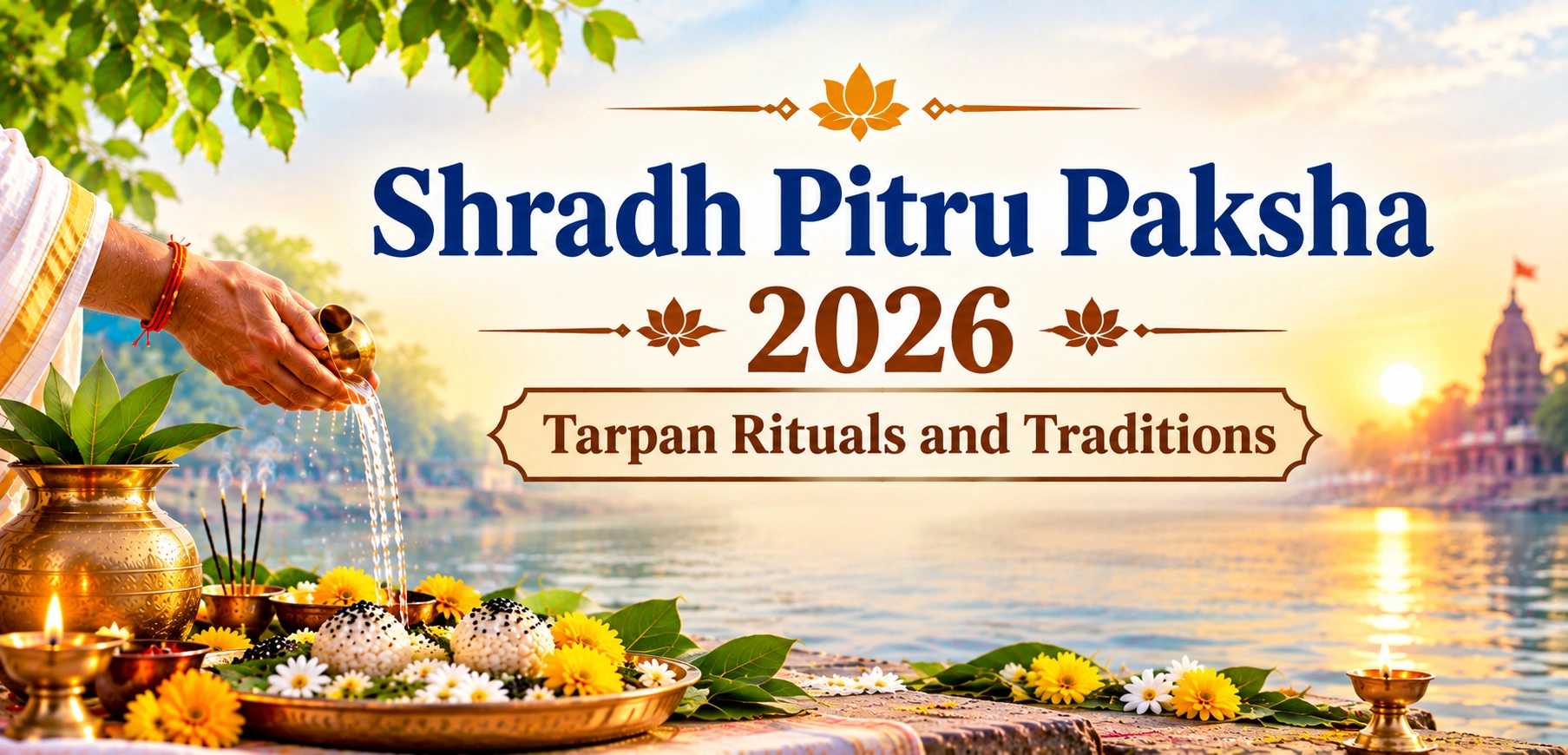
In the year 2026, Shradh Paksha (Pitru Paksha) will begin on 26 September 2026 and end on 10 October 2026 with Sarva Pitru Amavasya. During this sacred period, followers of Sanatan Dharma can perform Shradh, Tarpan and other rituals for their ancestors according to the respective tithi.
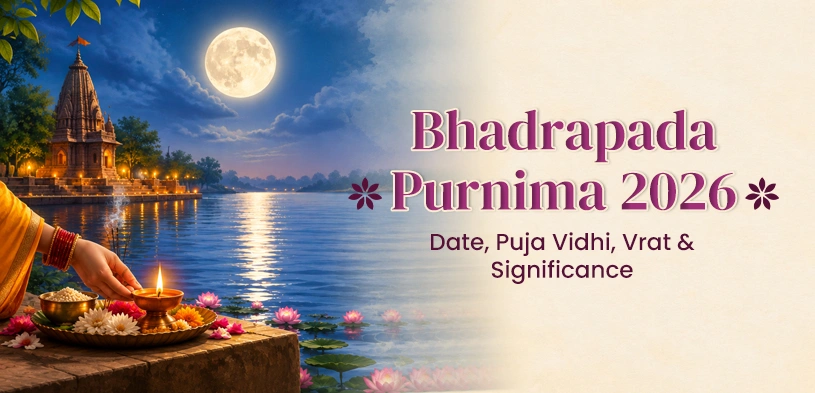
Bhadrapada Purnima 2026 falls on September 26. Discover its date, puja vidhi, vrat, Satyanarayan worship, Chandra Dev prayers, and the spiritual significance of charity and service.
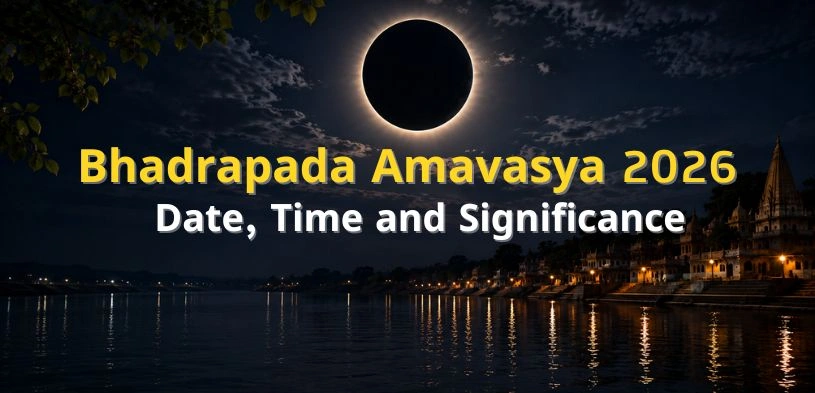
Bhadrapada Amavasya holds special spiritual significance in the Hindu Panchang. This sacred day is considered highly auspicious for self-reflection, remembering ancestors, offering Tarpan, taking a holy bath, and performing charity.