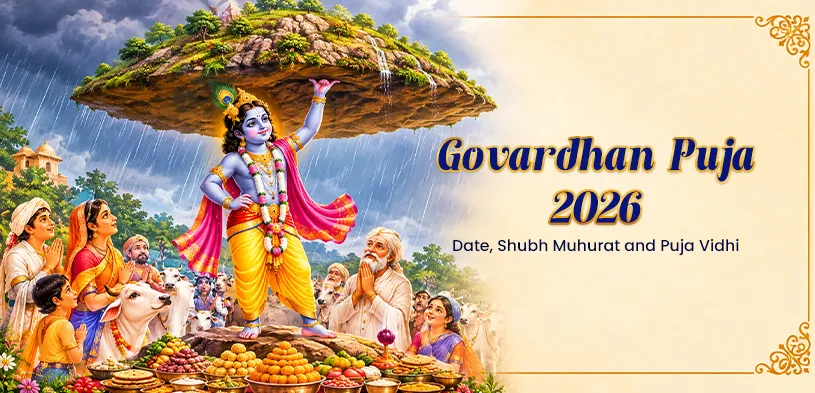
Just as the lights of Diwali continue to illuminate our homes and courtyards, the following day brings another sacred festival that reminds us of devotion and gratitude towards nature. This festival is known as Govardhan Puja. On this auspicious occasion, devotees remember the divine act of Lord Shri Krishna, who protected the people of Braj from the wrath of Lord Indra. Through this divine leela, Lord Krishna taught that true devotion comes not from fear, but from love and faith.
Celebrated on the Pratipada Tithi of Shukla Paksha in the Hindu month of Kartik, Govardhan Puja fills the heart with devotion. People create a symbolic form of Govardhan Hill using cow dung in their courtyards, prepare a variety of dishes as Annakoot offerings to the Lord, and perform Govardhan Parikrama while praying for happiness and prosperity. Behind this festival lies a divine story of Lord Krishna that continues to inspire people to respect nature, give up ego and have unwavering faith in God.
In 2026, the sacred festival of Govardhan Puja will be celebrated on Tuesday, 10 November. According to Drik Panchang, the Pratipada Tithi of Kartik Shukla Paksha will begin at 12:31 PM on 9 November 2026 and end at 2:00 PM on 10 November 2026. In Sanatan Dharma, the Udaya Tithi, or the lunar date prevailing at sunrise, holds special importance when determining festival dates. Following this tradition, Govardhan Puja will be celebrated on 10 November this year.
The morning auspicious muhurat for Govardhan Puja will be from 6:40 AM to 8:50 AM. Devotees can worship Govardhan Maharaj with proper rituals and devotion during this sacred period.
According to Hindu tradition, during the Dwapara Yuga, the people of Braj worshipped Lord Indra, the king of the gods. It was believed that rain came through Indra’s blessings, and rainfall helped crops grow in the fields. Therefore, the people of Braj regularly performed rituals and offered food to please him.
When young Lord Krishna noticed this practice, he asked Nand Baba and the other residents of Braj why they worshipped Lord Indra. He encouraged them to stop the ritual and explained that Govardhan Hill was far more important to their lives. The hill provided grazing land for cows and supported the growth of plants and vegetation. Therefore, instead of worshipping Indra out of fear, people should express gratitude towards Govardhan Hill, cows and nature.
Krishna’s words touched the hearts of the people of Braj. They worshipped Govardhan Hill, honoured the cows and prepared a variety of delicious dishes to offer to Govardhan Maharaj.
When Lord Indra learned about this, he felt insulted. Overcome by anger, he unleashed torrential rainfall upon Braj. Dark clouds covered the sky, lightning flashed, and the heavy rain frightened the people. Humans, animals and birds all faced danger.
Seeing their suffering, Lord Shri Krishna lifted the enormous Govardhan Hill on the little finger of his left hand and provided shelter to all the residents of Braj beneath it. The rain continued for seven days, but those who had taken refuge under Krishna’s protection remained safe. Eventually, Lord Indra realised his mistake. His pride faded, and he acknowledged the divine power of Lord Shri Krishna.
During Govardhan Puja, Lord Shri Krishna is worshipped in his divine form as Giriraj Dharan, the one who lifted Govardhan Hill. The festival reminds us to be grateful towards nature, which supports and nourishes all living beings without discrimination.
Govardhan Hill holds a special place in the faith and traditions of Braj and is revered as a divine form of the Lord. Devotees worship Giriraj Maharaj and pray for happiness, peace, prosperity and the well-being of their families. Worshipping cows on this day is also an important tradition, reflecting respect for Gau Mata and recognising the importance of caring for and protecting them.
Preparing Annakoot is an important tradition of Govardhan Puja. The word ‘Annakoot’ means a mountain or collection of food. On this day, people prepare a variety of dishes, sweets, vegetables, grains and other food items in homes and temples and offer them to Lord Shri Krishna.
The significance of Annakoot is not limited to the variety of dishes prepared. Its deeper meaning lies in expressing gratitude to God for everything we have received. This spirit of thankfulness is at the heart of the Annakoot celebration.
A large number of devotees visit temples on this occasion. After the Annakoot offering is made to the Lord, prasad is distributed among devotees. In many places, community feasts and charitable service activities are also organised.
The message of Annakoot remains relevant even today: food is not merely something that reaches our plates; it is the result of nature’s blessings and the hard work of many people. Therefore, respecting food, avoiding wastage and ensuring that hungry people receive a meal are also ways of honouring the true spirit of this festival.
Govardhan Puja is performed with devotion and simplicity. The rituals may vary according to family traditions, regional customs and local beliefs. However, the following steps are generally followed:
More than elaborate rituals or outward displays, Govardhan Puja places importance on faith, gratitude and the spirit of service. Even a small act of kindness performed with a sincere heart can make this festival truly meaningful.
Performing a circumambulation, or Parikrama, of Govardhan Hill is one of the oldest and most sacred religious traditions of Braj. Devotees consider Giriraj Maharaj a divine form of Lord Shri Krishna and perform Parikrama with deep faith.
During the journey, devotees remember Giriraj Maharaj, sing devotional songs and immerse themselves in the worship of Radha and Krishna. Some devotees also perform Dandavat Parikrama, in which they offer repeated full-body prostrations along the route. This spiritual practice symbolises patience, dedication and unwavering faith.
However, performing the Parikrama is not compulsory for everyone. Devotees should undertake the journey according to their physical ability and health. Those who cannot travel to Braj can also remember Giriraj Maharaj at home, listen to the sacred story and perform the puja with devotion.
The celebration of Govardhan Puja becomes even more meaningful when our devotion becomes a source of support for others. By protecting the people of Braj from danger, Lord Shri Krishna set an example of compassion and protection. Inspired by this message, we can take a pledge on this sacred occasion to feed the hungry, support those in need and care for vulnerable living beings.
During Annakoot, pledge to avoid food wastage, share meals with families in need and arrange clean drinking water for birds and animals. Helping someone according to our ability is also a beautiful way to express gratitude towards God.
This Govardhan Puja, let us embrace humility in our hearts, compassion in our actions and a spirit of service in our daily lives. May Lord Shri Krishna bless everyone with a happy and peaceful life and give us the strength to serve others. This is our heartfelt prayer.
Q. When is Govardhan Puja in 2026?
A: Govardhan Puja will be celebrated on 10 November 2026.
Q. What is the auspicious muhurat for Govardhan Puja?
A: The morning auspicious muhurat for Govardhan Puja will be from 6:40 AM to 8:50 AM.
Q. Why is Govardhan Puja celebrated?
A: According to Hindu beliefs, Lord Shri Krishna lifted Govardhan Hill on his little finger to protect the people of Braj from the heavy rainfall unleashed by Lord Indra. Govardhan Puja is celebrated to remember this divine event.
Q. Why is Govardhan Hill made from cow dung during the puja?
A: On this day, devotees create a symbolic form of Govardhan Hill using cow dung and worship it. This tradition represents reverence and respect for nature, Gau Mata and Govardhan Hill.
Q. Are Govardhan Puja and Annakoot the same festival?
A: Govardhan Puja and Annakoot are closely connected. On the occasion of Govardhan Puja, devotees offer Chhappan Bhog (56 food items) and many other delicacies to Lord Shri Krishna. This special offering and celebration are known as the Annakoot festival.
Diwali, the festival of lights, brings a message of renewed hope, prosperity, and new beginnings. It is a sacred occasion to illuminate our inner selves, follow the path of good deeds, and embrace righteousness, compassion, and harmony in our lives.
Amid the preparations for Diwali, Dhanteras arrives on the Trayodashi Tithi of Krishna Paksha in the Hindu month of Kartik. This sacred festival is dedicated to the worship of Lord Dhanvantari, Goddess Lakshmi, and Lord Kubera.
Rama Ekadashi is regarded as an Ekadashi that helps in overcoming sins and brings spiritual merit. Worshipping Lord Vishnu, chanting the name of Hari, observing a fast, making donations, and performing acts of service are considered especially meaningful on this day.