- +91-7023509999
- 0294-6622222
- info@narayanseva.org
Most people have had this moment in their lives when they’re scrolling through their phone at a stoplight and see a child tapping on the car window continuously.
Most of us look away, not because we don’t care, but because we know that nothing will change after handing over ten rupees.
That’s the real question that shows up: Is there any NGO working properly, or does someone genuinely want change or not?
It’s a little harder to answer this question; let’s get into it and find the answer.
What is Child Welfare and Why Is it Important in India?
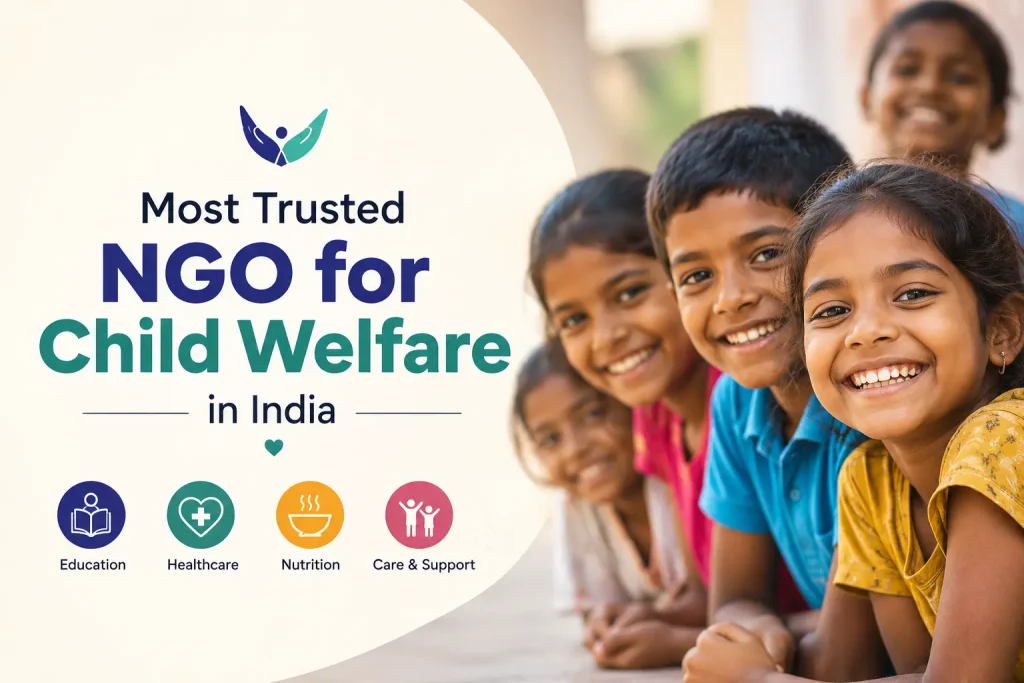
Child welfare is a system of laws and social programs made for the protection of children and their rights. These programs and legal activities run for the emotional, financial, social, and physical well-being.
India has come a long way on this front over the last couple of decades. But the gap hasn’t closed. Spend ten minutes walking through any slum, or stop at a dhaba off the highway, and you will see kids working who should be sitting in a classroom instead.
Government schemes exist on paper, but a family that’s struggling to eat two meals a day rarely has the time or knowledge to access them.
That’s the gap NGO are trying to fill – not replacing the government’s job, just doing the on-ground work that bureaucracy is too slow or too distant to do.
And this is not charity in the old sense of just giving something away. A child who finishes school grows into someone who pays taxes, votes, a parent who will do better by their own kids tomorrow. This process will just keep going.
What Makes an NGO the Most Trusted for Child Welfare in India?
Here‘s the real answer: there’s no single “most trusted NGO in India” badge that gets handed out. Anyone claiming that title outright should make you a little suspicious. What you can do instead is check for a few concrete things before you donate.
Does the NGO publish its financial details like actual audited numbers, not just glossy annual reports with photos? Is it registered under FCRA( needed to receive foreign funds), and does it have 80G status ( so your donation gets you a tax deduction)? Can you find its programs running somewhere specific, a school, a shelter, a health camp, rather than vague claims of “impact across India?”
One more thing worth checking: how long has it been around, and does its work show a pattern of follow-through rather than one-off events for photo opportunities? A feeding drive that happens once during a festival looks nice on Instagram. A nutrition program that’s been quietly running in the same three districts for eight years is the one actually changing outcomes. Spend 15 minutes on an NGO’s website and annual report before you donate. It’s a small effort compared to what your money is meant to do.
One NGO worth knowing about here is Narayan Seva Sansthan, based in Udaipur, Rajasthan. It was founded in 1985 by Kailash “Manav” Agarwal. He was honoured by Padma Shri for his humanitarian work,, and it has grown into one of the more established, trusted NGOs in India, with over 480 branches across the country. Its core focus has been differently abled and underprivileged children – free corrective surgeries, prosthetic limbs, and rehabilitation for kids born with conditions like cerebral palsy who would otherwise never get treated. Alongside this, it runs the Narayan children academy provide free digital education to children from low-income families, along with a residential care setup providing food, health support, and schooling for orphaned and underprivileged children. If you are looking at a child’s education NGO or a place to make an online donation for children with a mutli decades track record rather than a couple of years, it’s one worth reading up on directly.
Join the Mission to Support Child Welfare Across India
You don’t need to be wealthy to be part of this. A lot of people assume donating means writing a big cheque once a year, but the NGOs doing the steadiest work usually run on small monthly contributions from ordinary people – ₹500 here, ₹1000 there, month after month.
That kind of giving is actually more useful to an organization than a one-time lump sum, because it lets them plan. They can commit to a child’s school fees for the full year instead of a random payment. This is what a real child education donation looks like.
And it’s not only about money. Talk to people around you about it. Share a genuine NGO’s work instead of a random forward. If you have time, volunteer at a shelter on the weekend.
Make a Meaningful Difference Through Compassion and Action
Feeling bad about a problem isn’t the same as fixing it, even if it seems that way at the time. Only one of them helps a child. Giving even a small, specific amount, say a term’s school fees, or the cost of one health checkup, is what turns that vague discomfort into something that actually moves the needle. That’s the real difference between wanting to support poor children and actually doing it.
Every Child Deserves Education, Healthcare, and Protection
This should not need saying, but it does: no child should have to pick between a classroom and a job to keep their family fed. That’s not a choice a nine-year-old should ever be making.
Education is the obvious one – it changes the trajectory of a whole family, not just one child. But healthcare matters just as much and gets talked about far less. A child who keeps missing school because of untreated illness never gets the benefit of that education anyway. And then there is protection from abuse, from trafficking, from being pulled into labour before they are old enough to understand what’s happening to them. All three have to work together, or more of them really work together.
Start Your Journey of Giving Today
You don’t need the perfect NGO or the perfect amount to start. Choose one that’s transparent about its work, start with whatever you are comfortable giving, and let it run for a few months before deciding whether to continue or switch. Set up a recurring donation if you can – it takes the decision-making out of it and means the NGO is not left guessing month to month. Whether its one time donation for poor child support or a monthly commitment. The point is just beginning.
Conclusion:
There’s no shortage of children in India who need someone to show up for them. There is a shortage of people willing to check where their money actually goes before they give it. Do that homework once, find a children’s charity in India, whose work you can verify, and then just keep showing up for it; that’s really the whole formula. Nothing dramatic, just consistency, aimed at kids who deserve exactly that.

In the year 2026, Shradh Paksha (Pitru Paksha) will begin on 26 September 2026 and end on 10 October 2026 with Sarva Pitru Amavasya. During this sacred period, followers of Sanatan Dharma can perform Shradh, Tarpan and other rituals for their ancestors according to the respective tithi.
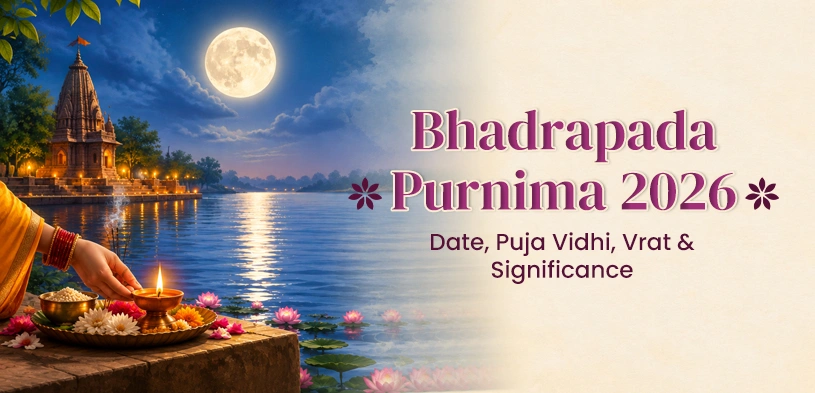
Bhadrapada Purnima 2026 falls on September 26. Discover its date, puja vidhi, vrat, Satyanarayan worship, Chandra Dev prayers, and the spiritual significance of charity and service.

Bhadrapada Amavasya holds special spiritual significance in the Hindu Panchang. This sacred day is considered highly auspicious for self-reflection, remembering ancestors, offering Tarpan, taking a holy bath, and performing charity.