- +91-7023509999
- 0294-6622222
- info@narayanseva.org
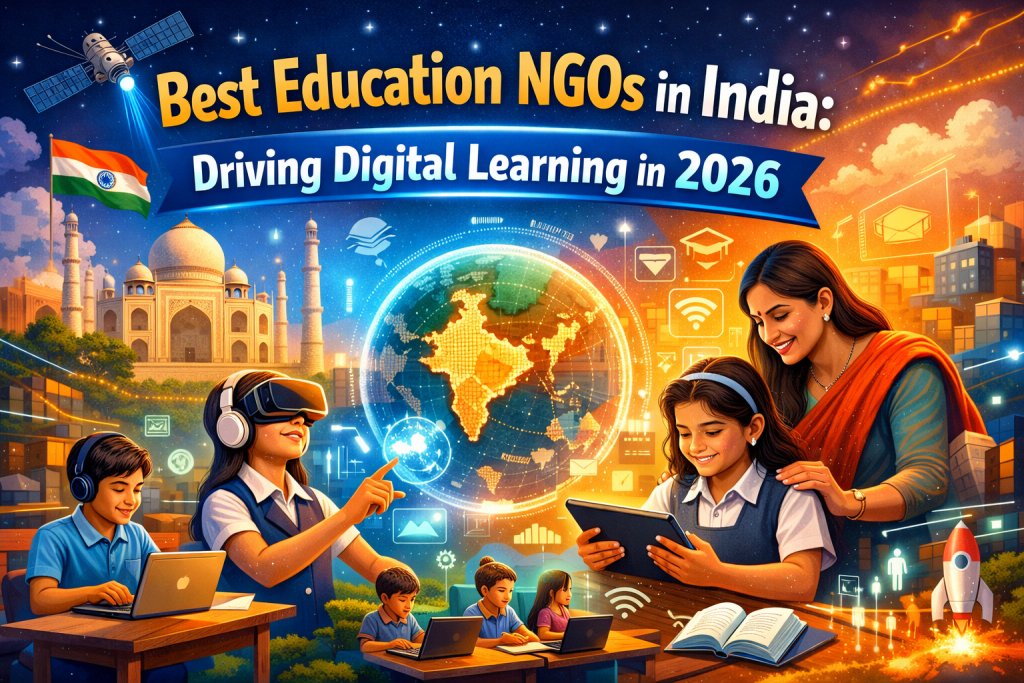
In 2026, digital learning in India is no longer a luxury. It has become a necessity. Technology is transforming education across the country—from major cities to remote villages. It is reshaping how students learn, how teachers teach, and how communities stay connected with schools.
Nonprofits and best education ngos are playing a vital role in making digital education accessible to underprivileged and differently-abled children.
While government programs provide some support, many top education NGOs in India are independently working to close the learning gap. They improve access through smart classrooms, digital content, teacher training, and community engagement.
India has one of the largest student populations in the world. Digital learning has become a powerful tool for democratizing quality education. However, more than 260 million students still face challenges in accessing consistent learning opportunities.
In rural and remote areas, poor infrastructure remains a major barrier. Limited road connectivity, a shortage of trained teachers, and lack of resources prevent students from receiving quality education.
Digital learning platforms address these challenges through personalized AI-based learning, engaging visual content, and structured curriculum support.
These tools also support students with disabilities and expand access to education in remote communities. Top Education ngos are now key drivers of this grassroots transformation.
Not every NGO succeeds in implementing digital learning initiatives. The most effective organisations share a few common characteristics:
Successful top education ngos use technology designed for low-resource environments. These tools work with low bandwidth and often function offline, making them suitable for areas with unstable internet connectivity.
Effective organisations go beyond distributing devices. They train teachers, volunteers, and parents, creating a sustainable ecosystem driven by the community.
Leading NGOs design tools that support children with disabilities and first-generation learners, ensuring no child is left behind.
Successful models can expand efficiently and integrate with government school systems, making them sustainable and cost-effective.
Pratham continues to lead innovation in education through its Hybrid Learning model. This combines low-cost tablets with community learning hubs, extending education beyond classrooms.
The organisation also promotes computer literacy, digital skills, and vocational training through accessible e-learning modules.
Narayan Seva Sansthan integrates digital learning with inclusive education for underprivileged children.
In 2026, the organisation is expanding smart classrooms equipped with assistive technologies, digital boards, and adaptive tools for children with physical disabilities.
It also provides multilingual digital content, improving accessibility and reducing dropout rates in rural areas.
Teach For India emphasizes technology-enabled leadership. Fellows use data analytics and blended learning methods to track and improve student performance.
The foundation focuses on teacher empowerment. Its initiatives have digitised educational processes and trained thousands of educators in digital teaching methods.
NIIT Foundation promotes digital literacy through initiatives like the “Digital Bus,” which delivers mobile computer labs to rural areas.
Its programs focus on practical job-ready skills such as IT support, data entry, and design.
Through its “Shiksha Na Ruke” initiative, Smile Foundation provides tablets with preloaded content, radio-based learning, and mental health support.
Rural schools are increasingly adopting digital tools. Traditional chalkboards are being replaced with digital screens, making learning more interactive and engaging.
Smart classrooms help address teacher shortages by delivering expert-led lessons to remote areas, ensuring equal access to quality education.
The success of digital education lies in combining technology with human compassion. Organisations like Pratham and Narayan Seva Sansthan demonstrate this balance effectively.
By 2030, nearly half of India’s government schools are expected to adopt smart classroom infrastructure. This shift could significantly reduce dropout rates and improve student engagement.
The future of education in India is already unfolding. With continued efforts, millions of children will gain access to better learning opportunities.

In the year 2026, Shradh Paksha (Pitru Paksha) will begin on 26 September 2026 and end on 10 October 2026 with Sarva Pitru Amavasya. During this sacred period, followers of Sanatan Dharma can perform Shradh, Tarpan and other rituals for their ancestors according to the respective tithi.

Bhadrapada Purnima 2026 falls on September 26. Discover its date, puja vidhi, vrat, Satyanarayan worship, Chandra Dev prayers, and the spiritual significance of charity and service.

Bhadrapada Amavasya holds special spiritual significance in the Hindu Panchang. This sacred day is considered highly auspicious for self-reflection, remembering ancestors, offering Tarpan, taking a holy bath, and performing charity.