- +91-7023509999
- 0294-6622222
- info@narayanseva.org
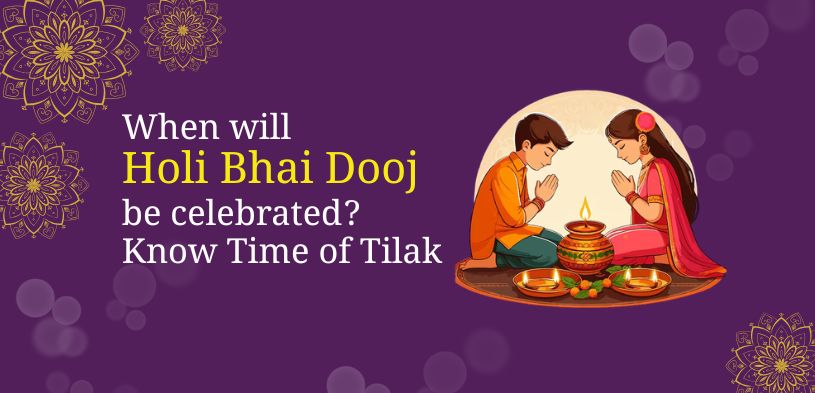
As the joyous spirit of Holi slowly subsides, the unbridled splash of colors fades into memory, and the fragrance of abir and gulal lingers in the air, the eternal tradition welcomes another sacred festival, known to us as Bhai Dooj. It celebrates the pure and spiritual love between brothers and sisters. While Holi fills life with the colors of love, Bhai Dooj binds that love with blessings and intimacy.
Bhai Dooj is also known as ‘Bhratri Dwitiya’ and ‘Yama Dwitiya. ‘This festival is celebrated on the second day of the bright fortnight of the Chaitra month. ‘Dwitiya’ means the second day of the lunar month, which is considered auspicious and auspicious. This day holds a special energy of brother-sister love.
In Sanatan Dharma, a sister is considered a motherly figure. Just as a mother prays for the well-being of her son, on this day, a sister vows to ensure her brother’s long and prosperous life. Through tilak (a mark of rice grains), roli (rice flour), and the light of a lamp, she marks her love and well-wishes on her brother’s forehead.
According to the Drik Panchang, the second day of the Shukla Paksha (waxing phase) of the month of Chaitra will begin at 4:48 pm on March 4, 2026, and conclude at 5:03 pm on March 5, 2026. The Sanatan tradition recognizes the “Udayatithi” (the rising date), so in 2026, Holi Bhai Dooj will be celebrated with reverence and joy on Thursday, March 5.
The significance of Bhai Dooj is also mentioned in the Puranas. The most famous story associated with this festival is that of Yamraj, the son of the Sun, and his sister Yamuna.
It is believed that Yamraj loved his sister Yamuna very much, but due to his busy schedule, he was unable to meet her for a long time. One day, Yamuna lovingly invited her brother. On the second day of Chaitra Shukla Paksha, Yamraj arrived at his sister’s house. Yamuna welcomed him with due ceremony, applied tilak (a mark of the moon), performed aarti (an auspicious ritual), and treated him to various dishes.
Overwhelmed by his sister’s love and respect, Yamraj granted a boon: “Any brother who visits his sister’s house on this day and receives tilak (a mark of the moon) will not fear untimely death and will attain happiness and prosperity.” Since then, this festival has been celebrated as a symbol of the unbreakable love and protection between brothers and sisters.
1. Tilak and Aarti
After bathing in the morning, sisters decorate a puja plate. Turmeric, rice grains, a lamp, and sweets are placed on it. At an auspicious time, the brother is seated on a seat, and a tilak is applied, followed by an aarti.
2. Chanting and Prayers
In some places, special mantras are chanted. The sister prays for her brother’s well-being and wishes for his life to always attain the four goals of life: Dharma, Artha, Kama, and Moksha.
3. Sweets and Dishes
Traditional dishes are prepared in homes on this day, including Gujiya, Malpua, Kheer, and Puri.
4. Gifts and Blessings
After applying the tilak on the forehead, the brother gives gifts to his sister and wishes her a happy life.
Bhai Dooj is not just a tradition but an invaluable heritage of Sanatan culture. It is a sacred celebration of the love, trust, and devotion between brothers and sisters. When a sister applies tilak on her brother’s forehead, she ignites happiness, peace, and prosperity in his life.
On this auspicious Bhai Dooj, let us deeply experience the sweetness of our relationships. May a sister’s love and a brother’s protection always remain; with this auspicious wish, may this sacred festival fill all our lives with joy, health, and spiritual progress.
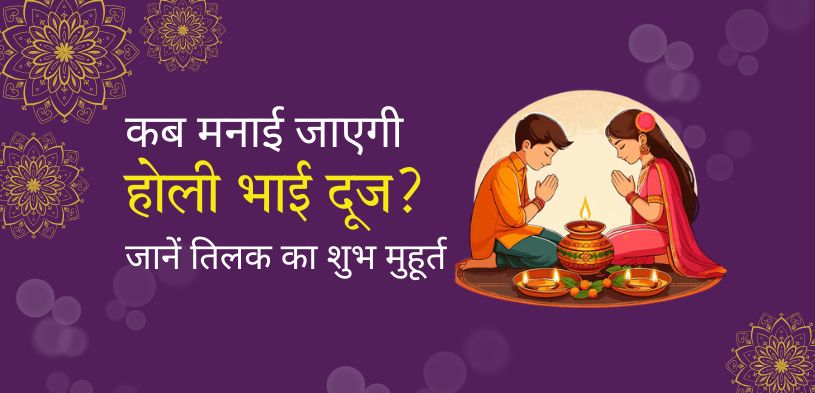
होली भाई दूज बहन और भाईचारे के प्यार का त्योहार है। इसका धार्मिक महत्व और अहमियत जानने के लिए, हम इसे मनाने का समय, तारीख और इसके असली मतलब के बारे में विस्तार से बताने जा रहे हैं।
होली 2026 पर चंद्रग्रहण का साया! जानें 3 मार्च को ग्रहण का सही समय, सूतक काल और 4 मार्च को मनाई जाने वाली धुलंडी व रंगों के उत्सव का पूरा विवरण।
Celebrate the Festival of Colors on Phalgun Purnima with joy, unity, and compassion. Know the exact Holi 2026 date, time, and shubh muhurat, and discover how Narayan Seva Sansthan turns colors into seva through food donation and disability support.