In Indian culture, every festival symbolizes both a celebration and a spiritual message and a philosophy of life. Holi (Festival of Colors) is one such sacred festival, considered a wonderful confluence of colors, joy, and devotion. Celebrated on the full moon day of the month of Phalgun, this festival is not merely a celebration of external colors, but an opportunity to color the inner self with love, compassion, and harmony.
On March 3rd, a lunar eclipse will take place. This raises a major question: when should we play with colors?
According to astrology, the Sutak period begins nine hours before the eclipse. People typically avoid religious celebrations during this time. Therefore, we will celebrate Holi 2026 on March 4th. Following the scriptures, devotees can play with colors once the eclipse ends; thus, the public will celebrate Dhulandi on March 4th.
According to the almanac, this time a lunar eclipse will also occur along with Holi, which will be visible in India. Therefore, the eclipse’s Sutak period will also be in effect throughout India. According to Indian Standard Time, the lunar eclipse will begin on March 3rd at 3:20 pm and end at 6:47 pm. The total duration of this lunar eclipse will be visible for 3 hours and 27 minutes.
Holi honors the story of the devotee Prahlad and his father, Hiranyakashipu. Hiranyakashipu, a demon king, arrogantly declared himself God. However, his son Prahlad remained an ardent devotee of Lord Vishnu. Despite his father’s numerous tortures, Prahlad never wavered in his faith. Eventually, Hiranyakashipu’s sister Holika—who possessed a boon protecting her from fire—sat in the flames with Prahlad in her lap.
In a divine act of justice, the fire burned Holika to ashes while Prahlad emerged unharmed. We celebrate Holika Dahan to honor this victory. This ritual does not just burn wood, cow dung cakes, and sticks; it destroys our ego, anger, jealousy, and sinful tendencies.
People play with colors on the second day of Holika Dahan. This day symbolizes social harmony and mutual love. Everyone discards differences of age, wealth, caste, and creed to apply colors to one another. Within the Sanatan tradition, this festival holds special significance in the Braj region. The world-famous Lathmar Holi of Vrindavan and Barsana commemorates the divine pastimes of Radha and Krishna, which still live on today in the streets of Braj and throughout India.
Holi offers more than just colors; it also features a feast of delicacies and sweets. Every household prepares a variety of dishes to celebrate the occasion. Let’s explore some of the special treats people make for this festival:
Gujiya: This special dish completes the festival. Almost every household in India prepares Gujiya, and people love sharing these sweets while playing with colors.
Dahi Bade: This festive staple makes the celebration feel whole. Families in Braj specifically prepare this dish during the festivities.
Gulab Jamun: This famous Indian sweet brings life to the festival. Every household includes these in their Holi celebrations. Family members relish this sweet and serve it to guests who join the festivities.
In addition to these treats, Gathiya, salty Puris, and Malpuas enhance the flavor of this festival.
1. Lathmar Holi of Braj (Barsana and Nandgaon)
The world recognizes Lathmar Holi as a famous tradition. This celebration symbolizes the divine love between Lord Krishna and Radha. Tradition holds that Krishna traveled to Barsana to play Holi with his friends, where Radha and her friends playfully stopped him with sticks. Today, locals still recreate this event. Women beat men with sticks, while men protect themselves with shields. Fun and traditional songs fill the entire celebration.
2. Phool Holi (Vrindavan, Uttar Pradesh)
Devotees celebrate Phool Holi on Ekadashi at the Banke Bihari Temple in Vrindavan. People use fresh flower petals here instead of chemical colors or gulal. Temple priests shower flowers onto the crowds, while devotees toss flowers and gulal toward the deity.
3. Dhulandi and Dolchi Holi (Rajasthan)
Communities primarily celebrate this in the areas surrounding Jaipur, Udaipur, and Kota. On this day, people drench each other with abir-gulal and watercolors. Groups march through city and village streets with drums and cymbals, shouting “Holi Hai!” In the Marwar region, locals wear traditional clothing and dance to drum beats. During Bikaner’s Dolchi Holi, people pour water over one another from specially designed leather bowls.
4. Hola Mohalla (Punjab)
The Sikh community in Punjab celebrates Hola Mohalla as a symbol of bravery. Guru Gobind Singh Ji started this tradition to develop military skills and valor among Sikhs. Today, Nihang Sikhs demonstrate horse riding, sword fighting, and martial arts at this massive fair in Anandpur Sahib.
5. Rangpanchami (Maharashtra and Madhya Pradesh)
People especially celebrate Rangpanchami in Maharashtra and parts of Madhya Pradesh. The Malwa region hosts large celebrations on this day. The world-famous Rangpanchami ‘Gair’ procession at the Rajwada in Indore draws huge crowds. During the festivities, machines spray water onto the streets as people immerse themselves in colors.
6. Baithaki and Khadi Holi (Kumaon, Uttarakhand)
Villagers primarily celebrate ‘Baigwal’ or Kumaoni Holi in the Kumaon region of Uttarakhand. Music plays the starring role here. In this tradition, Holi is not just a one-day event but a month-long musical celebration. Residents gather in their homes to sing Pahari Holi songs. Villagers also wear traditional costumes and dance in circles during the musical sessions.
In today’s times, while celebrating Holi, we should also be mindful of the environment. Use natural and herbal colors instead of chemical dyes. Conserve water and make this festival pure, dignified, and joyful.
This festival is not just a festival of colors but a festival of self-purification and love. No matter how difficult the circumstances in life, if we have the light of devotion and truth in our hearts, no Holika can burn us. On this auspicious occasion, offer your innermost evil to Holika and illuminate your life with the colors of love, forgiveness, and harmony.
Ans: We will celebrate Holi on March 4th.
Ans: The lunar eclipse will take place on March 3rd, 2026.
Ans: The lunar eclipse will occur from 3:20 PM to 6:47 PM on March 3rd, 2026.
Ans: We will celebrate Dhulandi, the Festival of Colors, on March 4th.
Ans: Traditional Holi foods include sweet treats like gujiya, malpua, and thandai, along with savory snacks like dahi bhalle and kachori. At Narayan Seva Sansthan, we share these festive delights to bring smiles and nourishment to the underprivileged.
Ans: Holi is India’s vibrant Festival of Colors, celebrating love, spring, and the victory of good over evil with colorful powders (gulal) and joy. Narayan Seva Sansthan embraces this spirit to unite communities and support the differently-abled with love and care.
Ans: Due to the lunar eclipse on March 3, 2026, many people are confused about the correct Holi date.
Holika Dahan will be performed on March 3, 2026, after sunset during Pradosh Kaal.
Dhulandi (Festival of Colors) will be celebrated on March 4, 2026, after the eclipse ends and the Sutak period concludes.
Therefore, people will play with colors on March 4, 2026.
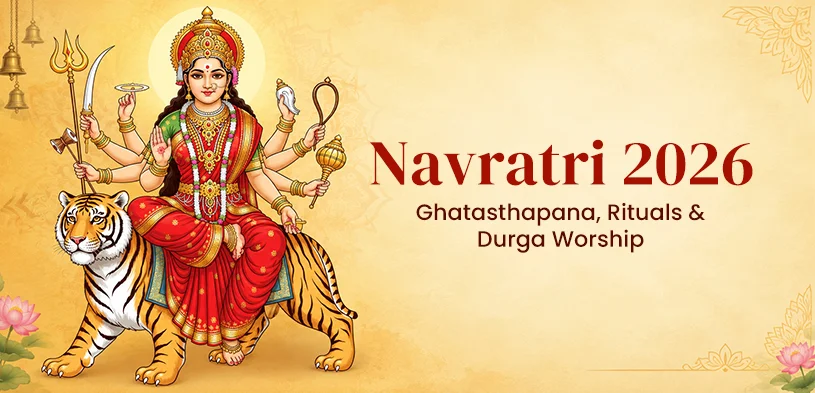
Sharadiya Navratri 2026 begins 11 October with Ghatasthapana and concludes with Dussehra on 20 October. Get the full Ghatasthapana Muhurat, day-wise Durga Puja calendar, colours, and puja vidhi inside.
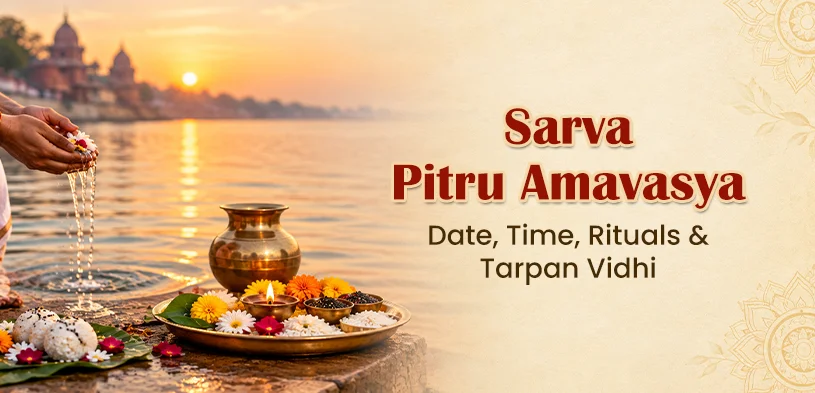
The last day of Pitru Paksha is known as Sarva Pitru Amavasya. This Amavasya is considered especially significant for remembering all known and unknown ancestors whose Shradh date may not be known or whose Shradh could not be performed on the prescribed tithi for some reason.
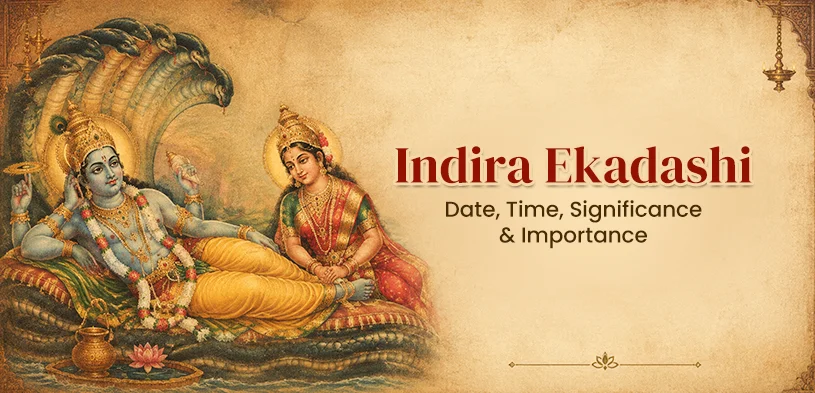
Indira Ekadashi, which falls during the Krishna Paksha of the Ashwin month, is one such meritorious tithi. As it occurs during Pitru Paksha, this day is specially associated with the worship of Lord Vishnu along with feelings of reverence and righteous deeds.