Giving to charity feels good. Did you know it can also help you save on taxes?Many people support causes they care about. They may not know this can also lower their tax bill. In this blog, we’ll cover all you need to know about the tax benefits of charitable giving. It’s simple and easy to understand.
A tax-deductible donation is money you give to a qualified group. In return, the government permits you to lower your taxable income by that amount.
Not every donations qualifies, though.To get a tax benefit, your donations must go to a charity. This charity must be recognised by the government as legitimate. Personal gifts to friends or family do not count. Neither do donations to political parties or candidates.
The types of contributions that can qualify include cash, cheques, online transfers, physical good like clothing or furniture, share and securities, and even certain out of pocket express when you volunteer for a registered charity.
When you file your taxes, you list your income. The government then allows you to subtract certain expenses from that income , these are called deductions. Charitable donations are one such deduction. Here is a basic example. Say you earn.
Here’s a basic example. If you earn ₹1,000,000 a year, you can donate ₹50,000 to a registered charity. This lets you deduct ₹25,000 from your taxable income. This makes your taxable income ₹975,000. If you donate to an organization with a 100% deduction, you can deduct the full ₹50,000.
In india laws, section 80G of the income tax act govens these deductions. Depending on the charity, you can claim either 50% deduction or 100% deduction, sometimes with a limit and sometime without. In other countries like the US or UK, similar rules apply through their respective tax codes. The key takeaway is that every eligible rupee or dollar you donate can lower the amount of income on which you are taxed.
Not every organization that calls itself a charity is recognized for tax purposes. To get a deduction, you must donate to an organization that holds official approval from the tax authority.
In india, Look for organizations registered under section 80G or section 12A of the income tax act.
In the US, search for 501(c)(3) organisations. In the UK, charities must register with the Charity Commission. How can you check?
It is easier than you think. In india, you can ask the organization for their 80G certificate or check up the income tax Departments website. In the US, the IRS has a free online tool called TAX exempt organization search. Most legitimate charities wil also display their registration details on their website.
When in doubt,ask the charity directly. Any organization will be happy to share proof of their status.
This where many people dont have proper information about paperwork. If you dont have full information you cannot claim your deduction.
Here is what you need to know about documents:-
Best way to manage documents make a simple folder physical or digital where your store all donation related documents within the year. Doing this as you go saves a lot of stress during tax season.
Tax savings are a nice bonus. But the real strength of charitable giving is the positive change it brings to our world. When you donate, you help a hospital or charity. You make it possible for someone to get treatment they can’t pay for. When you support an education charity, you give a child a chance at a better future. When you support a community development organisation, you help build things. You create jobs and make lives better. These areas often get ignored.
The ripple effect of giving is very big. A single donation can fund meals for families. It can also provide scholarships for students or clean water for villages over time. Regular donations from individuals and businesses bring lasting change. They help people in need. They also support the whole community and economy.
Charitable giving doesn’t need to be an afterthought. With a bit of planning, it can be a natural part of your financial management.
Charitable giving is one the rare things in life where everyone wins. You get to support causes that matter, enjoy real tax savings,and contribute to a better society – all at the same time.
The process is simpler than most people think. Find a registered charity organization, donate via a proper medium, keep your receipt, and clai your deduction at tax time. That is really all there is to it.
Whether you give a little or a lot. What matters most is thaat you start. Your contribution, no matter the size, has the power to make a real difference and now you know it can also make a difference to your tax bill.
So give thoughtfully, give consistently, and let your generosity work double duty for you and for the world.
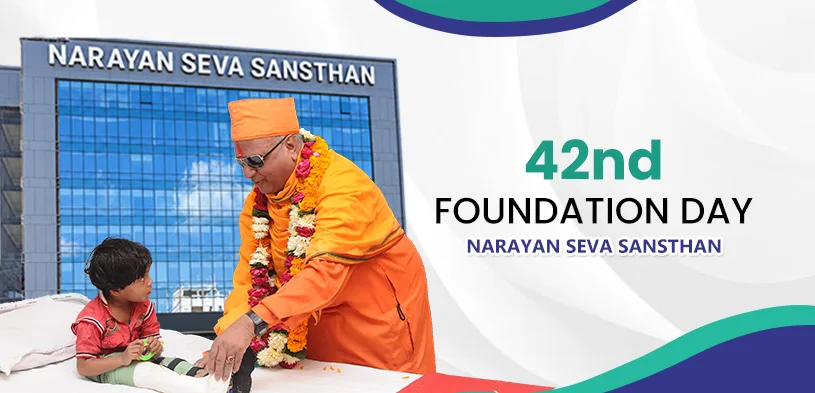
The guiding motto of Narayan Seva Sansthan is “Nar Seva Hi Narayan Seva”. This belief lies at the heart of every service initiative undertaken by the organization.

Full moon of Ashwin month, known as Sharad Purnima, Kojagari Purnima, and Raas Purnima, holds a special place because of its religious and spiritual significance. It is associated with Lord Shri Krishna’s divine Raas Leela, worship of Goddess Lakshmi

According to the Hindu calendar, Dussehra, also known as Vijayadashami, is celebrated on the tenth day of the Shukla Paksha, or waxing phase of the Moon, in the month of Ashwin.