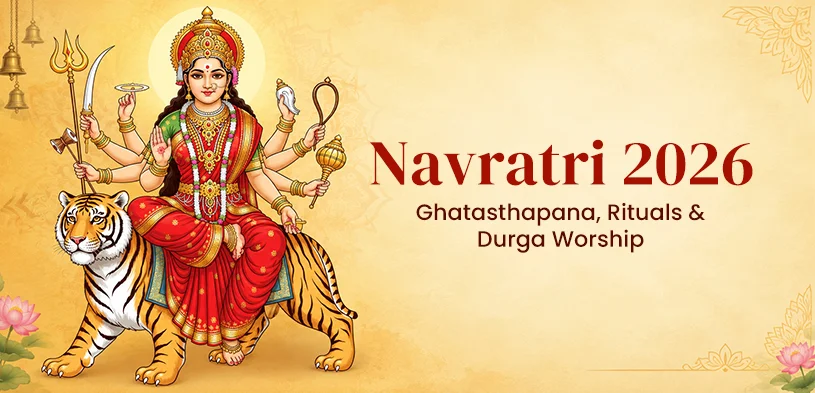
As the coolness of the autumn season begins to fill the air, the sacred festival of Sharadiya Navratri brings a message of devotion, strength and spiritual growth. This nine-day festival is dedicated to the worship of the nine forms of Goddess Durga and gives devotees an opportunity for inner purification. During these days, devotees pray to the Goddess and make their lives more positive and disciplined through fasting, worship, chanting, recitation, fire rituals and service.
The Devi Mahatmya describes the glory of the Goddess with these words:
Ya Devi Sarvabhuteshu Shakti Rupena Samsthita.
Namastasyai Namastasyai Namastasyai Namo Namah॥
This means we bow again and again to the Divine Mother, who lives in all beings in the form of divine power. This divine power inspires devotion, inner strength and positive thoughts in devotees throughout Navratri.
Sharadiya Navratri 2026 will begin on October 11, 2026. The festival will end on October 20, 2026, with the sacred occasions of Mahanavami and Vijayadashami. The Pratipada Tithi of the Shukla Paksha of the Ashwin month will begin at 9:19 PM on October 10 and end at 9:30 PM on October 11.
The worship of Goddess Durga begins on the first day of Navratri with Ghatasthapana. The Kalash is considered a symbol of divine power. Through its installation, devotees invite the blessings and presence of the Goddess into their homes.
Ghatasthapana Muhurat: 6:19 AM to 10:12 AM
Ghatasthapana is traditionally performed during an auspicious time with proper rituals and devotion.
Each of the nine days of Navratri is dedicated to a different form of Goddess Durga. The first day is dedicated to Goddess Shailputri, the second to Goddess Brahmacharini, the third to Goddess Chandraghanta, the fourth to Goddess Kushmanda, the fifth to Goddess Skandamata, the sixth to Goddess Katyayani, the seventh to Goddess Kaalratri, the eighth to Goddess Mahagauri and the ninth to Goddess Siddhidatri.
Each form of the Goddess has its own importance. Some forms represent spiritual practice and devotion, while others represent courage and protection from fear. Some reflect the love and compassion of a mother, while others represent the power to destroy evil. Therefore, Navratri is not only a festival of worship. It is also a time to recognise the strength within ourselves.
Goddess Durga is worshipped as the supreme divine power, the Divine Mother and the force that protects and sustains the world. The Durga Saptashati praises the Goddess with these words:
Sarva Mangala Mangalye Shive Sarvartha Sadhike.
Sharanye Tryambake Gauri Narayani Namostute॥
This means: O Goddess, you are the source of all that is auspicious and the giver of well-being. You fulfil the wishes of your devotees and provide them with protection. O Divine Mother, we bow to you.
Navratri teaches us the importance of surrender and faith. When we place our fears, worries and ego at the feet of the Goddess, we gain greater confidence and inner strength. According to religious beliefs, Goddess Durga defeated the demon Mahishasura and protected righteousness.
The story of Goddess Durga and Mahishasura teaches us that when evil and pride grow, divine power destroys them and restores righteousness.
Therefore, the nine days of Navratri are also seen as a time to overcome anger, greed, attachment, ego and negative thoughts within ourselves.
Many devotees observe fasts during Navratri according to their faith and ability. Fasting is not only about avoiding certain foods. It is also a way to control the mind and senses.
During these days, devotees traditionally eat pure vegetarian food, remember God, avoid lies and harsh words, and help people in need. The true purpose of Navratri is to turn the mind away from negative thoughts and focus it on devotion to the Goddess.
There is a special tradition of worshipping young girls on Ashtami and Navami. Young girls are considered forms of Goddess Durga and are worshipped with devotion. They are offered food along with clothes, fruits, gifts and monetary offerings.
Kanya Pujan reminds us that divine feminine power is not limited to the idols worshipped in temples. It is also present in every girl and woman. Helping people in need, donating food, serving those who are helpless and bringing hope into someone’s life are also meaningful ways of worshipping the Goddess.
According to the Sanatan tradition, worshipping Goddess Durga also means serving young girls who are considered forms of the Goddess. On the sacred occasion of Sharadiya Navratri, Narayan Seva Sansthan has taken a resolve to provide free surgeries to 501 innocent girls with disabilities and bring new hope into their lives.
These young girls face many challenges because of physical disabilities. Your support can help them improve their mobility, become more independent and move forward in life with dignity.
This Navratri, along with worshipping the Divine Mother, take a resolve to bring happiness and hope into the lives of these young girls. Your support can give a girl a new opportunity in life and make your devotion more meaningful through the spirit of service.
Q: When will Sharadiya Navratri 2026 begin?
A: Sharadiya Navratri 2026 will begin on October 11, 2026.
Q: When will Ghatasthapana be performed during Sharadiya Navratri 2026?
A: Ghatasthapana will be performed on October 11, 2026. The auspicious time is from 6:19 AM to 10:12 AM. The Abhijit Muhurat will be from 11:44 AM to 12:31 PM.
Q: When will Sharadiya Navratri 2026 end?
A: Sharadiya Navratri 2026 will end on October 20, 2026, with Mahanavami.
Q: Which nine forms of Goddess Durga are worshipped during Navratri?
A: The nine forms of Goddess Durga worshipped during Navratri are Shailputri, Brahmacharini, Chandraghanta, Kushmanda, Skandamata, Katyayani, Kaalratri, Mahagauri and Siddhidatri.
Q: What materials are needed for Ghatasthapana during Navratri?
A: The main materials generally needed for Ghatasthapana are a Kalash, water, betel nut, coin, mango leaves, coconut, red cloth, uncooked rice grains, barley or wheat and other worship materials.
Q: What is considered auspicious to donate during Navratri?
A: Along with worship, Navratri is considered a good time for charity and service. Providing food, clothes, education or other necessary support to people in need is considered a virtuous act.
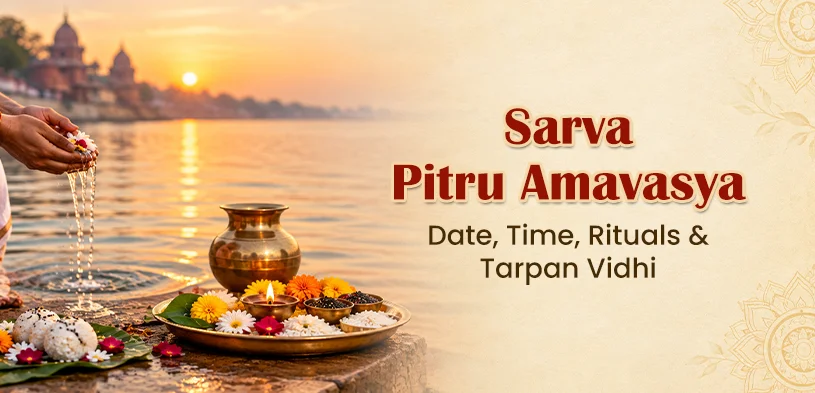
The last day of Pitru Paksha is known as Sarva Pitru Amavasya. This Amavasya is considered especially significant for remembering all known and unknown ancestors whose Shradh date may not be known or whose Shradh could not be performed on the prescribed tithi for some reason.
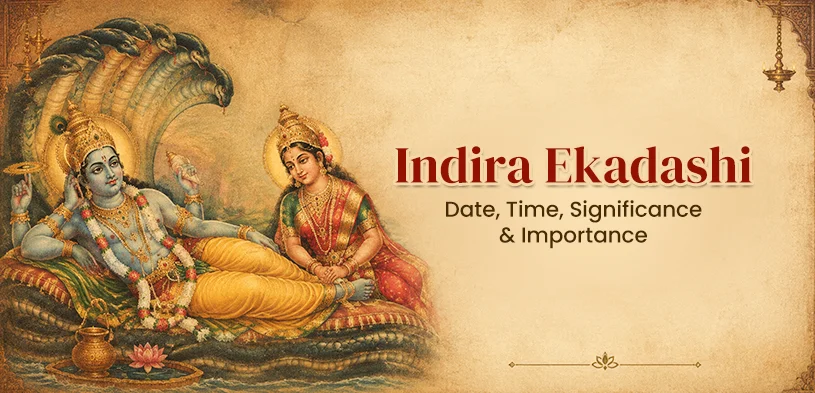
Indira Ekadashi, which falls during the Krishna Paksha of the Ashwin month, is one such meritorious tithi. As it occurs during Pitru Paksha, this day is specially associated with the worship of Lord Vishnu along with feelings of reverence and righteous deeds.
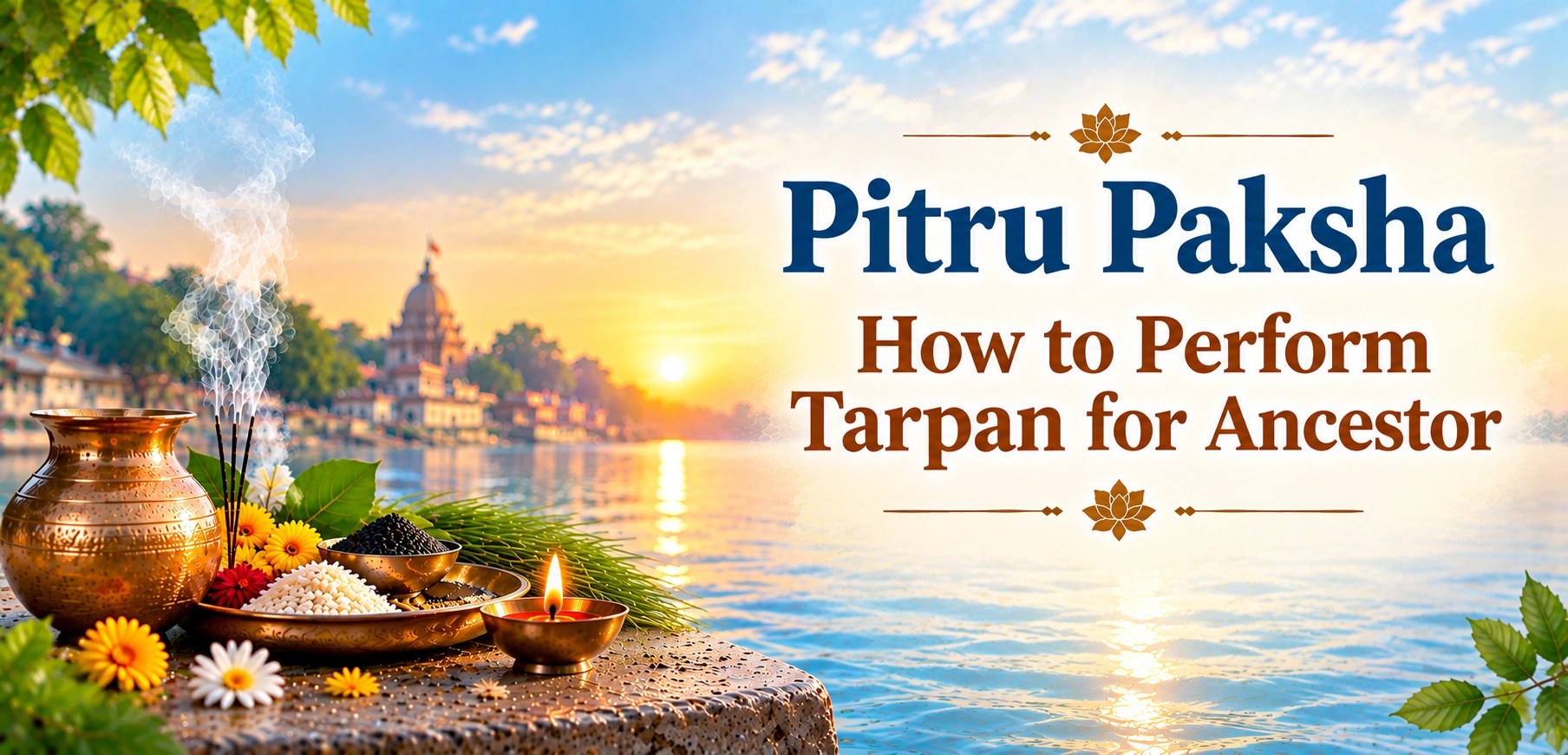
Our ancestors laid the foundation of the family through their lives, austerities, values, and good deeds. Pitru Paksha is the sacred opportunity to express reverence and gratitude towards them.