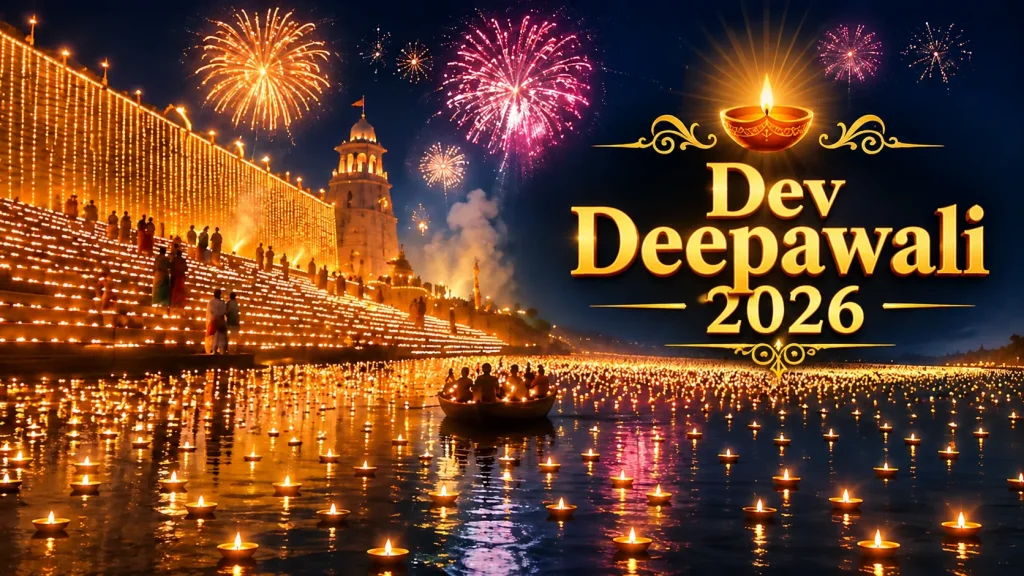
Close your eyes for a moment and imagine a scene…
A velvety autumn evening is drawing to a close. In the sky, the moon—radiant in its full, sixteen-phased glory—scatters its milky moonlight. Below, along the seven-kilometer stretch of the crescent-shaped ghats of Kashi, millions of earthen lamps flicker into life simultaneously. As these lamps, set in leaf-bowls, drift upon the tranquil waves of the Ganga, it appears as though the stars themselves have left the heavens to rest in the lap of Mother Ganga. The profound resonance of conch shells, the rhythmic beat of the damru, and the echoing chants of Vedic mantras fill the air—mingled with the sacred fragrances of sandalwood, frankincense, and pure desi ghee.
This is no mere dream; this is Dev Deepawali—an ethereal night when the gates of heaven swing open, and the deities of the cosmos descend to Earth, assuming human form to celebrate Deepawali.
While Deepawali is a celebration of triumph over the profound darkness of the amavasya, Dev Deepawali is a celebration of the radiant peak of the purnima- a moment where human devotion and divine grace embrace.
What is it about this night that compels the gods themselves to leave the comforts of heaven and descend upon the steps of Kashi’s ghats? The answer lies in the ancient Puranas, in a grand saga where Dharma dismantled the ultimate fortress of ego.
The legend speaks of three formidable asura brothers—Tarakaksha, Kamalaksha, and Vidyunmali. Through intense penance, they pleased Lord Brahma and were granted three invincible cities—collectively known as Tripura—crafted from gold, silver, and iron, which drifted across the heavens in different directions. The boon granted was that their destruction would be impossible unless all three cities aligned perfectly and were pierced by a single arrow.
Panic spread across the three worlds. It was then that Mahadeva—the Lord of Lords—assumed his fierce, Raudra form. He transformed the Earth into a chariot, the Sun and Moon into its wheels, the Vedas into horses, and Mount Sumeru into a bow. As soon as the three cities aligned on the day of Kartika Purnima, Mahadeva used his infallible arrow to reduce ‘Tripura’—the three cities—to ashes.
To celebrate this monumental destruction of unrighteousness, the gods descended from the heavens to the banks of the Ganges in Kashi, where they lit millions of diyas and honored Mahadeva. Ever since, this night has been etched in golden letters as ‘Tripurari Purnima’ and ‘Dev Deepavali.’
Our sages have accorded the month of Kartika the highest status among the twelve months of the year. In the Skanda Purana, a profound verse extols the glory of this month:
Na Kartikasamo maso na kritena samam yugam.
Na vedasadrisham shastram na tirtham gangaya samam.
Meaning: There is no month equal to Kartika, no era equal to the *Satya Yuga*, no scripture equal to the Vedas, and no sacred pilgrimage site equal to the Ganges.
This is also the sacred occasion when Lord Shri Hari Vishnu incarnated as Matsya to rescue the Vedas and the entire creation from the ocean of cosmic dissolution. On one side lies the destructive power of Shiva, and on the other, the sustaining compassion of Vishnu. Dev Deepavali is a grand celebration marking the convergence of these two supreme powers.
If Dev Deepavali is the body of this festival, then Deepdaan—the offering of lamps—is its heartbeat. In the scriptures, the act of Deepdaan is held in even higher regard than the donation of food, clothing, or gold. While food satisfies hunger for a moment and clothing covers the body, the offering of a lamp provides vision and kindles hope. An earthen lamp symbolizes the five elements. When you place a cotton wick and ghee within it and light the flame, you do not merely dispel the darkness around you; you also incinerate the inner darkness—the tamas – of ego, fear, and despair.
The Padma Purana contains a verse regarding the power of deepdaan:
Kartike deepdaanasya kalaam naarhanti shodasheem,
Yajnadaanatapasteerthajapahomadikam phalam.
Meaning: The merit earned through grand sacrificial rituals , substantial acts of charity, rigorous penance, pilgrimages, chanting, and sacred offerings does not even equal one-sixteenth of the merit gained by offering a single lamp during the month of Kartik.
You are not required to travel to Kashi to perform deepdaan on Dev Deepawali. Wherever you may be, you can transform your own courtyard into Kashi through your devotion. Simply ensure that you light lamps in these five places:
On the banks of sacred rivers or water bodies: Offering a lamp along the banks of the Ganga, Yamuna, Narmada, or any local river, lake, or well invokes the blessings of Lord Varuna and Mother Ganga.
In temples and shrines: Lighting ghee lamps in temples dedicated to Lord Shiva or Lord Vishnu helps alleviate life’s crises and planetary afflictions.
Near the Tulsi plant: The month of Kartik holds special significance for the worship of Tulsi. Lighting a ghee lamp near a Tulsi plant invites happiness, prosperity, and positive energy into the home.
Beneath Peepal and Amla trees: It is believed that Lord Vishnu resides in the Amla tree, while the Peepal tree is the abode of the Trideva . Offering a lamp beneath these trees bestows eternal merit. At the threshold and in the dark corners of your home: Be sure to light two lamps at the main entrance to welcome Goddess Lakshmi, and illuminate those corners of your house that often remain in darkness.
As you light the lamps, chant this mantra to yourself:
Shubham karoti kalyanam arogyam dhanasampada,
Shatrubuddhivinashaya deepajyotirnamostute.
Dev Deepawali teaches us a truly beautiful lesson. In life, we often feel disheartened, believing we have nothing significant to offer others. Yet, that tiny earthen lamp reminds us that one does not need to be the sun to spread light.
All that is required is the spirit to be kindled and the desire to light the way for others.
This Dev Deepawali, as you light a diya—shielding its flame from the wind with your cupped hands—offer this simple prayer: ‘Tamaso ma jyotirgamaya’—”O Lord, lead me from darkness toward the light.”
For the moment the lamp of compassion, love, and forgiveness is lit within you, you will no longer need to wait for the divine beings; they will come to dwell within your very heart. And then, every night of your life will become a Dev Deepawali.
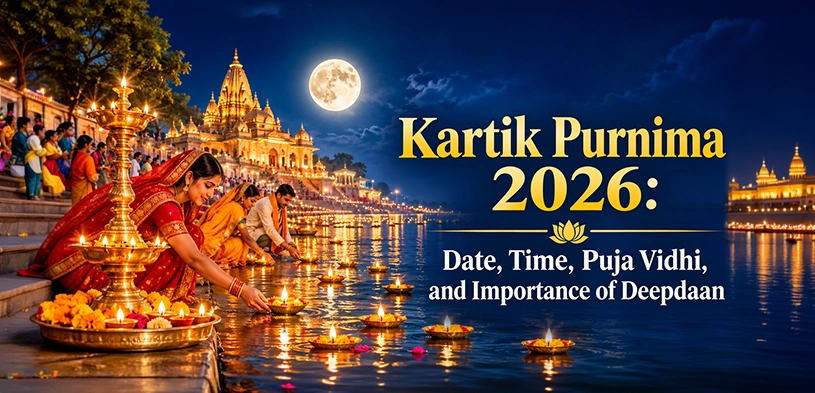
Kartik Purnima marks the conclusion of this auspicious period. It is also known as Kartik Purnima, Dev Deepawali, and Tripurari Purnima.
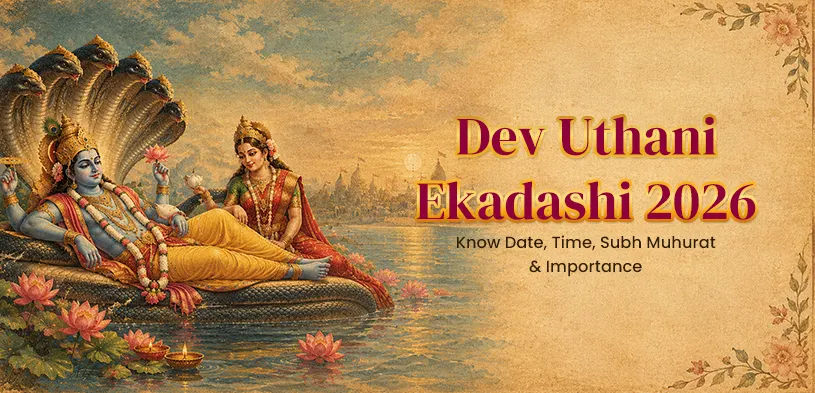
Dev Uthani Ekadashi will be observed on Friday, November 20, 2026. It will begin at 7:15 AM on November 20, 2026, and end at 6:31 AM on November 21, 2026.

Recognizing this urgent need, Narayan Seva Sansthan has launched the ‘Sukoon Bhari Sardi’ initiative. Through this campaign, the organization has pledged to provide 100,000 sweaters and blankets to the destitute, the vulnerable, and those in need.