- +91-7023509999
- 0294-6622222
- info@narayanseva.org
A non-profit organization is a group set up to support a cause. It does not aim to make money for owners or shareholders. A non-profit organization doesn’t operate for profit. Instead, it puts every rupee it raises back into the community it serves. This could mean healthcare for people who can’t pay. It might support disabled individuals. It could also provide education for children at risk of missing out. Lastly, it may help families escape poverty.
You may have heard about many non-profit organisations in India. Like Akshaya Patra, CRY, HelpageIndia, Narayan Seva Sansthan & many more. But you might not know how they work behind the scenes. Take Narayan Seva Sansthan for example. This organisation has helped people with disabilities for 40 years. It also supports social welfare. It’s a great way to see how nonprofits work. Many people don’t realise this: donations create real benefits for others.
Many nonprofit organisations begin by identifying a community. They ask a simple question: what’s missing here?
It might be about access to doctors. It could be a lack of skills training. Or it might be children needing reliable schooling. From there, the organization builds programs designed to fill that specific gap. Narayan Seva Sansthan is a useful case study here.
It offers free surgeries for people with disabilities. It gives free tools like limbs and wheelchairs. It also helps with rehabilitation. This helps people get their freedom back. It also provides vocational training. This helps people create livelihoods. They get more than just one-time support.
Nonprofits can work in many areas. These include healthcare, rehabilitation, education, and social inclusion. Many mature nonprofits do this. It’s not just about giving something once; it’s about building a way forward.
Most nonprofits work in a similar way, such as:
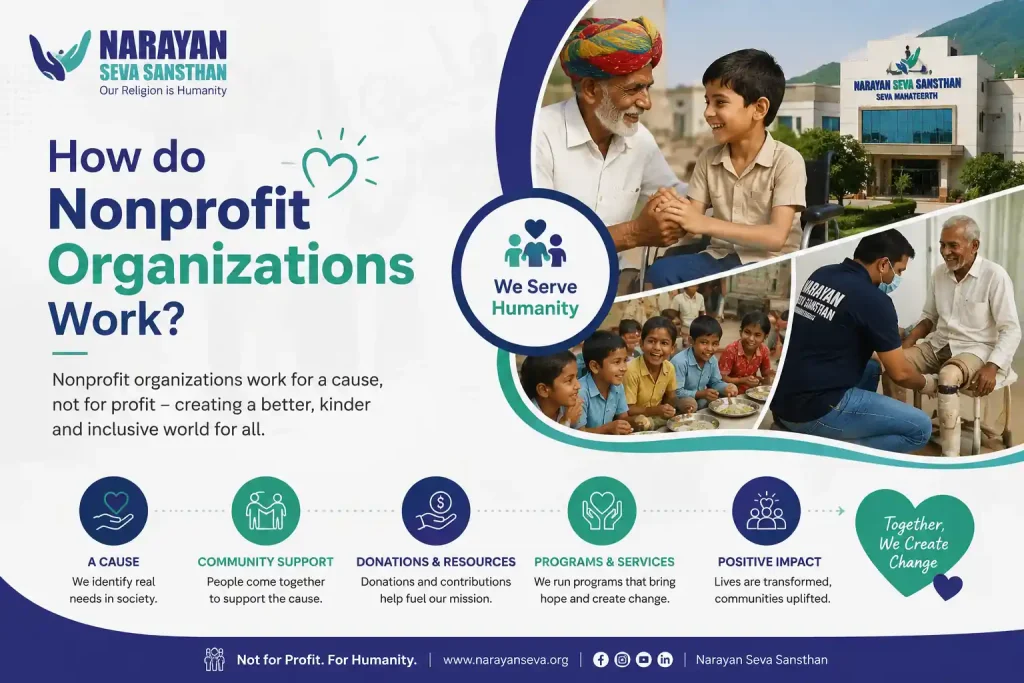
Identifying a need – staff and volunteers study the community, often through outreach camps or direct engagement to understand what’s actually required.
Raising Resources – Donations, grants, and partnerships are gathered to fund the response.
Delivering Service – after receiving donations, NGOs start programs such as free surgeries, artificial limb distribution, and provide education and skill training to children and disabled people.
Measuring Impact – The organization tracks whether the work is actually helping: how many people were treated, how many found jobs, how many became more independent.
Continuing The Mission – After measuring impact, will check what’s working and repeat the cycle for the betterment of disabled and unfortunate people.
Nonprofits use many funding sources at once, since relying on just one is risky. Common Sources include:
Online donations to nonprofit organizations have made giving far more accessible – someone can support a cause from their phone in under a minute. This mix of funding gives nonprofits keep programs running year after year instead of stopping and starting.
NSS’s work centers on a few consistent pillars:
Many charity organisations ask for help. It’s important to know what makes trusted nonprofits different from others. Look for: A clear, transparent mission and well-defined programmes. Simple details on who benefits from the work.
Some easy ways to help organization:-
Whatever you choose, it’s worth spending a few minutes checking the NGOs first, checking their registration number, cross-checking with the government app, and checking transparency and track record before you donate.
Nonprofits are a pillar of sustainable development. They manage resources like money, time, skills, and goodwill. Then, they turn these into real support for those who need it most. Donations are just one part of the puzzle. The rest comes from volunteers, staff, partners, and the communities. They all work together for the same goal. Narayan Seva Sansthan shows what focused nonprofit work can achieve. It provides more than treatment or help. It offers real opportunities, respect, and freedom to those it supports. Nonprofit work isn’t just about one-time charity. It’s a long-term promise to improve life for others.
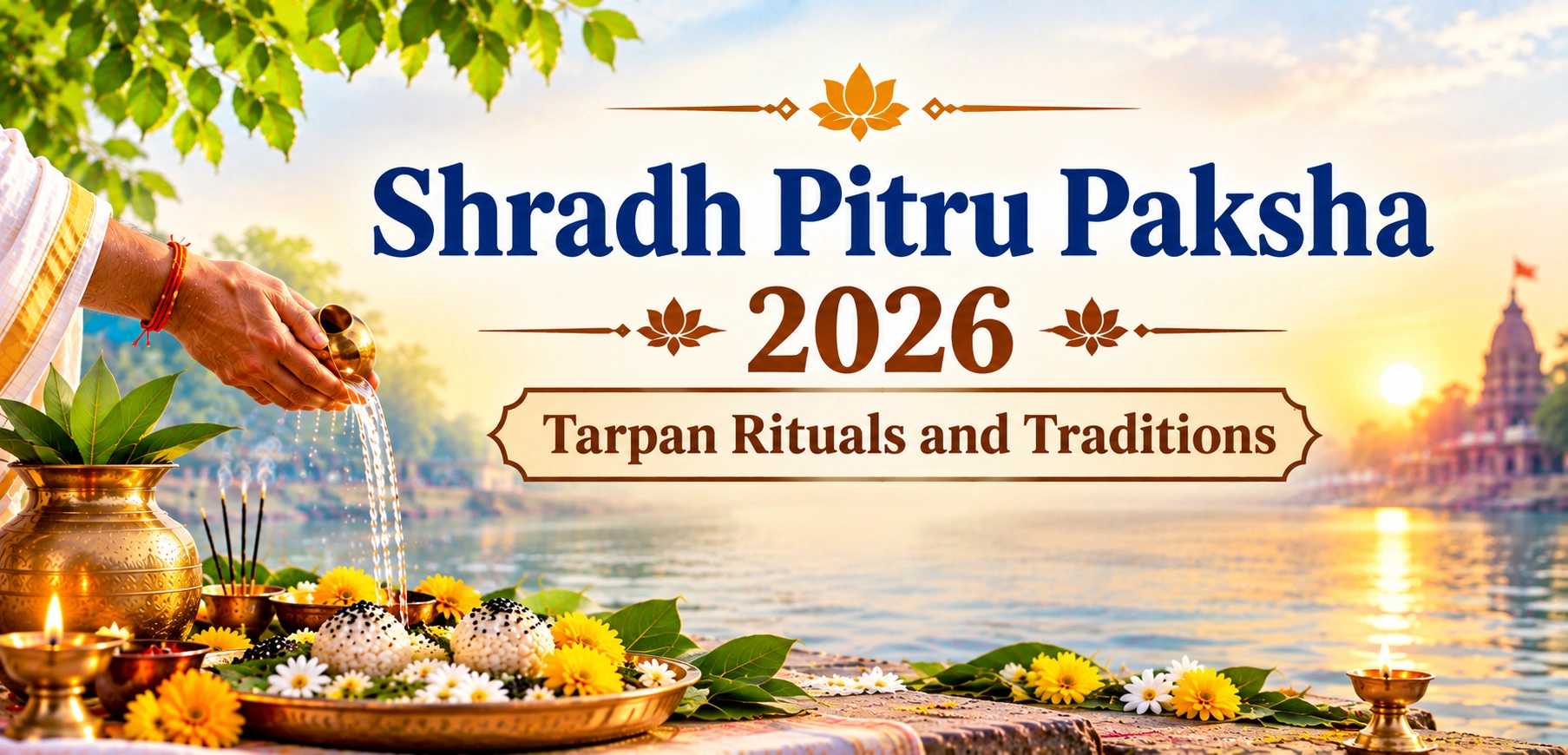
In the year 2026, Shradh Paksha (Pitru Paksha) will begin on 26 September 2026 and end on 10 October 2026 with Sarva Pitru Amavasya. During this sacred period, followers of Sanatan Dharma can perform Shradh, Tarpan and other rituals for their ancestors according to the respective tithi.

Bhadrapada Purnima 2026 falls on September 26. Discover its date, puja vidhi, vrat, Satyanarayan worship, Chandra Dev prayers, and the spiritual significance of charity and service.

Bhadrapada Amavasya holds special spiritual significance in the Hindu Panchang. This sacred day is considered highly auspicious for self-reflection, remembering ancestors, offering Tarpan, taking a holy bath, and performing charity.