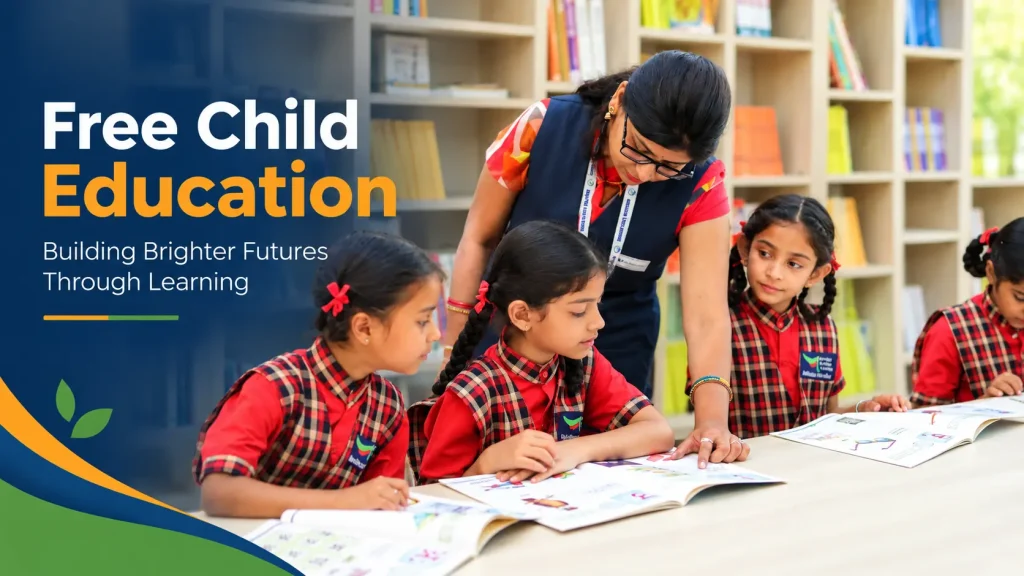
In India, many families cannot afford school fees. This forces children to drop out of school. Poverty takes away their chance for a better future. Fees are one part of the struggle. Books, uniforms, stationery, and travel expenses all add up. For families living on daily wages, even small costs can be tough to handle. Free child education takes that burden away so the child can keep going to class. Many education NGOs in India work on this, and Narayan Seva Sansthan is one of them.
When people say free education, they usually mean no fees. But anyone who has sent a child to school knows the fee is the smaller part. There are books, a uniform, and shoes for the monsoon. There’s also a bag and notebooks due by February. Some children also need a bus or a long walk. These days, some need a phone for online homework too.
The Right to Education Act has been in force since 2010. It gives every child aged 6 to 14 the right to free and compulsory education. That’s a real promise, and it has put millions of children in classrooms. The trouble starts where the promise stops, and the household budget begins.
I don’t want to run down the schemes, because they have done a lot. Sarva Shikshaa Abhiyaan took schools to villages that had none. Beti Bachao Beti Padhao was aimed at girls, who tend to be pulled out first when money is tight. RMSA tried to do something similar for secondary school. Enrollment numbers went up because of them.
But schemes work on averages. A family whose child needs a tuition teacher to catch up, or whose daughter is needed at home during sowing season, doesn’t fit the average very well.
The reasons are small and boring, which is why they get missed. A notebook. A pair of shoes. Eighty rupees for a project file the teacher asked for. None of it looks like a crisis. But for a family earning daily wages, a few of these in the same month can decide whether school continues.
Then there’s work. In a lot of homes, the eldest child ends up looking after the younger ones, or helping at the shop, so the adults can earn. Girls get this more than boys. After a couple of months out, going back feels embarrassing, because everyone else has moved ahead. So the child just doesn’t go back.
This is where an education NGO in India comes in. Good ones don’t try to be a second school system. They go after the children the first one lost. Some set up small learning centers near where kids live. Some supply books and basic materials. Some now teach online, which matters in places where the nearest good school is an hour away.
The thing I would look for is how long they stay. Handing out notebooks once a year is nice, but it doesn’t get anyone through class 10. A child needs someone around for years, and that is harder and less photogenic than a one-day event.
Narayan Seva Sansthan is based in Udaipur, Rajasthan, and many people know it first for its work with differently-abled people and families who have very little. Education is part of its work too, and it follows the same thinking: If someone is held back only by circumstances, help should reach them.
Through its education initiative, Narayan Seva Sansthan provides free English-medium digital education to children from financially weaker backgrounds. That choice makes sense. English and basic digital skills now decide who gets certain jobs, and the children who miss out on them are mostly the same children who were already struggling.
Till now, 2401 children have been educated at Narayan Children’s Academy. Currently, 795 children are receiving digital education at the academy. There are many stories. I’ll tell you one of them:
Pratika is a nine-year-old girl. She studies in class 4 at Narayan Children Academy. Her father carries bricks for a living. Some days he earns enough. Some days he does not. So an expensive private school education was never an option for their family.
Pratika goes to school every morning. She sits in front of a screen, learns, asks questions, and comes home with homework. This is because Narayan Children Academy doesn’t charge her a penny. She gets free digital education. She also receives stationery and school bags. They also include books and uniforms. Transport services are free as well. When teachers ask what she wants to be when she grows up, she never hesitates. She already knows.
That confidence—that clarity — is not something money bought her. It came from simply being given a chance to learn.
Patrika is one student. But there are hundreds more like her sitting in that same classroom, each one carrying a dream that just needed a little room to grow.
You don’t have to be rich. You can donate for education to an organization you trust, or donate to free education programmes where children pay nothing. If you would rather it go to one child, you can donate for poor children’s education so that books and learning costs are covered for a student. An online education donation takes about five minutes on your phone.
If giving isn’t possible right now, tell someone. A lot of people would support education in India if they knew a good programme existed and nobody had asked them.
Spend ten minutes on this. Does the organization have a clear education programme or only a general appeal? Does it publish reports? Can it clarify where the money goes? Can it say how many children remain in school? If not, seek information elsewhere.
The law gives every child a seat. What keeps the child in it is usually small and local: a notebook, a fee. That’s work the government, schools, NGOs like Narayan Seva Sansthan, and ordinary donors all share. Pick one programme, find out how it works, and give to it for more than a month.
What is the new NEP rule?
In India, NEP 2020 brought a new education policy. It replaces the old 10+2 system with a 5+3+3+4 model for ages 3 to 18. This policy encourages early learning in the mother tongue. It focuses on understanding and skills. It will apply to all states and boards.
Which charity gives 100% of donations?
There are no mainstream charities that claim this alone. Some NGOs say 100% of donations will go to programmes and cover running costs from separate funds. To find out about their donation distribution, look at their annual report. You can also check the audited accounts. Do this before you trust their information.
Which NGOs help with child education?
Tech for India, Nahi Kali, Smile Foundation, and Narayan Seva Sansthan help kids in need. They support poor children. They offer free education.
How to donate to child education?
Choose the best NGO for education, read about its programme, check its reports, and select the cause you want to support. Then donate online through the official website, and keep the receipt.
Where to donate for children’s education?
Donate to an organization with a clear education programme.

On Papankusha Ekadashi, traditions of worshipping Lord Vishnu, fasting, chanting His name, listening to religious stories, night vigil, and charity have been followed. This day provides an opportunity to light the lamp of devotion and spirituality within oneself.

In 2026, Shardiya Navratri begins on Sunday, October 11. This year, the belief that Maa Durga arrives riding an elephant is receiving special attention. Devotees worship the Goddess in her Gajvahini form and pray for happiness, peace, and prosperity in their lives.
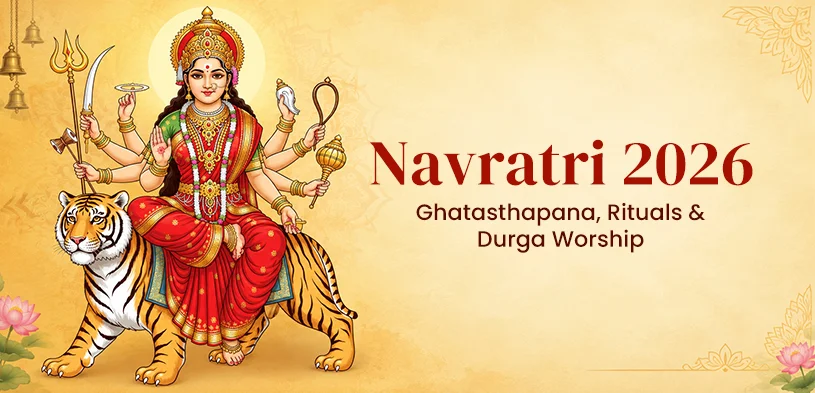
Shardiya Navratri 2026 begins 11 October with Ghatasthapana and concludes with Dussehra on 20 October. Get the full Ghatasthapana Muhurat, day-wise Durga Puja calendar, colours, and puja vidhi inside.