- +91-7023509999
- 0294-6622222
- info@narayanseva.org
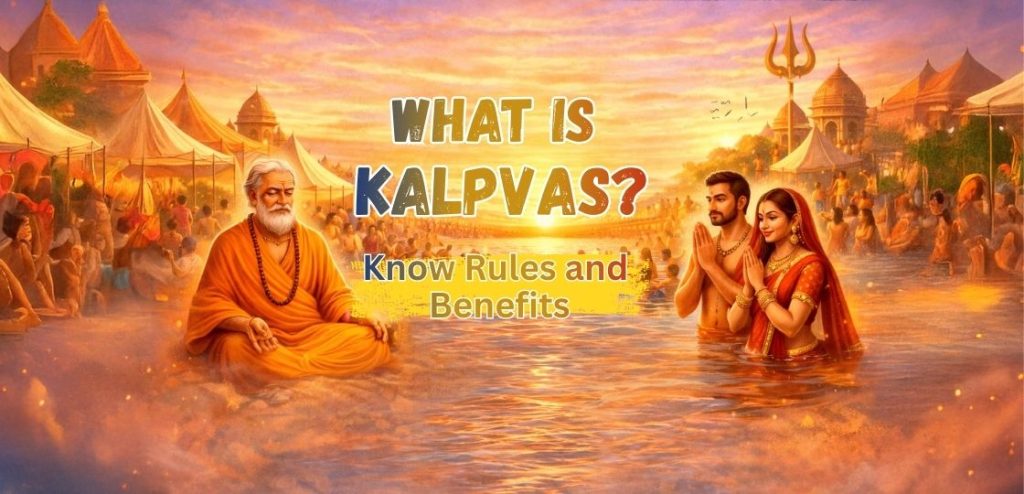
In Sanatan tradition, the month of Magh is regarded as the most auspicious period for penance, renunciation, and inner purification. During this sacred month, when the holy rivers Ganga, Yamuna, and the invisible Saraswati converge at Prayagraj, the Triveni Sangam becomes the divine center of a profound spiritual practice known as Kalpavas. Kalpavas is not merely a religious ritual; it is a transformative spiritual journey that purifies life from within.
The literal meaning of Kalpavas is to reside in a holy place for a fixed period while observing discipline, restraint, and spiritual practices. Living on the banks of the Sangam during the month of Magh and dedicating one’s life to Vedic recitation, chanting, penance, meditation, worship, and service is called Kalpavas. Scriptures state that this one-month period, beginning with the Sun’s entry into the zodiac sign Capricorn (Makara), grants innumerable spiritual merits. It is believed that performing Kalpavas for one month in Magh yields merits equal to those of one Kalpa (a cosmic era) of Lord Brahma.
Traditionally, Kalpavas begins on Ekadashi of the Shukla Paksha of Paush and continues until Dwadashi of the Shukla Paksha of Magh. Many devotees also begin it from Makar Sankranti. During this time, devotees reside near the Sangam, live with minimal resources, practice self-restraint, and strictly follow religious duties. It is believed that penance performed in the presence of the Sangam during Magh elevates a person to great spiritual heights.
Kalpavas is considered a powerful means of spiritual upliftment. It is said that a devotee who observes Kalpavas with complete faith and discipline not only fulfills heartfelt desires but also opens the path to liberation from the cycles of birth and death. The Mahabharata mentions that the merit obtained from a hundred years of severe penance is easily attained by observing Kalpavas during the month of Magh.
During Kalpavas, devotees adopt a simple lifestyle. They wear white or yellow clothes, consume pure vegetarian (sattvic) food, and completely renounce luxury. According to scriptures, the duration of Kalpavas may range from a single night to a lifetime—it depends on the devotee’s faith, capability, and resolve.
Chaitra Navratri 2026: This sacred nine-day ritual begins on March 19th and continues until March 27th. The auspicious time for Ghatasthapana is from 6:52 am to 7:43 am. Receive the blessings of Goddess Durga through the Kalash Sthapana ritual and Kanya Pujan.

Claim up to 50% or 100% tax deduction on donations under Section 80G—available only in the Old Tax Regime. No benefits on cash donations above ₹2,000; Form 10BE is mandatory.

अक्षय तृतीया, जिसे आखा तीज भी कहते हैं, वैशाख शुक्ल तृतीया को मनाया जाता है और इस दिन किए गए दान, जप, तप एवं शुभ कार्य अक्षय (अनंत) फल देते हैं। 19 अप्रैल 2026 को पड़ने वाला यह अबूझ मुहूर्त पर्व परशुराम जयंती, गंगा अवतरण, अक्षय पात्र कथा से जुड़ा है, जहाँ सोना खरीदना, लक्ष्मीनारायण-कुबेर पूजा और दान से जीवन में सुख-समृद्धि अक्षय बनी रहती है।