- +91-7023509999
- 0294-6622222
- info@narayanseva.org
This blog is all about function of ngo and its role. If you observe that Village life looks peaceful from the outside. But if you have ever lived in one or visited someone who does – you know the truth. There is no hospital nearby. There is no doctor you can call at midnight. In the village, only the compounder is available in an emergency. Also, there is no ambulance that will come on time. When someone gets sick in a village, the family panics. They arrange transportation and money. They travel for hours on bad roads. And sometimes, they are just too late. This is the everyday reality for millions of people in India. And this is exactly where NGOs come silently, consistently, without waiting to be asked.
Some people think good health means hospital doctors. But good health starts in homes, schools and communities with awareness, clean habits, and early care. NGOs understand this better than anyone.
They go directly to poor and rural communities and run health awareness programs on hygiene, nutrition, safe drinking water and disease prevention. They teach mothers about why vaccination is important for newborns. They teach girls about menstrual hygiene. They teach farmers about how pesticides are dangerous to them. They also train local men and women as community health workers. They work individually. And they live in the same villages, speak the same language and are trusted by their families. Because of that trust. They can reach households, but doctors and outsiders can not.
NGOs run regular health camps in villages and rural areas, checkup drives, provide free medicines to patients who cannot afford them and refer critical patients to city hospitals.
At big level, organisations like PHFi work with the government to design better health policies-
So NGOs have important rules to improve public healthcare.
Rural areas in India are home to more than 60 crore people. But most of them have very limited access to quality healthcare.
To fill these gaps in India, NGOs work every single day.
Function of Ngos is to drive mobile health units in vans stocked with medicines and basic diagnostic equipment that travel to remote villages on a fixed schedule. People know when the van is coming, and they solve their health problems on a daily basis.
NGOs also, from time to time, send health workers to villages who do daily work that never work for headlines but save many lives. They visit every house to know that no one is sick, track pregnant women’s health, and baby movement. Also, they remind parents about vaccines for their child. Also, they check vitals & symptoms of old age patients, who are on long-term medicines. They get to know problems early- before they become emergencies.
Also, health workers are aware of clean sanitation, nutrition programs for malnourished children and mothers.
Organisations like Seva Mandir in Rajasthan have been doing this work for decades. In villages they serve, infant deaths have reduced, more women give birth safely in health centres, and TB patients complete their full treatment — because someone is following up with them.
It’s very rare and not easy to accept that very few people in India have never had a single health check-up in their lives. No blood pressure test, no sugar test, no eye test, nothing. Free medical camps organised by NGOs are changing this reality, one village at a time. These camps are organised in villages, schools, and tribal areas. They are completely free. And in a single visit. A person can access multiple services, BP check, Blood sugar test, eye test, dental check-up, HIV test, disability test and medicine all without spending a single rupee.
For pregnant women, camps offer antenatal check-ups and iron supplement distribution. For children, vaccines are given on the spot. For the elderly, chronic disease screenings are often done, catching conditions like diabetes or high BP that were silently increasing and damaging other organs & health for years.
This is one of the most impactful function of NGO in public Health – bringing healthcare to people who had stopped believing healthcare was for them. They built the habit of health check-ups in communities where prevention was never a priority.
For villagers, reaching a government hospital in a big city is hard enough. But once a poor family gets there, a different kind of struggle begins,
Long queues, confusing forms. Multiple departments. Doctors who speak quickly and move on. No one to explain what is happening or what to do next.
For families coming from villages, this system feels impossible to navigate alone.
Another important function of NGOs is to provide hospital support services to solve exactly this problem.
NGO volunteers are present inside hospitals to guide patients, help them understand their diagnosis, fill out admission forms, find the right ward and speak with doctors. Families travelling from 300 kilometres away have somewhere to sleep and eat while their loved one recovers.
For patients battling cancer, NGOs provide care like home visits, pain management, and emotional counselling for both patient and family. This is deeply important work that the government system rarely covers. It ensures that even in the most difficult moments, people are not left to suffer alone.
The Indian Government has powerful healthcare schemes, Ayushman Bharat, PM Jan Arogya Yojana (PMJAY), the national health mission, and others. These programs have the potential to change healthcare for crores of families. But there is one problem.
Most people who qualify for these schemes do not know about them. And even those who do often struggle to enrol, understand the benefits or use them at a hospital. This is where NGOs become the bridge. NGOs go door to door in villages to identify eligible families and help them enrol in government health insurance programs. They explain what treatments are covered.
Which hospitals accept the schemes? And who to file a claim. Without this handholding. A large share of the government health money never reaches the families it was meant for.
NGOs also support specific national programs on the ground. From bypass surgery to trauma management, ensure patients take their medicines daily and do not abandon treatment halfway. For the universal immunisation program, they identify and track children who have missed vaccines in hard-to-reach areas. The partnership works simply. The government makes the programs. The NGO ensures it actually reaches people. Both roles are essential. One without the other leaves millions behind.
When floods hit, when an earthquake strikes, when a pandemic spreads -hospitals become crowded places, checking every patient is impossible, and government response slows under the weight of coordination and approvals.
To fill these gaps, NGOs move faster because they are already there.
During the COVID-19 pandemic, NGO across India set up oxygen cylinder distribution points, ran telemedicine helplines, delivered medicine kits to home-isolated patients, and provided cooked meals to daily labourers who had lost their income sources.
During the Uttarakhand floods of 2013 and the Odisha cyclone of 2019. An NGO medical team reached the affected villages before any formal government relief arrived. They treated injuries, distributed clean water and food packets and set up temporary medical camps in the middle of devastation.
In an emergency, NGOs do not just bring medicine; they also provide calmness, human presence, and sympathy to survivors who have lost everything in a crisis.
When an NGO works in a community for 5 -10 years, the change becomes visible and measurable. Baby death rates go down. More women deliver babies safely in health centres. TB patients complete their treatment. Children are fully vaccinated. Families start visiting doctors earlier instead of waiting until a condition becomes critical.
These small improvements prevent big health crises in the family. With precaution and awareness, family lives them, children suffer less, mothers worry less about children, and elderly parents get time-to-time checkups.
The impact is also felt at a system level. When NGO programs prove that something works, a mobile van model, a community health worker system, a door-to-door enrollment drive, state and central governments take notice. Many schemes that are now national policy were first tested and proven by NGOs working quietly on the ground.
NGOs also build something that lasts longer than any single program’s awareness and trust. Communities have been supported by NGOs to begin to take charge of their own health. They ask questions. They demand services. They stop accepting poor healthcare as their fate. That shift in mindset is perhaps the most lasting impact of all.
NGOs working in healthcare, not as charity. They are doing essential work that our health system depends on. The function of NGO in India’s health sector is to reach the people who are hardest to reach. They do the work that is least visible but most needed. They stay when others leave. And they treat every patient, no matter how poor, how remote, or how forgotten, as someone whose life matters.
India’s healthcare challenges are massive. But every day, thousands of NGO workers are out there making those challenges smaller – one family, one village, one life at a time.
That work deserves recognition. It deserves support and, most of all, it deserves to be known.
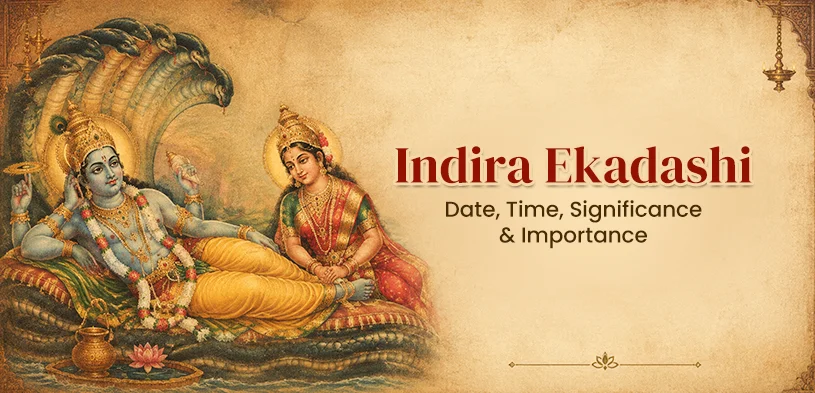
Indira Ekadashi, which falls during the Krishna Paksha of the Ashwin month, is one such meritorious tithi. As it occurs during Pitru Paksha, this day is specially associated with the worship of Lord Vishnu along with feelings of reverence and righteous deeds.
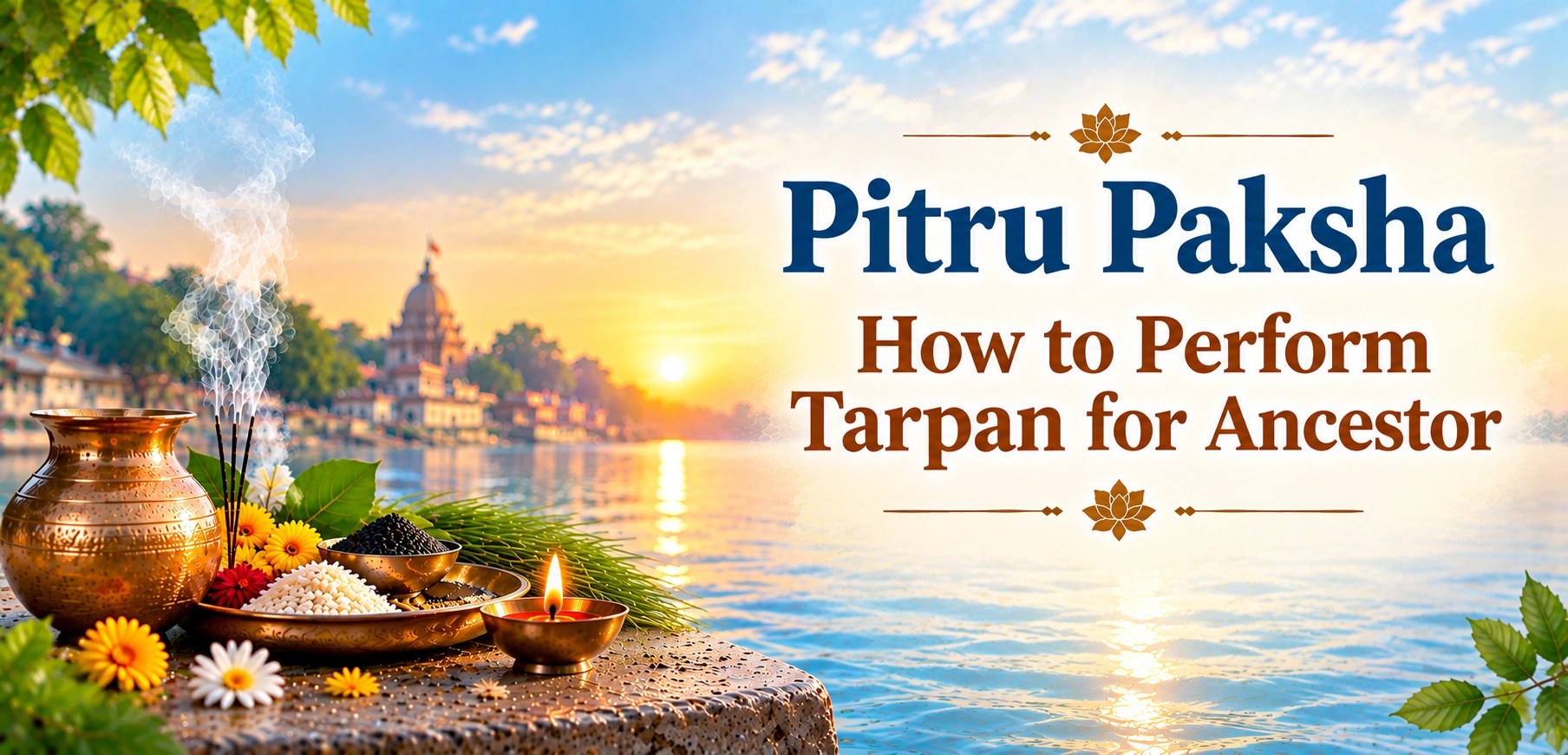
Our ancestors laid the foundation of the family through their lives, austerities, values, and good deeds. Pitru Paksha is the sacred opportunity to express reverence and gratitude towards them.

Bhadrapada Purnima 2026 falls on September 26. Discover its date, puja vidhi, vrat, Satyanarayan worship, Chandra Dev prayers, and the spiritual significance of charity and service.