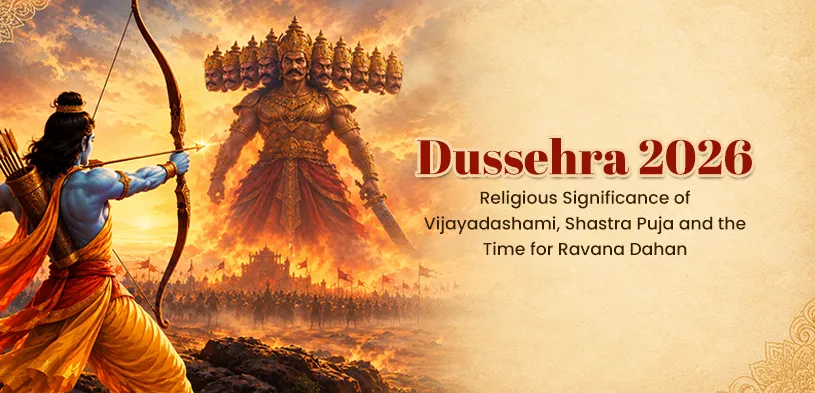
In India’s religious and cultural traditions, Dussehra is an auspicious festival that inspires people to follow the path of truth, righteousness, morality, and good conduct. This festival reminds us that no matter how powerful unrighteousness may appear, truth and righteousness ultimately prevail. The slaying of Ravana by Lord Shri Ram and the defeat of Mahishasura by Goddess Durga are two major religious events associated with Vijayadashami.
This day symbolizes the victory of good over evil, truth over falsehood, and justice over injustice. According to religious beliefs, it is also considered an auspicious occasion for new beginnings, Shastra Puja and renewing one’s commitment to fulfilling one’s duties.
| Details | Information |
|---|---|
| Festival Name | Dussehra (Vijayadashami) 2026 |
| Date | Tuesday, October 20, 2026 |
| Hindu Month | Ashwin |
| Tithi | Ashwin Shukla Paksha Dashami |
| Also Known As | Vijayadashami |
| Significance | Celebrates the victory of Lord Shri Ram over Ravana and the victory of Goddess Durga over evil. |
According to the Hindu calendar, Dussehra, also known as Vijayadashami, is celebrated on the tenth day of the Shukla Paksha, or waxing phase of the Moon, in the month of Ashwin. After worshipping the various forms of Goddess Durga throughout the nine days of Sharadiya Navratri, Vijayadashami is celebrated on the tenth day. On this occasion, the victory of Lord Shri Ram and the divine power of Goddess Durga are remembered with devotion.
This year, the Dashami Tithi of the Shukla Paksha in the month of Ashwin falls on October 20. Therefore, Dussehra will be celebrated on October 20, 2026.
Vijayadashami holds special religious significance for Shastra Puja and the observance of Vijay Muhurat, an auspicious period associated with victory. On October 20, 2026, Vijay Muhurat will be from 1:59 PM to 2:45 PM. Meanwhile, the Aparahna period, considered suitable for worship, is stated to be from 1:14 PM to 3:30 PM. Shastra Puja and other auspicious activities may be performed during this period with devotion.
One of the major traditions of Dussehra is the burning of the effigies of Ravana, Kumbhakarna and Meghnad. Ravana Dahan, which takes place after sunset, symbolizes the end of unrighteousness, arrogance and evil, as well as the victory of truth and righteousness. The timing of Ravana Dahan may vary from city to city depending on local traditions and event schedules. Therefore, it is advisable to check the local Hindu calendar or official announcements from the event organizers for the exact timing.
Dussehra is associated with the battle between Lord Shri Ram and Ravana. According to the Ramayana, the king of Lanka, Ravana, abducted Mata Sita through deceit. To free Mata Sita from Ravana’s captivity and put an end to unrighteousness, Lord Shri Ram marched towards Lanka with the help of Sugriva, the king of the Vanaras, Lord Hanuman, Jambavan, Angad and the Vanara army.
A fierce battle took place between Lord Shri Ram and Ravana in Lanka. Ravana was highly learned, powerful and knowledgeable in many fields, but his arrogance, injustice and unrighteous conduct ultimately led to his downfall. In the end, Lord Shri Ram killed Ravana, restored righteousness and freed Mata Sita.
Vijayadashami is celebrated in remembrance of this victory.
Another major religious episode associated with Vijayadashami concerns Goddess Durga and Mahishasura. According to mythological beliefs, Mahishasura became arrogant because of his immense power and began terrorizing the gods and the inhabitants of the worlds. To free them from his tyranny, Goddess Durga manifested through the combined divine energies of the gods. She fought Mahishasura for nine days and defeated him on the tenth day, protecting righteousness and restoring peace.
This victory is regarded as the triumph of divine power over unrighteousness. The worship of Goddess Durga during the nine days of Sharadiya Navratri and the celebration of Vijayadashami on the tenth day are traditionally associated with this religious belief.
Vijayadashami is not merely a festival; it is also an opportunity for self-reflection and spiritual purification. The ten heads of Ravana are symbolically associated with negative traits such as lust, anger, greed, attachment, pride, jealousy, ego, laziness, violence and injustice. This interpretation inspires us to recognize our own negative tendencies and work towards overcoming them.
The life of Lord Shri Ram represents the ideals of dignity, compassion, truthfulness and duty. Even in difficult circumstances, he remained committed to the path of righteousness. Therefore, Dussehra teaches us to embrace truth, humility and good conduct in our daily lives. On this day, let us resolve to bring kindness into our behaviour, service instead of selfishness, and humility instead of arrogance.
| State | Special Dussehra Tradition |
|---|---|
| Uttar Pradesh | Ramlila performances and Ravana Dahan symbolize Lord Shri Ram’s victory over Ravana. |
| Delhi | Grand Ramlila events, fairs and the burning of Ravana, Kumbhakarna and Meghnad effigies. |
| West Bengal | Vijaya Dashami marks the conclusion of Durga Puja, with Sindoor Khela and Durga Visarjan. |
| Karnataka | Mysuru Dasara is renowned for its royal traditions, illuminated Mysuru Palace and the grand Jamboo Savari procession. |
| Himachal Pradesh | Kullu Dussehra features processions of local deities and celebrations centered around Lord Raghunath. |
| Gujarat | The festive season is known for Garba and Dandiya Raas during Navratri, followed by Vijayadashami. |
| Maharashtra | Shami Puja and the exchange of Apta leaves, symbolizing gold and prosperity, are important traditions. |
| Tamil Nadu | Bommai Golu displays dolls and figurines during Navratri, while Ayudha Puja honors tools and instruments. |
| Kerala | Vidyarambham is an important ceremony in which young children are introduced to learning and writing. |
| Andhra Pradesh | Devotees participate in Goddess worship, temple rituals and processions, including distinctive celebrations at Proddatur. |
| Chhattisgarh | Bastar Dussehra is known for its distinctive tribal customs, traditional rituals and community processions. |
| Rajasthan | Kota is famous for its grand Dussehra Mela, featuring Ramlila performances, royal processions, cultural programs, and the burning of giant effigies of Ravana, Kumbhakarna, and Meghnad. The celebration reflects Rajasthan’s rich royal heritage and the victory of good over evil. |
In Indian culture, the joy of festivals is considered complete when it includes the spirit of sharing happiness with others. Vijayadashami inspires us to share our joy with people who need support, care and a sense of belonging. Helping underprivileged families and serving people with disabilities are considered virtuous acts on this occasion.
According to your means, donate food and essential supplies to bring hope and happiness into someone’s life.
The greatest message of Dussehra is that victory is not achieved only by defeating external enemies; overcoming the evils within ourselves is equally important. Ravana’s downfall reminds us of the consequences of arrogance, while the character of Lord Shri Ram reveals the power of truth, patience and righteousness.
This festival teaches us never to abandon the truth, even in difficult times. Power should be used not to oppress others but to protect and support them. Knowledge accompanied by humility, success guided by good conduct, and prosperity combined with a spirit of service make life truly meaningful.
On this Vijayadashami, let us resolve to overcome our ego, anger, greed and hatred. Let us embrace compassion, love, humility and service in our daily lives. By helping those in need alongside our prayers and worship, we can make the joy of this festival even more meaningful.
Wishing everyone a very Happy Dussehra!
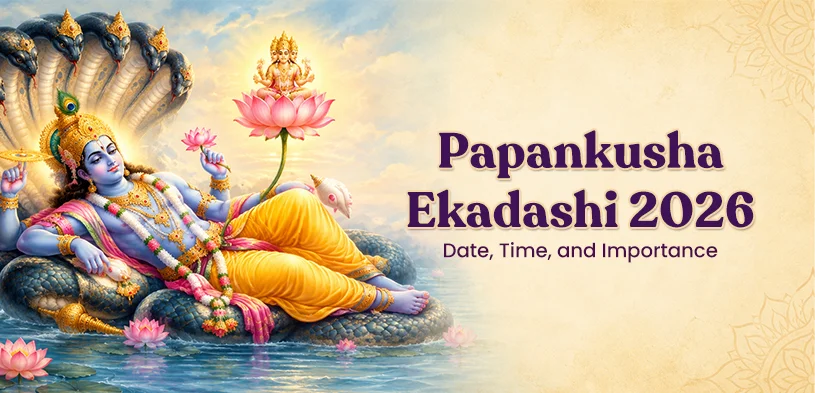
On Papankusha Ekadashi, traditions of worshipping Lord Vishnu, fasting, chanting His name, listening to religious stories, night vigil, and charity have been followed. This day provides an opportunity to light the lamp of devotion and spirituality within oneself.
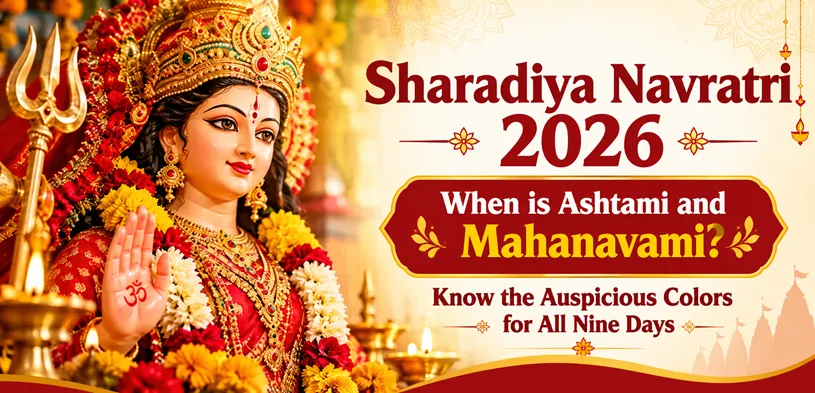
In 2026, Shardiya Navratri begins on Sunday, October 11. This year, the belief that Maa Durga arrives riding an elephant is receiving special attention. Devotees worship the Goddess in her Gajvahini form and pray for happiness, peace, and prosperity in their lives.
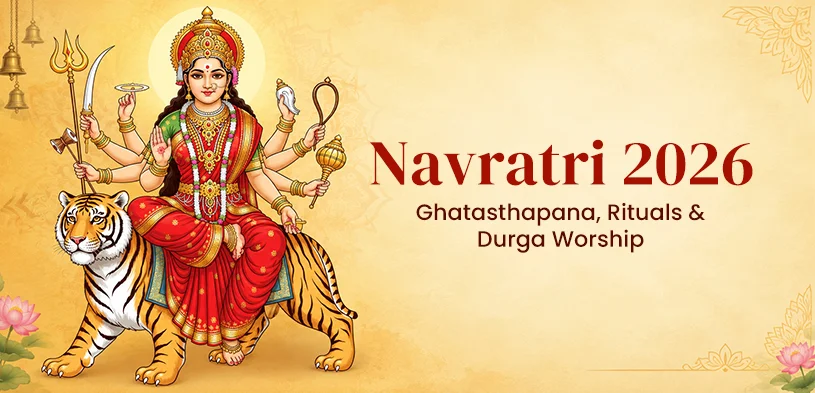
Shardiya Navratri 2026 begins 11 October with Ghatasthapana and concludes with Dussehra on 20 October. Get the full Ghatasthapana Muhurat, day-wise Durga Puja calendar, colours, and puja vidhi inside.