
- +91-7023509999
- 0294-6622222
- info@narayanseva.org
Women’s empowerment is a critical issue in the modern world. It aims to provide equal rights, opportunities, and autonomy to women across various spheres of life. It is a multidimensional concept. It encompasses social, economic, political, and cultural aspects.
Despite significant progress in recent decades, many challenges still hinder the full realization of women’s empowerment. However, Narayan Seva Sansthan has played a crucial role. They are empowering women and improving their lives.
A. Gender Stereotypes and Societal Expectations:
Deep-rooted gender stereotypes limit women’s opportunities. These expectations perpetuate traditional roles. This prevents women from reaching their full potential.
B. Unequal Access to Education and Healthcare:
Disparities in education and healthcare access hinder women’s development. These gaps lead to limited career prospects and poorer health outcomes.
C. Economic Inequality and Gender Pay Gap:
Women often face wage disparities and limited economic opportunities. This impedes their financial independence. It also limits their contribution to society.
D. Violence Against Women:
Gender-based violence poses a significant threat to women’s safety. This includes domestic abuse, sexual harassment, and human trafficking. These issues are major barriers to empowerment.
A. Education and Leadership:
We highlight success stories of women who have broken barriers in education. Many have taken leadership positions. They have become role models for future generations.
B. Entrepreneurship and Economic Empowerment:
We showcase women entrepreneurs who have succeeded in various industries. This promotes economic empowerment. It also encourages women-led businesses.
C. Advocacy and Legal Reforms:
We explore stories of activists and organizations that have brought about positive change. They use advocacy and legal reforms. This ensures women’s rights are protected and upheld.
D. Health and Well-being:
We share success stories of initiatives that improved healthcare access. These promote overall well-being. They also help in reducing maternal mortality rates.
A. Access to Information and Digital Literacy:
Digital literacy programs have empowered women. Access to information enhances their skills. It also enables new economic opportunities.
B. Mobile Technology for Empowerment:
Mobile technology has transformed women’s lives. This ranges from mobile banking to health applications. It bridges gaps in education and healthcare.
C. Women in STEM:
We celebrate women’s accomplishments in science and technology. We also highlight engineering and mathematics (STEM). This encourages more women to pursue careers in these fields.
A. United Nations Sustainable Development Goals (SDGs):
The UN’s SDGs play a crucial role on a global scale. They promote women’s empowerment and gender equality.
B. International Women’s Day and Women’s Movements:
We recognize the impact of International Women’s Day. The collective efforts of women’s movements are driving change.
C. Corporate Initiatives and Gender Diversity:
Many companies have implemented gender diversity programs. These foster inclusive workplaces that empower women.
A. Breaking Taboos and Challenging Norms:
Women and communities have challenged cultural taboos. They fight norms that limit choices. This paves the way for social change.
B. Empowering Voices through Arts and Media:
Art and literature have become powerful tools. Media platforms amplify women’s voices. They also raise awareness about women’s issues.
C. Role of Religious and Community Leaders:
We discuss leaders who advocate for women’s rights. Religious and community leaders can foster a more inclusive society.
A. Women as Climate Change Champions:
Women play a significant role in environmental conservation. We showcase their contributions as climate change champions.
B. Sustainable Livelihoods for Women:
Initiatives empower women in rural areas. They provide sustainable livelihood opportunities. This promotes environmental preservation and economic empowerment.
C. Addressing Gender and Climate Intersectionality:
We analyze the intersectionality of gender and climate. Addressing gender disparities can lead to better climate solutions.
A. Indigenous Women’s Empowerment:
We shed light on challenges faced by indigenous women. Efforts to empower them must respect their cultural identity and rights.
B. Empowerment for Women with Disabilities:
Initiatives promote accessibility and inclusivity for women with disabilities. This enables them to participate fully in society.
C. Refugee and Migrant Women Empowerment:
We highlight the resilience of refugee and migrant women. Specific programs support their empowerment and integration in new communities.
A. Changing Perceptions and Challenging Patriarchy:
It is important to engage men and boys as allies. They help in dismantling patriarchal norms. They also promote gender equality.
B. Fathers’ Role in Empowering Daughters:
We illustrate stories of fathers who support their daughters’ ambitions. They contribute to a more empowered next generation.
A. Women’s Participation in Peacebuilding:
Women’s involvement in peace negotiations is vital. Their participation in conflict resolution enhances the prospects of lasting peace.
B. Supporting Women in Post-Conflict Reconstruction:
Initiatives provide resources to women in conflict-affected regions. These provide opportunities for rebuilding their lives and communities.
A. Leveraging Technology for Greater Impact:
Emerging technologies have great potential. Artificial intelligence and virtual reality can advance women’s empowerment.
B. Strengthening Global Collaborations:
There is a need for continued cooperation. Governments, NGOs, and corporations must work together to accelerate progress.
C. Investing in Girls’ Education and Leadership:
We advocate for increased investment in girls’ education. Leadership development is a crucial step towards an empowered future.
Women’s empowerment is an ongoing global endeavor. There are challenges to overcome and success stories to celebrate.
Despite obstacles, organizations like Narayan Seva Sansthan play a crucial role. They address unique challenges faced by women with disabilities. They help in creating a more inclusive and equitable world.
Ram Navami celebrates the birth of Lord Shri Ram, the seventh incarnation of Lord Vishnu. In 2026, the festival will be observed on March 26. Devotees worship the child form of Lord Ram, recite the Ramayana, and remember the ideals of righteousness, truth, and devotion.
The Hindu New Year 2026, Vikram Samvat 2083, begins on Chaitra Shukla Pratipada (the bright fortnight of the bright fortnight) on March 19, when Jupiter becomes king and Mars becomes minister in the Rudra Samvat.
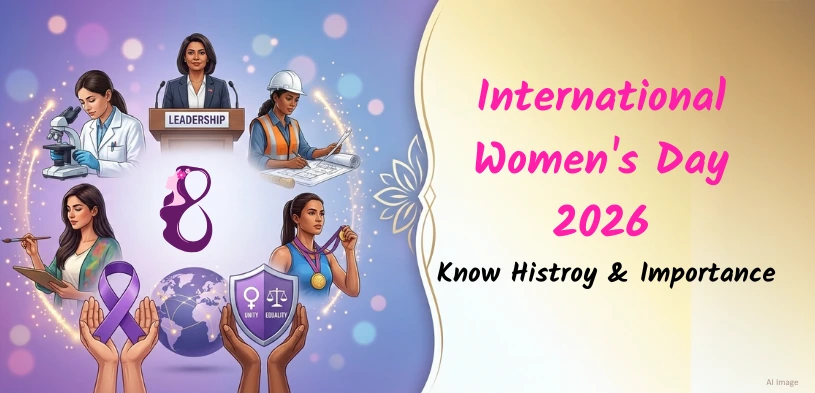
International Women’s Day 2026 will be celebrated on March 8 with the theme “Give to Gain.” The year 2026 also marks 115 years of International Women’s Day, first celebrated in 1911. Learn about the history, significance, and global celebration of Women’s Day.


