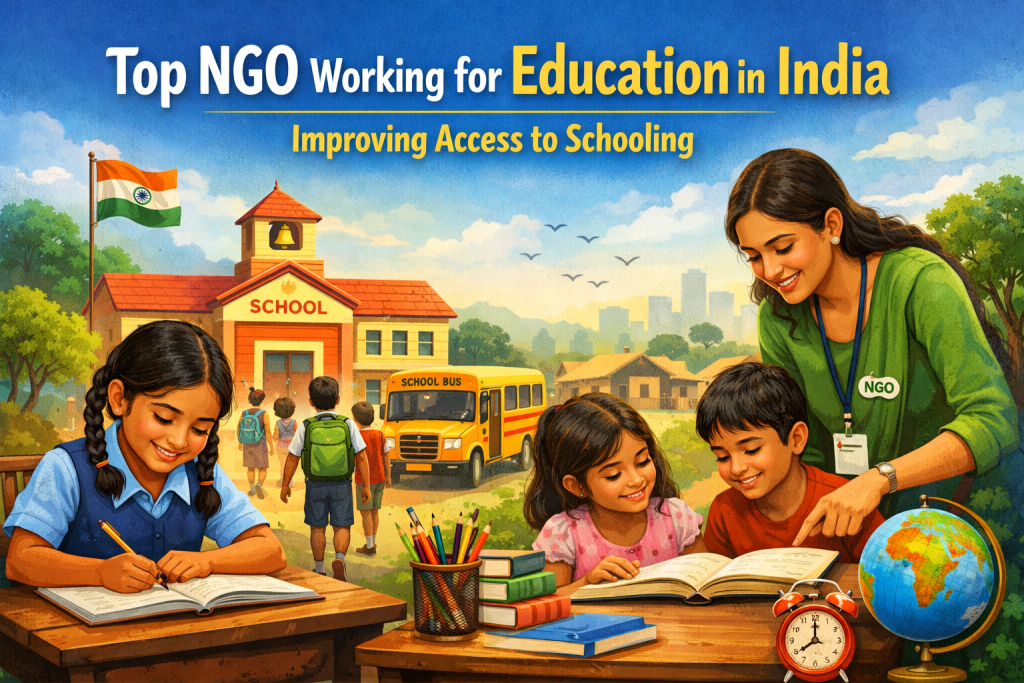
Education is not only about what you learn in school. It helps children create their dreams, build confidence, and shape their identity. In India, many people still face poverty and social inequality. Education is a strong tool to help break these barriers. The government has launched many programs to boost schooling for all children. But many children are still being left behind.
Before we see how NGOs are helping, we need to know the main challenges. These challenges still limit education access for millions of children in the country.
The Current Challenges in Schooling
Access to schooling faces many challenges today. These issues impact students, families, and communities. Some key challenges include:
- Financial struggles: Many families earn less than the poverty line. They cannot afford school fees, uniforms, books, or transportation. Many children stay home to work or help their families instead of going to school. In rural areas, schools are often far away, making travel difficult and unsafe.
- Limited educational resources: Schools in many regions lack proper classrooms, trained teachers, learning materials, and technology. This affects the quality of education and discourages children from continuing their studies.
- Community awareness: Many communities still do not consider education important, especially for girls and children with disabilities. Early marriage, child labour, and traditional practices often lead to high dropout rates. In many areas, people are not aware of the long-term benefits of education.
These challenges create a cycle that keeps children away from education. NGOs work closely with local communities to understand these problems and provide meaningful support.
Role of NGOs in Improving Access to Education
Non-governmental organisations (NGOs) play an important role in bridging the education gap. They work directly in communities and reach areas that many government programs cannot fully support.
- Providing free or subsidised education: Many NGOs run schools and learning centres that provide free education or short-term learning programs so children can study with little or no cost.
- Supporting school infrastructure: NGOs help build classrooms, repair school buildings, and provide essential facilities such as toilets, benches, and clean drinking water.
- Providing scholarships and learning materials: They help cover school fees and distribute books, uniforms, bags, and stationery so that financial challenges do not force children to leave school.
- Running community education programs: NGOs organise awareness sessions, meetings with parents, and door-to-door campaigns to explain the importance of education.
Key Initiatives Taken by NGOs to Support Education
Many NGOs run educational programs designed to support underprivileged children. Some of the important initiatives include:
- Free schooling programs: Some NGOs operate full-time schools or special learning classes in slums, rural communities, and remote villages.
- After-school learning support: Many children are first-generation learners and require extra support. NGOs organise evening tuition centres to help them understand subjects better and reduce dropout rates.
- Distribution of books and uniforms: NGOs distribute study materials such as textbooks, uniforms, and stationery, reducing financial pressure on families.
- Awareness campaigns: Street plays (Nukkad Natak), rallies, workshops, and counselling sessions encourage families to prioritise education and delay early marriage while supporting girls’ schooling.
These initiatives not only help children enroll in school but also ensure they continue learning and complete their education.
Top NGOs Working for Education in India
Over the years, several NGOs have become well known for their efforts to promote education in India.
- Narayan Seva Sansthan: Narayan Seva Sansthan’s Narayan Children’s Academy is one of India’s digital English-medium co-educational schools that focuses on improving education for underprivileged children. The academy uses digital learning tools such as smart classes and technology-based teaching.
- Pratham: One of India’s leading education NGOs working with children in government and community schools. Through activity-based learning methods and assessments such as the Annual Status of Education Report (ASER), it focuses on improving basic reading and math skills.
- Teach For India: This organisation places young professionals as full-time teachers in under-resourced schools to provide quality education and leadership role models for students.
- Smile Foundation: Runs education programs including non-formal education centres, bridge courses, and school support initiatives for children from disadvantaged communities.
By supporting students in continuing their education, Narayan Children Academy works toward creating a brighter future for many children.
Impact of NGOs on Students and Communities
The impact of NGO-led education initiatives can be seen in several positive ways.
- Increased school enrollment: More children, especially from disadvantaged communities, are now able to attend school.
- Better literacy levels: Teacher support and access to educational resources improve reading, writing, and mathematical skills.
- Better career opportunities: Education allows students to pursue higher studies, vocational training, and skilled jobs.
- Stronger communities: Educated youth contribute to the growth of their communities and motivate others to pursue education.
How Can People Support NGOs Working for Education?
Individuals and organisations can contribute to strengthening educational initiatives by supporting NGOs in different ways.
- Donations for education programs: Financial contributions help NGOs manage schools, pay teachers, build infrastructure, and provide learning materials.
- Sponsoring a child’s education: Donors can support a child’s school fees, books, uniforms, and other educational needs.
- Volunteering: People can contribute by teaching, mentoring students, organising educational events, or assisting with awareness campaigns.
- Raising awareness: Sharing information about educational programs encourages more people to support the cause.
Even small efforts can make a meaningful difference in a child’s life.
Narayan Children Academy by Narayan Seva Sansthan
Narayan Children Academy is an initiative by Narayan Seva Sansthan that provides quality education to children from economically weaker families. The academy ensures that financial challenges do not prevent children from receiving a good education.
The academy offers structured learning, experienced teachers, and essential resources along with guidance and moral values. It focuses on overall development by helping students build confidence, discipline, and life skills.
Through its commitment to education, Narayan Children Academy helps underprivileged children build a brighter and more secure future. Initiatives like these demonstrate how NGOs can transform lives and strengthen communities through education.