- +91-7023509999
- 0294-6622222
- info@narayanseva.org
Have you ever thought that a small donation from you could change someone’s entire life? At the same time, it can also optimize your tax planning. This beautiful blend of social service and financial prudence is a long-standing feature of the Indian tax system. If you move forward with the right information, you can reduce your income tax liability while giving new hope to someone in need.
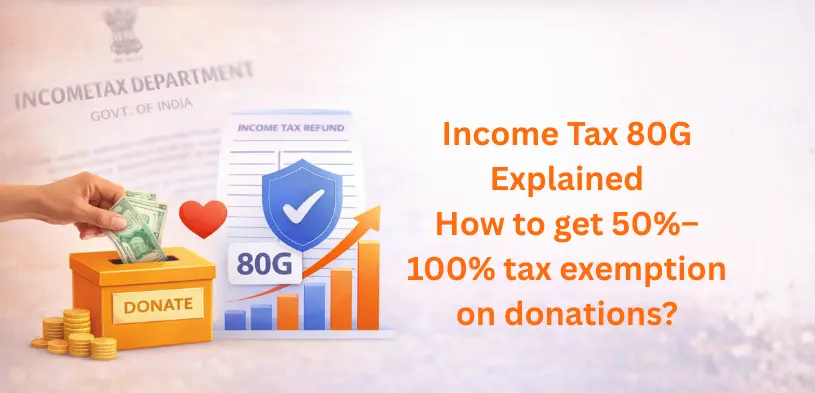
In India, special provisions have been made under the Income Tax Act to encourage donations. The most important among these is Section 80G of the Income Tax Act, 1961, which provides tax deduction benefits on donations made to eligible institutions. Let’s understand in detail how this section works and how you can benefit from it.
Under Section 80G of the Income Tax Act, 1961, if you donate to a registered religious or social institution, trust, or NGO, you receive an exemption on that donation amount. This deduction directly reduces your taxable income.
It is important to note that not all donations are eligible for a 100% deduction. Generally, donations made to specific government funds qualify for a 100% deduction, while donations to most 80G-registered private NGOs or trusts qualify for a 50% deduction.
Example: If you donate ₹50,000 to an 80G-certified institution that falls under the 50% deduction category, then ₹25,000 will be deducted from your taxable income, thereby reducing your total tax liability.
The following taxpayers can avail of the benefits under Section 80G:
Individual Taxpayers
Companies and Firms
Hindu Undivided Families (HUF)
Non-Resident Indians (NRIs), provided they donate to a recognized 80G registered institution in India.
This means that if your income is taxable in India and you have donated according to the rules, you can avail of this facility.
Currently, two tax systems are in effect in India: the Old Tax Regime and the New Tax Regime. It is crucial to understand that if you opt for the New Tax Regime, you will not get the benefit of most exemptions and deductions, including Section 80G.
Therefore, only taxpayers who choose the Old Tax Regime can claim tax exemptions on donations under 80G. Before planning your donations, decide which tax regime is more beneficial for you.
To avail of the benefits of Section 80G, it is mandatory to follow certain conditions:
Donate only to 80G Registered Institutions: First, ensure that the NGO or trust you are donating to is registered under Section 80G and possesses a valid 80G certificate.
Donate through Digital or Banking Channels: Tax exemption is not available for cash donations exceeding ₹2,000. Therefore, always donate via bank transfer, cheque, demand draft, or digital modes like UPI. This also serves as clear proof of payment.
Obtain Form 10BE: The recipient organization will issue Form 10BE. This is an official certificate containing the details of your donation and is essential while filing your Income Tax Return (ITR).
Keep the Receipt Safe: The donation receipt must contain the following:
Name of the institution
PAN of the institution
80G Registration Number
Donation amount and date
Some donations are eligible for 100% deduction, while most are limited to 50%.
In some cases, a “qualifying limit” applies, where the deduction cannot exceed 10% of your Adjusted Gross Total Income.
Only the person who files an ITR for the relevant financial year can claim this deduction.
The donation must be made in an individual’s name; you cannot claim a deduction for a donation made in someone else’s name.
When you donate for the surgery, education, or rehabilitation of a child with a disability, you light a spark of hope in the life of someone helpless. With your support, a child can walk again, and a family can live with dignity.
Simultaneously, through 80G, this donation reduces your tax liability. Your money plays a dual role: social transformation and financial balance. This financial year, as you plan your taxes, consider how your contribution can become a massive ray of hope for someone else.
Q: Can a Partnership Firm avail of 80G benefits?
A: Yes, if the firm has donated to an eligible NGO, it can claim this deduction.
Q: If I am an NRI and I donate to Narayan Seva Sansthan, can I claim a deduction?
A: Yes, Section 80G provides this benefit to both Indian citizens and NRIs.
Q: Can I get an 80G benefit if I donate ₹10,000 in cash?
A: No. No tax exemption is allowed for cash donations exceeding ₹2,000.
Q: If I choose the New Tax Regime, can I get an 80G deduction?
A: No. Only those opting for the Old Tax Regime can avail of this benefit.
Q: What if I lose my receipt?
A: If you have donated to Narayan Seva Sansthan and lost your receipt, you can email info@narayanseva.org or contact 0294-6622222 / 7023509999 to have it resent to you.
अक्षय तृतीया, जिसे आखा तीज भी कहते हैं, वैशाख शुक्ल तृतीया को मनाया जाता है और इस दिन किए गए दान, जप, तप एवं शुभ कार्य अक्षय (अनंत) फल देते हैं। 19 अप्रैल 2026 को पड़ने वाला यह अबूझ मुहूर्त पर्व परशुराम जयंती, गंगा अवतरण, अक्षय पात्र कथा से जुड़ा है, जहाँ सोना खरीदना, लक्ष्मीनारायण-कुबेर पूजा और दान से जीवन में सुख-समृद्धि अक्षय बनी रहती है।
Akshaya Tritiya, also known as Akha Teej, is celebrated on the third day of the bright fortnight of the month of Vaishakha, and charity, chanting, austerities, and auspicious deeds performed on this day yield eternal (infinite) results.
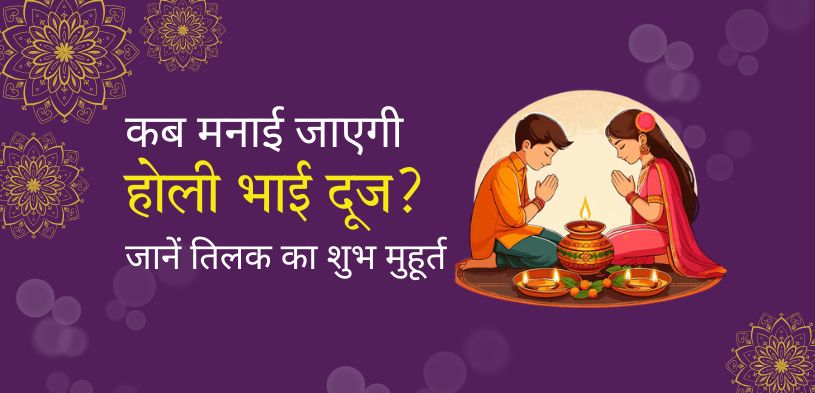
होली भाई दूज बहन और भाईचारे के प्यार का त्योहार है। इसका धार्मिक महत्व और अहमियत जानने के लिए, हम इसे मनाने का समय, तारीख और इसके असली मतलब के बारे में विस्तार से बताने जा रहे हैं।