- +91-7023509999
- 0294-6622222
- info@narayanseva.org
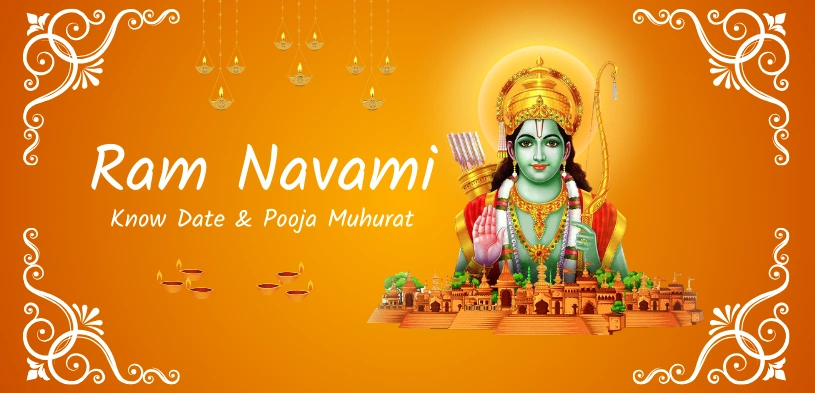
Ram Navami is one of the most profound festivals in Sanatan Dharma, marking the divine descent of Lord Vishnu as Maryada Purushottam Lord Shri Ram. This auspicious day celebrates the victory of truth, righteousness (Dharma), and the ideal path of living.
In this blog, we explore the significance of Ram Navami 2026, the traditional birth story from the Ramayana, and how you can perform the Puja at home to seek the blessings of Ram Lalla.
According to the Drik Panchang, the sacred festival of Ram Navami will be celebrated on Thursday, March 26, 2026.
To ensure your prayers align with the most auspicious planetary positions, please note the following Chaitra Navami Tithi timings:
Ram Navami Date: March 26, 2026
Navami Tithi Begins: March 26, 2026, at 11:48 AM
Navami Tithi Ends: March 27, 2026, at 10:06 AM
Auspicious Madhyahna Puja Muhurat: 11:27 AM to 1:54 PM
Why Madhyahna? The Madhyahna period (midday) holds immense spiritual importance because, as per the scriptures, Lord Rama was born when the sun was at its peak.
Ram Navami is a symbolic festival representing the establishment of righteousness and truth in Sanatan Dharma. On this day, Lord Vishnu took birth as Lord Ram in the house of King Dasharatha in the city of Ayodhya. According to scriptures, when the Earth was suffering from injustice, tyranny, and demonic forces, the gods prayed to Lord Vishnu, who then incarnated as Shri Ram to restore dharma.
According to the Valmiki Ramayana, King Dasharatha of Ayodhya had no children. In order to be blessed with offspring, he performed the Putrakameshti Yajna under the guidance of his guru, Maharishi Vashistha. At the end of the yajna, a divine bowl of kheer emerged from the sacred fire. King Dasharatha distributed this divine offering among his three queens—Kaushalya, Kaikeyi, and Sumitra. As a result, four divine sons were born in due time: Shri Ram, Lakshman, Bharat, and Shatrughna.
In the 18th chapter of the Balakanda of the Valmiki Ramayana, the birth of Lord Shri Ram is described as follows:
“Tato yajña samāpte tu ṛtūnāṁ ṣaṭsuvatyaye
Tataḥ ṣaṇmāsyatīte tu chaitre nāvamike tithau.”
This means that after the completion of the Putrakameshti Yajna and after six seasons had passed, in the twelfth month—on the Navami Tithi of Chaitra month—under the auspicious Punarvasu Nakshatra and favorable planetary alignments, Mother Kaushalya gave birth to the divine Lord Shri Ram, who possessed extraordinary qualities and was revered by all worlds.
Lord Shri Ram is known as Maryada Purushottam, meaning the ideal man who perfectly follows the principles of righteousness and moral conduct. Throughout his life, he set remarkable examples as a son, brother, husband, friend, and king—ideals that continue to inspire humanity across generations.
In the Valmiki Ramayana, Lord Ram is described as:
“Ramo vigrahavan dharmah sadhu satyaparakramah
Raja sarvasya lokasya devanam iva vasavah.”
This means that Lord Ram is the embodiment of dharma. His nature is noble, and his courage is rooted in truth and justice. Just as Indra is the king of the gods, Shri Ram is the ideal ruler of all people.
On Ram Navami, devotees traditionally worship Lord Shri Ram during the Madhyahna period. The puja is performed in the following way:
Wake up early during Brahma Muhurta, take a bath, and wear clean clothes. Then offer water, rice grains, and vermilion to the Sun God using a copper vessel.
Place a wooden platform in the puja area and spread a yellow cloth over it. Install idols or pictures of Lord Ram, Mata Sita, Lakshman, and Lord Hanuman.
Invoke the deity and bathe the idol with Gangajal. Offer sandalwood paste, yellow flowers, clothes, and ornaments.
Offer prasad such as kheer, saffron rice, panjiri, and sweets. Tulsi leaves should обязательно be included in the offering.
Chant the name of Lord Ram and, if possible, recite the Ramcharitmanas, Ramayana, or Ram Raksha Stotra. Finally, perform the aarti with a lamp, incense, and camphor.
Worshipping the child form of Lord Shri Ram on Ram Navami is considered highly auspicious. In many places, idols of Ram Lalla are gently placed in cradles and rocked, and grand processions and tableaux are organized in temples. It is also considered auspicious to place a Dharma flag at the main entrance of the house on this day.
Devotion to Lord Shri Ram establishes discipline, righteousness, and dedication to duty in life. Goswami Tulsidas wrote in the Ramcharitmanas:
“Ramahi keval prem piyara, jani lehu jo jan nihara.”
This means that Lord Ram loves only pure devotion. Anyone who remembers him with true love and sincerity has their wishes fulfilled.
The sacred festival of Ram Navami reminds us that following the path of righteousness, truth, and moral values is the true way of life. The life of Lord Shri Ram serves as an ideal example for humanity, guiding us toward duty, sacrifice, love, and justice.
Finally, bowing at the feet of Lord Shri Ram:
“Lokabhiramam ranarangadhiram rajivanetram raghuvanshanatham
Karunyarupam karunakaram tam shri ramchandram sharanam prapadye.”
This means: I surrender to Lord Shri Ramchandra, who brings joy to all beings, who is brave in battle, whose eyes are like lotus petals, who is the lord of the Raghu dynasty, and who is the embodiment of compassion and mercy.
Jai Shri Ram.

The Hindu New Year 2026, Vikram Samvat 2083, begins on Chaitra Shukla Pratipada (the bright fortnight of the bright fortnight) on March 19, when Jupiter becomes king and Mars becomes minister in the Rudra Samvat.

International Women’s Day 2026 will be celebrated on March 8 with the theme “Give to Gain.” The year 2026 also marks 115 years of International Women’s Day, first celebrated in 1911. Learn about the history, significance, and global celebration of Women’s Day.
चैत्र अमावस्या 2026, जो 19 मार्च को पड़ रही है, प्रार्थना, व्रत और दान के ज़रिए पुरखों का सम्मान करने का एक पवित्र दिन है। इसके रीति-रिवाज़, आध्यात्मिक महत्व और दान के फ़ायदों के बारे में जानें।