Where there is charity for charitable trust, there is neither fear nor ignorance.” While giving is a noble act, structured giving creates a long-lasting impact. This is where a charity trust in India plays a crucial role. In today’s world, where social challenges such as poverty, healthcare gaps, and lack of education persist, organized efforts are essential to bring sustainable change.
This blog explains the concept of a ngo trust, its importance, and the key difference between charity and charitable trust.
A charitable trust is a legally registered organization created with the purpose of serving society and supporting underprivileged communities. It is established by individuals, families, or organizations who wish to dedicate their resources for public welfare.
Unlike one-time donations, a charitable trust ensures that resources are systematically managed and used for long-term social impact. These trusts work in areas such as:
A charity trust in India operates under legal frameworks such as the Indian Trusts Act, 1882 or other relevant laws depending on the nature of the organization. Once registered, it gains legal recognition and can function as a separate entity.
A charitable trust is not just about donations—it is a structured system designed to deliver consistent impact. Here are its key features:
A charity trust is a legally recognized entity. It can own property, enter into contracts, and carry out activities in its own name.
The primary objective of a charity trust is not profit-making. Any income generated is reinvested into social causes.
The core purpose of a charitable trust is to serve society. It focuses on improving the lives of disadvantaged and marginalized communities.
Registered charity trusts in India are required to maintain proper records, financial statements, and compliance with legal norms.
Unlike one-time charity, a charitable trust ensures continuous support through well-planned programs and initiatives.
A charitable trust performs multiple functions to create meaningful and sustainable social impact. Some of the major functions include:
Charity refers to the act of giving help—either in the form of money, goods, or services—to those in need. It is usually voluntary and driven by compassion.
People can contribute to charity by:
While charity is essential, it is often short-term and unstructured. This is where a charitable trust becomes more impactful by organizing such efforts.
| Basis | Charity | Charitable Trust |
|---|---|---|
| Meaning | An act of giving help to those in need | A legally registered organization created for charitable purposes |
| Nature | Informal and voluntary | Formal and structured |
| Duration | Short-term or one-time | Long-term and continuous |
| Legal Status | No legal identity | Has legal recognition |
| Management | Individual-driven | Managed by trustees |
| Scope | Limited impact | Wider impact |
| Accountability | No formal accountability | Requires transparency |
| Funding | Personal donations | Donations, CSR, grants |
A charitable trust is more than just an organization—it is a structured approach to creating meaningful and lasting social change. While donation reflects kindness and generosity, a charity trust in India ensures that these values are transformed into consistent action and measurable impact.
Understanding the difference between charity and charitable trust helps individuals make informed decisions about how they want to contribute to society. By supporting or establishing a charity trust, one can ensure that their efforts lead to sustainable development and long-term benefits for communities.
Every contribution matters, but when combined with structure and vision, it has the power to transform lives at scale.

The last day of Pitru Paksha is known as Sarva Pitru Amavasya. This Amavasya is considered especially significant for remembering all known and unknown ancestors whose Shradh date may not be known or whose Shradh could not be performed on the prescribed tithi for some reason.
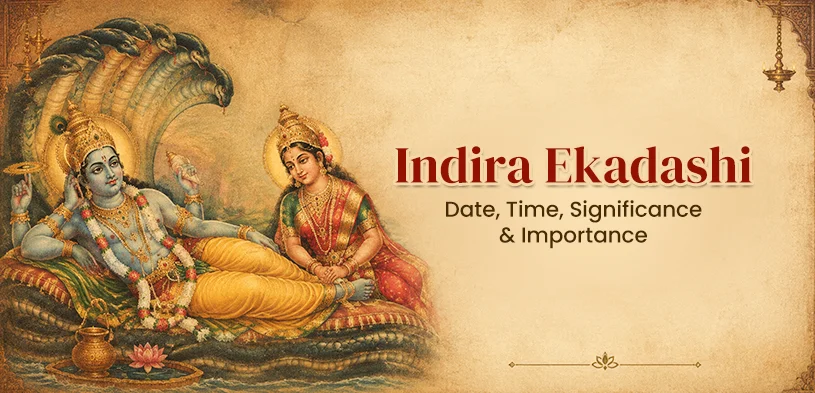
Indira Ekadashi, which falls during the Krishna Paksha of the Ashwin month, is one such meritorious tithi. As it occurs during Pitru Paksha, this day is specially associated with the worship of Lord Vishnu along with feelings of reverence and righteous deeds.

Our ancestors laid the foundation of the family through their lives, austerities, values, and good deeds. Pitru Paksha is the sacred opportunity to express reverence and gratitude towards them.