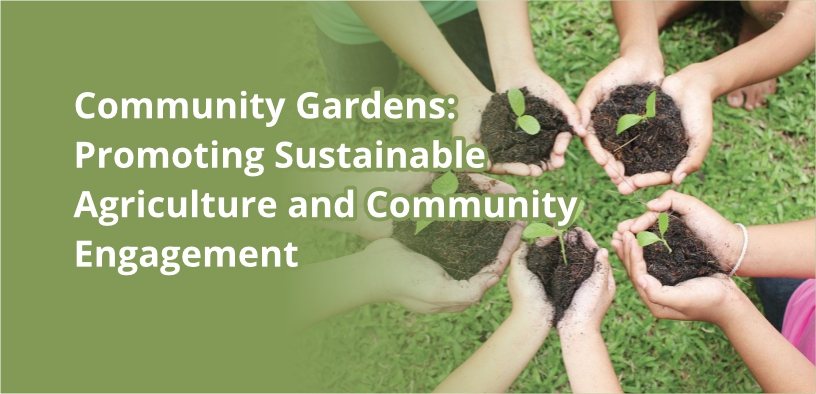
Community gardens have emerged as a powerful tool for promoting sustainable agriculture and fostering community engagement across the world.
These initiatives bring individuals together to cultivate and maintain shared green spaces. They allow for the cultivation of fresh produce and the creation of stronger, more connected communities.
In India, community gardens have gained significant momentum by addressing various socio-economic and environmental challenges.
Food security is a fundamental global concern. It encompasses access, availability, and utilization of nutritious food for all individuals.
With the world’s population increasing and urbanization expanding, ensuring food security has become a significant challenge.
Community gardens have emerged as an effective solution by fostering local food production, promoting sustainable practices, and enhancing community well-being.
Community gardens offer a wide range of benefits, with enhancing food security being a vital aspect.
By fostering local food production, educating individuals, promoting social cohesion, and embracing sustainable practices, these gardens contribute to a more resilient food system.
Through their impact on local communities, community gardens play a meaningful role in addressing global food security challenges.
Local Food Production:
Community gardens provide a platform for individuals and communities to actively participate in food production. These gardens, often located in urban areas, offer shared spaces where people can grow fruits, vegetables, and herbs.
By engaging in local food production, community gardens reduce dependence on long-distance transportation and industrialized agriculture.
They create opportunities for communities to access fresh, affordable, and nutritious produce, especially in areas where healthy food options are limited or inaccessible.
Education and Skill Development:
Community gardens play a crucial role in educating individuals about sustainable agriculture, nutrition, and food systems. They provide hands-on learning experiences that foster a deeper understanding of how food is grown, harvested, and prepared.
By involving community members of all ages, these gardens empower individuals to make informed food choices. The knowledge and skills gained can be applied at the household level, encouraging self-sufficiency and food security.
Social Cohesion and Community Building:
Community gardens act as catalysts for social interaction and cooperation. They provide spaces for people from diverse backgrounds to work together and share experiences.
These collective efforts strengthen social ties, promote cultural exchange, and build supportive community networks. Through shared goals, community gardens help communities become more resilient.
Environmental Sustainability:
Community gardens encourage environmentally sustainable practices. Organic farming, composting, and reduced chemical use help preserve soil fertility and biodiversity.
Many gardens also adopt rainwater harvesting and renewable energy solutions. These practices contribute to long-term food security by protecting the ecosystems on which agriculture depends.
Addressing Food Deserts and Food Inequality:
Community gardens help address food deserts where nutritious food is scarce or unavailable. By establishing gardens in underserved communities, access to fresh produce improves significantly.
These gardens often promote food justice by addressing inequalities in food distribution and access. By prioritizing equity and inclusivity, community gardens help ensure nutritious food is accessible to all.
Limited Access to Land:
Securing suitable land is one of the primary challenges faced by community gardens. Urban areas often have limited space and high competition for land. This scarcity can result in long waiting lists and increased costs for acquiring or leasing land.
Solution:
Collaboration with local authorities, nonprofits, and property owners is essential. Urban planning policies should include designated green spaces for community gardens.
Lack of Infrastructure and Resources:
Community gardens require basic infrastructure such as water access, tool storage, fencing, and composting facilities. Limited access to tools, seeds, and resources can hinder productivity and participation.
Solution:
Partnerships with government bodies and community organizations can address these gaps. Funding, tool-sharing programs, seed libraries, and grants can support infrastructure development.
Limited Knowledge and Skills:
Many participants lack prior gardening experience, which can affect productivity. Challenges often include pest management, soil health, and sustainable practices.
Solution:
Education and skill-building initiatives are critical. Workshops, training sessions, and mentorship programs can empower gardeners with practical knowledge.
Community gardens are powerful catalysts for sustainable agriculture and community engagement in India. Through their efforts, Narayan Seva Sansthan and other NGOs contribute to resilient and empowered communities.
By improving food security, promoting sustainability, and fostering social cohesion, community gardens offer a holistic path toward an inclusive future.