- +91-7023509999
- 0294-6622222
- info@narayanseva.org
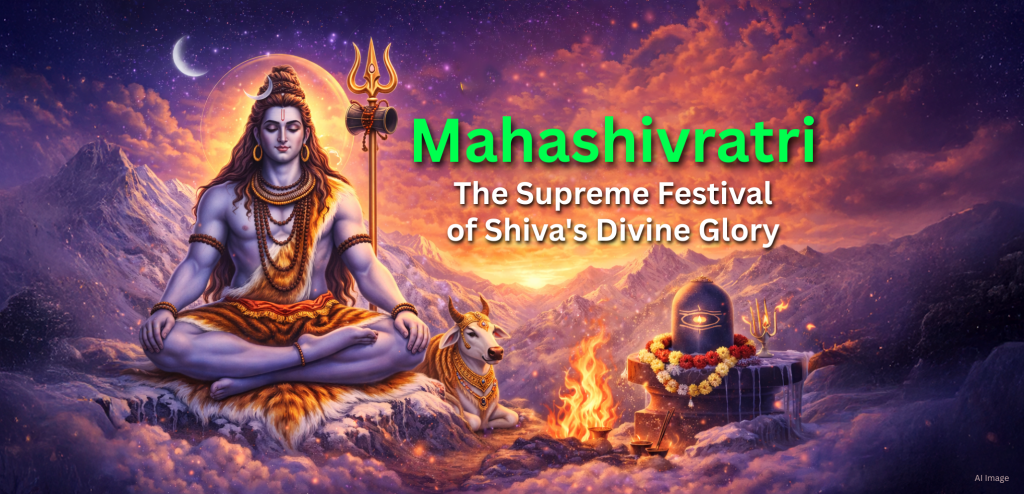
In Sanatan Dharma, the festival of Mahashivratri is considered extremely sacred, mystical, and full of spiritual consciousness. This night is dedicated to the worship of Lord Shiva, the God of Gods, who is worshipped as Adidev, Mahadev, Trinetradhari, Neelkanth, and the lord of destruction and welfare. Shiva’s form itself is meditation, Shiva’s name is liberation, and devotion to Shiva is the ultimate goal of life.
Mahashivratri falls on Phalgun Krishna Chaturdashi, the darkest night just before Phalgun Amavasya, linking Shiva’s transformative awakening directly to the new moon’s renewal and ancestral peace.
Mahashivratri is the most sacred festival dedicated to Lord Shiva, celebrated on the Chaturdashi Tithi of the Krishna Paksha (dark fortnight) of the month of Phalgun. It is known as the ‘Divine Night of Shiva,’ during which devotees observe fasts, perform night vigils, perform Rudrabhishek, and worship Mahadev with devotion. Fasting on this night, offering Bel leaves, milk, water, and cannabis, pleases Lord Shiva immensely.
This fast is considered the best means for the destruction of sins, the fulfillment of desires, and the attainment of salvation. Devotees pledge to liberate themselves from the darkness of ignorance and merge with the Shiva element on this day. Mahashivratri is a unique night of peace and well-being.
According to the scriptures, Lord Shiva is the origin of creation; he balances creation, sustenance, and destruction. Maha shivratri is that divine night when the Shiva element is most active. This night is considered best for self-reflection, penance, chanting, and meditation. It is said that worship by Shiva devotees on this night destroys the sins of many lifetimes and entitles the devotee to Shiva’s blessings.
Monday, the month of Sawan, Shivaratri, and especially Mahashivratri; All of these are considered extremely fruitful for worshipping Lord Shiva, but Maha shivratri, which falls on the Chaturdashi (fourteenth day) of the Krishna Paksha (dark fortnight) of the Phalguna month, holds special significance.
According to the Vedic calendar, the Chaturdashi date of the Krishna Paksha of the Phalguna month will begin at 5:34 pm on February 15, 2026, and end at 6:04 pm on February 16, 2026. Following the tradition of worshipping during the Nishith period, the Mahashivratri fast will be observed on Sunday, February 15, 2026. Performing Maha shivratri worship at night is considered especially virtuous.
First auspicious time: 5:54 pm to 9:03 pm
Second auspicious time: 9:03 pm to 12:12 am
Worshiping Lord Shiva and Goddess Parvati during these times fulfills the devotee’s wishes. The fast can be broken on February 16th from 6:31 am to 3:03 pm.
On Mahashivratri, bathe in the morning and wear clean clothes. Establish a Shivalinga at home or in a temple.
Anoint the Shivalinga with water or milk from a clay or copper pot.
Offer Belpatra, Aak-Dhatura, ashes, rice, and flowers.
Light a lamp and worship with incense and lamps.
If going to the temple is not possible, you can make a Shivalinga from clay at home and worship it with devotion. On this day, reciting the Shiva Purana and chanting the Mahamrityunjaya Mantra and the Panchakshara Mantra “Om Namah Shivaya” yields special results. Staying awake all night and remembering Shiva’s name is considered extremely auspicious.
The scriptures state that the night of Mahashivratri is divided into four watches. Devotees can worship Shiva in any watch or all four watches, as per their convenience. Worshiping Shiva during each watch is considered to liberate one from various obstacles and bondages in life.
Many stories are associated with Maha shivratri. According to one belief, Goddess Parvati performed rigorous penance to obtain Lord Shiva as her husband. Pleased with her penance, Lord Shiva married her on Falgun Krishna Chaturdashi; for this reason, this date is considered extremely sacred.
On Mahashivratri, we learn that Lord Shiva is pleased with simple feelings. He is the Unsullied, the Bholenath; Who showers blessings even with small worship done with true devotion. This festival shows us the path of renunciation of ego, compassion, restraint and self-purification.
Shiva’s praise and importance of Panchakshar
Recitation of Shiva Panchakshar Stotra on this auspicious occasion is considered extremely virtuous.
Five letters of “Om Namah Shivay”—Na”, Ma, Shi, Va, Ya—symbolize the five elements and connect the seeker with Shivatattva. It is said in the scriptures that the devotee who recites this stotra with devotion reaches Shivalok and enjoys the company of Shiva.
Shiva Panchakshar Source:-
Nagendraharaya Trilochanaya Bhasmanga Ragaya Maheshwaraya.
Nityaya Shuddhay Digambaray Tasme Na Karay Namah Shivay.
Mandakini Salil Chandan Charcharaya Nandishwar Pramathanath Maheshwaraya.
Mandarapushpa Bahupushpa Supujitaay Tasme Ma Karay Namah Shivay.
Shivay Gauri Vadnabjavrind Suryay Dakshadhvarnashakaya.
Shri Neelkanthaya Vrishabhaddhajay Tasmai Shi Karay Namah Shivay.
Vashishtha Kubhodav Gautamaya Munindra Devarchit Shekhrai.
Chandrarka Vaishwanar Lochanay Tasmai and Karay Namah Shivay.
Yagyaswaroopaya Jatadharaya Pinakastaya Sanatanay.
Divyay Devay Digambaray Tasmai Ya Karay Namah Shivay.
Panchaksharamidam punyam ya: pathet shiva sannidhau.
Shivlokam vapnoti shiven co modate.
Mahashivratri is the practice of merging the soul with Devadhidev Mahadev. This night is meant to lead from ignorance to knowledge, from darkness to light, and from bondage to liberation. On this auspicious occasion of Maha shivratri 2026, seek Lord Shiva’s blessings through fasting, chanting, meditation, and devotion and make your life Shiva-like.
Om Namah Shivaya
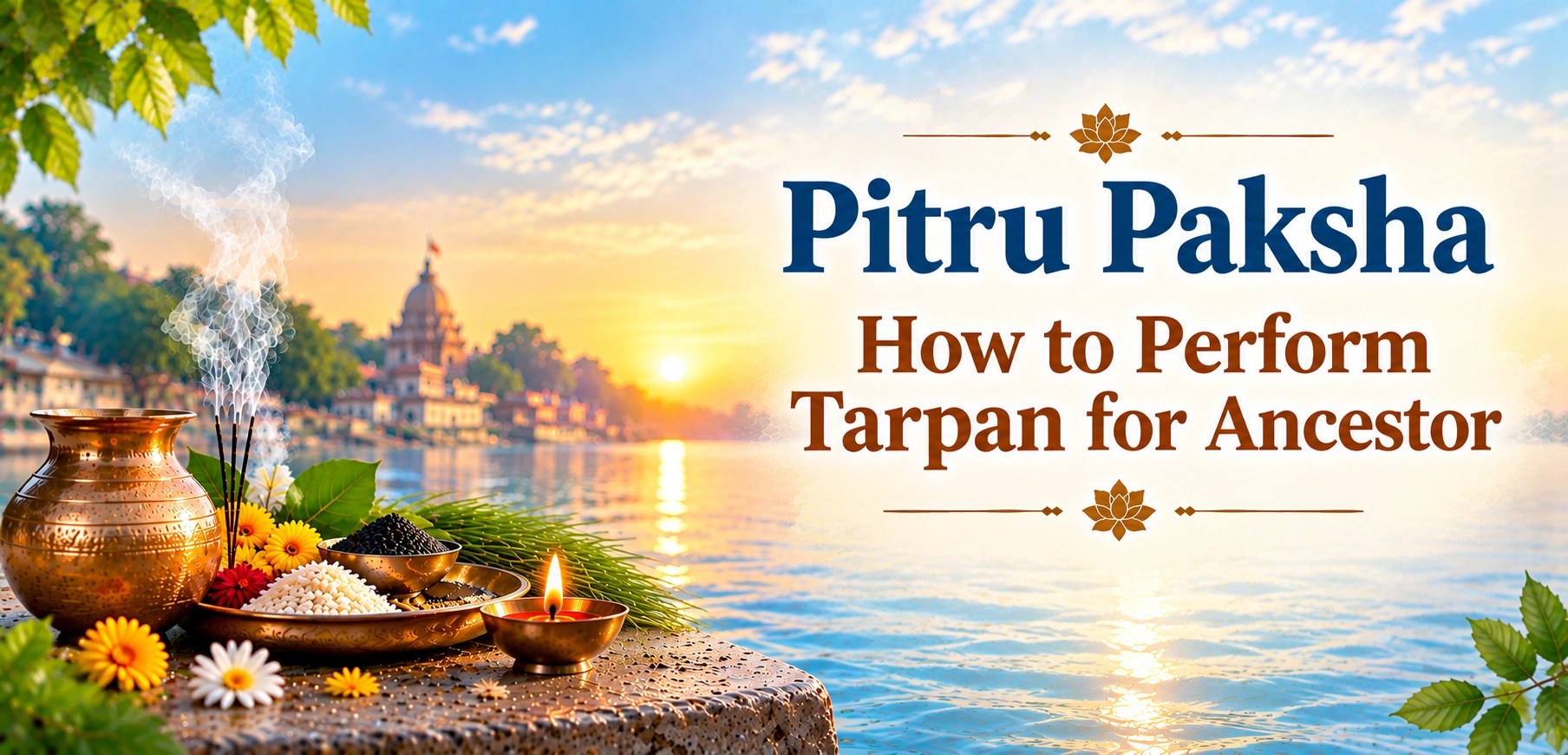
Our ancestors laid the foundation of the family through their lives, austerities, values, and good deeds. Pitru Paksha is the sacred opportunity to express reverence and gratitude towards them.
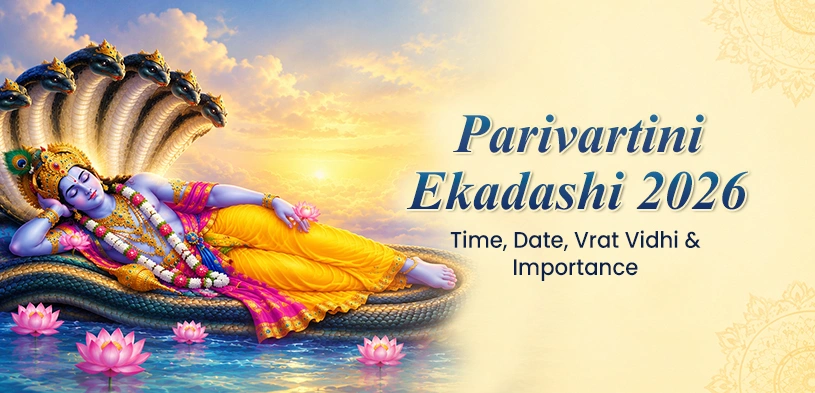
Parivartini Ekadashi of the Shukla Paksha of Bhadrapada holds special importance. It is also known as Padma Ekadashi, Parshva Ekadashi and Dol Gyaras.
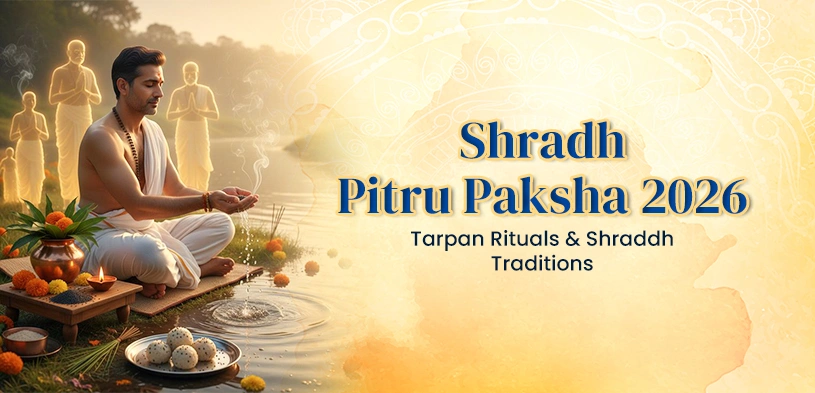
In the year 2026, Shradh Paksha (Pitru Paksha) will begin on 26 September 2026 and end on 10 October 2026 with Sarva Pitru Amavasya. During this sacred period, followers of Sanatan Dharma can perform Shradh, Tarpan and other rituals for their ancestors according to the respective tithi.